Civics PlaybookCivic Spirit
- Mission: Civic Spirit empowers schools across faith traditions to enhance civic knowledge, responsibility and belonging in their student and faculty communities.
- Geographic Focus: National
- Audience: K-12 students, teachers, and the public
- Budget: $950,000
- Focus Areas and Core Competencies:
- Teacher training
- Student civic experiences
Using Civics to Build Informed and Engaged Citizens Across Faith Communities
Impact: Civic Spirit
Over the past eight years, Civic Spirit has built a network of over 1,100 educators and administrators at over 200 faith-based schools serving approximately 60,000 students. Civic Spirit has partnered with a wide network of teachers, educational leaders and institutions, foundations, nonprofits, and scholars to improve the civic education landscape in America.
A Conversation with Rabbi Charles Savenor, Executive Director of Civic Spirit
Q: What is the mission/work of your organization? What problem(s) in civics education is your nonprofit working to solve?
Civic Spirit provides training and resources to teachers as well as programming to students so that the next generation can become informed and engaged citizens and members of American democracy. Anchored in a nonpartisan approach, our work focuses on faith-based schools, where there is no formal requirement to implement a civic education curriculum. There are currently four million students attending faith-based schools in the United States, twice the number of those in charter schools.
Q: Does your organization have any upcoming programs or events planned in recognition of the 250th anniversary of the United States?
For America’s semiquincentennial, Civic Spirit has developed workshops and seminars for educators and school administrators, a contest for middle school and high school students and educational materials tailored for school leaders and administrators. We will also partner with the Community Scholar Program, based in Southern California, on a month-long online series with Dr. Jonathan Sarna on American Jewry at 250. While centered around this historic national milestone, our initiatives are designed to launch a sustained, positive civic culture within faith-based schools and their communities.
A key component will be helping educators leverage civic holidays throughout the year as opportunities to create meaningful communal experiences and, equally important, strengthen students’ American identities. Since the actual semiquincentennial takes place over the summer, we are developing programs for summer camps to mark the moment in their experiential education settings.
Moreover, we aim to pilot an “America 250” cohort for 10 heads of schools who will spearhead this work in their own schools and become civic champions in the larger communities. This experience would include a civic study pilgrimage to Philadelphia, Gettysburg and Washington, D.C. Success will be measured by the number of schools actively enhancing their civic culture and survey data assessing the effectiveness and impact of these efforts on both educators and students.
With additional funding, we would like to launch a speaker series with historians, thought leaders and elected officials about the significance of this moment and possibilities for the future. Our nonpartisan, multifaith approach has attracted lifelong learners who want to better understand the issues of our days and work toward change in their communities. Funding would enable us to feature personalities like filmmaker Ken Burns, Professor Danielle Allen, Lin Manuel Miranda and Dr. Robert Putnam.
Q: How do you describe the big goals your organization is working to achieve? How do you measure impact?
Civic Spirit strives to combat the neglected state of civics education and restore public trust in government. To achieve these goals, we focus on two critical fronts: training teachers and educating the current generation of students to engage fully in American society.
We measure impact through a combination of quantitative and qualitative indicators, including the number of educators and schools participating in our programs, participants’ proficiency in civics and the extent to which civic learning opportunities are implemented in their classrooms and broader school communities.
These metrics help us assess both the reach and level of engagement, ensuring that our efforts lead to meaningful, sustained change in civic education in participating schools and their larger communities.
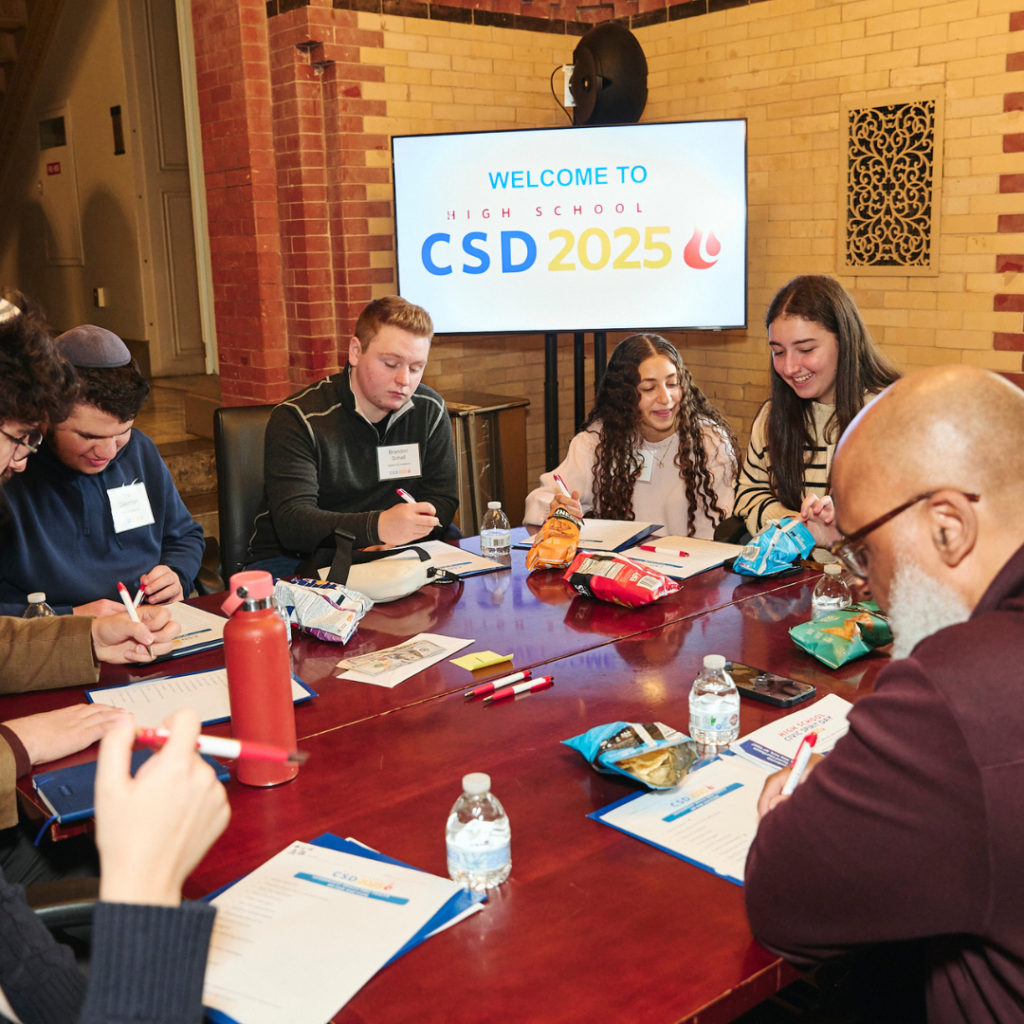
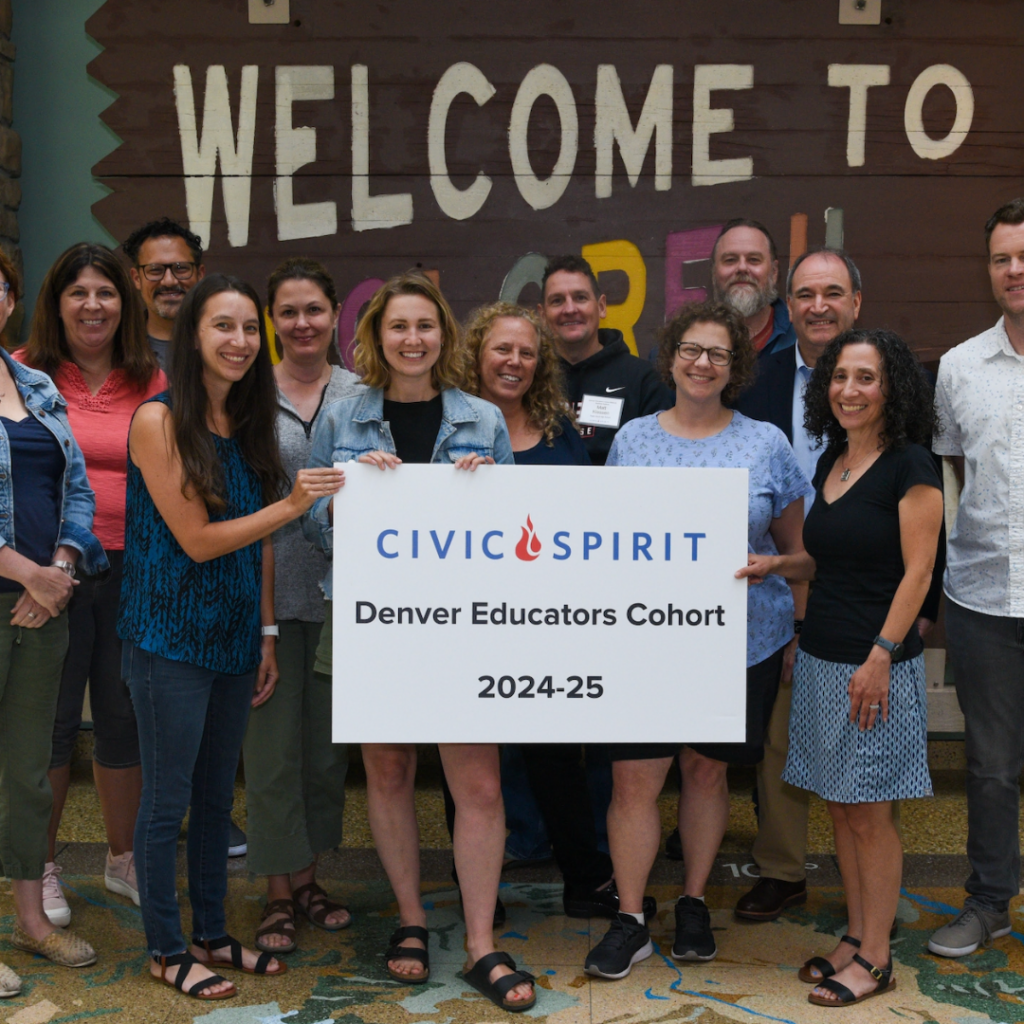
Over the last eight years, over 1,100 educators from 27 states have participated in our teacher training programs and Educators Cohort fellowship. In just three years, our student clubs have nearly tripled in size, from eight clubs to 23 clubs in 2024.
Fellows who have participated in our year-long fellowship reported a boost in confidence in teaching civics today and “powerful shifts in hearts and minds.” Our third party evaluator wrote, “Civic Spirit provides a rare and, in some cases, unique experience where those with opposing views not only meet but also discuss core beliefs frankly … which [is] essential for growth … [and] is a hugely impactful feature.”
Q: What are some of the biggest challenges your organization has experienced in working to accomplish its mission? How did your organization overcome those challenges?
One of our greatest challenges – teaching America’s story today – is also our greatest opportunity. Many educators are confused or even fearful about constructively teaching our nation’s history and civic principles, a challenge amplified by the “Great Resignation” which left schools with newer teachers often lacking a strong civic education. To meet the challenge, Civic Spirit equips teachers, many of whom did not receive this education, with a comprehensive approach to civic education.
Our approach highlights primary sources in the formation and evolution of our democracy that foster students’ critical thinking, incorporates pedagogical training in constructive dialogue and provides coaching for teachers to incorporate civic education into their existing curriculum and, in many cases, create new classes or units.
Q: What are your organization’s biggest needs? How can philanthropists help your organization achieve its goals?
The number of educators participating in Civic Spirit is growing, our network of schools is becoming more active, and student programming has nearly tripled over the last year, growing from 18 educators to 55. This past year, we have worked with an additional 56 educators, 27 who have participated in the Educators Cohort fellowship and 29 who were trained and mentored as academic advisors for Civic Spirit Clubs. We are currently reaching 1% of the four million students in Catholic, Jewish and Christian schools in the United States. Our strategic goal is to reach 5% by 2030, and funding can help us actualize this plan.
For the upcoming 2025-26 school year, we have already recruited 38 new educators for our Chicago and National Educators Cohort and anticipate welcoming 40 Civic Spirit Club advisors into our network. This is the moment for multiyear funding so that we can meet the demands of the day and create an infrastructure that will last for generations to come.
Financial support can ensure that quality staff are retained, our team can grow to meet demand and scaling goals, students are provided with local, statewide and national travel transformational opportunities and resources are developed that capture the attention of learners of all ages. Funding can also enable us to create a longitudinal study of civic education’s impact on students.
Philanthropists can also assist the civic world by donating meeting space for school programs and meeting with students to talk about their values and the value of communal service. Students need role models more than ever, and the generosity of time and attention can change lives and inspire students to embrace character and communal service as priorities.
Finally, philanthropists can help most by seeing themselves as partners in giving students today every opportunity to take advantage of knowledge they will need to actualize the aspirations of what George Washington called, “the great American Experiment.”
Q: Beyond your organization, where should philanthropists who care about advancing civic knowledge and education invest their charitable dollars?
Civic Spirit is uniquely positioned as the only civic education organization working directly with educators and students in faith-based schools. With the immense challenges facing our country due to a lack of civic knowledge and polarized civil discourse, we approach other civic education organizations as potential partners and collaborate with numerous organizations to implement programs in our growing network.
Our partners include the Citizen University, the Jack Miller Center, iCivics, the New York Historical Society, Essential Partners, the News Literacy Project, Tikvah, the Chicago Historical Museum and History Colorado. With America’s 250th fast approaching, philanthropists can invest in local and state historical societies and museums so that the story of our founding and its lasting impact from sea to shining sea can be taught effectively and inspire the students of today to be the leaders of tomorrow.
Q: If you received an increase in funding, how would your organization expand its programming?
Our Civic Spirit Clubs have grown from 8 in the 2023-24 school year to 23 in 2024-25. Funding would enable us to double that to 40 clubs in the upcoming school year, reaching 55 clubs by 2026-27. Additional support would also provide microgrants to schools to further support the students’ local initiatives. Since we offer a stipend to club advisors and provide some programmatic support and coaching, new support will be key in achieving this goal. We aim to create a leadership program for the best of the student club leaders that culminates with a trip to different presidential libraries each year.
We would like to create an annual gathering for students in Washington, D.C. This experience would include meetings with their elected representatives on Capitol Hill, sitting in a session at the Supreme Court and learning how monuments shape civic culture. Beyond the programmatic elements, this D.C. experience would introduce students to their peers from other faith-based schools and invite them to collaborate across differences on shared civic challenges with the aim of cultivating civic attitudes.
With over 5,900 Catholic and Christian schools and 900 Jewish day schools in the United States, we are working to reach a greater percentage of them through our regional model. After expanding to Chicago in 2025, we aspire to add two new locations in Boston and Southern Florida in 2026. By offering localized cohorts with designated community coordinators, our capacity to run multiple cohorts for educators in faith-based schools throughout the year increases. To effectively recruit teachers from Catholic and Christian schools, we need to add a staff member with connections in these networks.
With the proof of concept and scores of success stories from sea to shining sea, we want to formalize our curriculum for K-12 schools. In addition, we have started working this past year with supplemental schools in synagogues geared toward students who attend public and private schools. The positive response from the pilot motivates us to create a curriculum that can be shared throughout the country. This enterprise would entail a curriculum writer, designer and training sessions.

Contact Our Team
Contact the Roundtable’s Programs team to learn more about this investment opportunity.