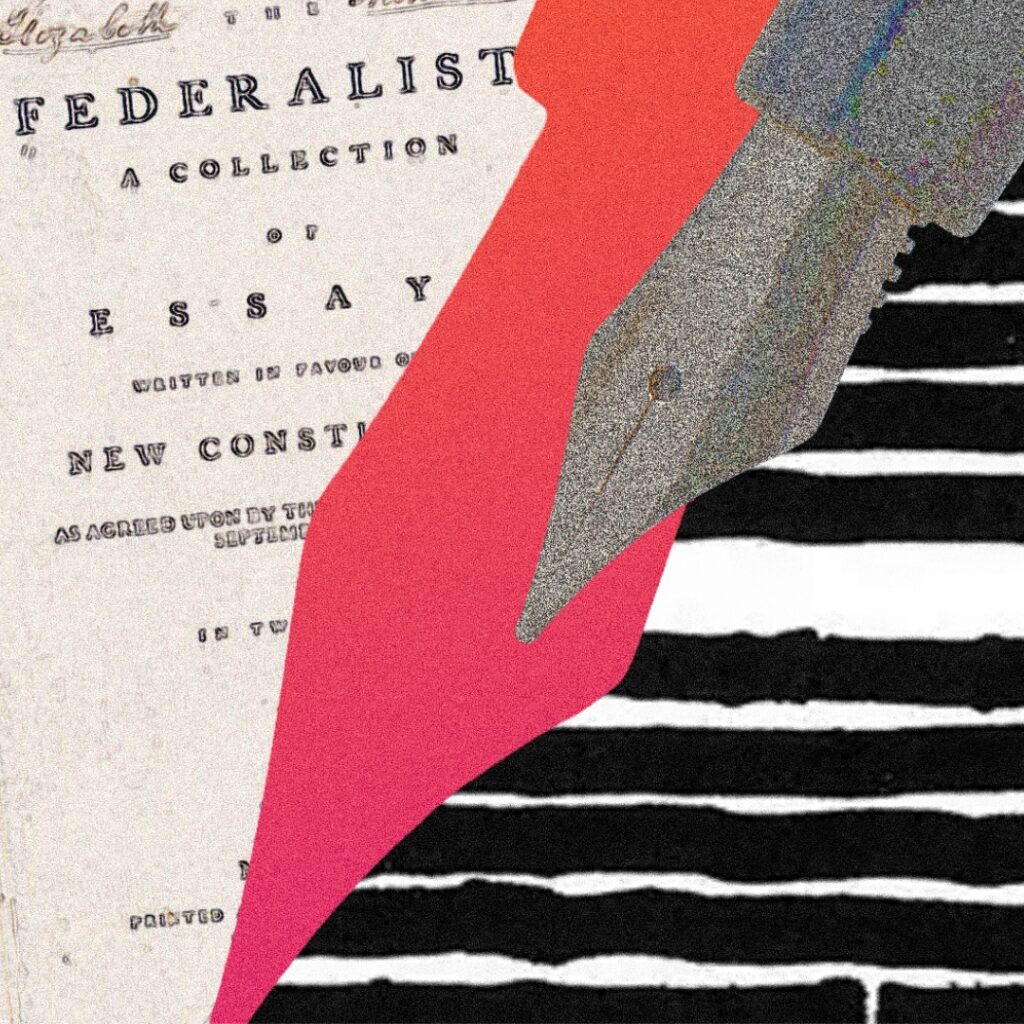
In the fall of 1787, as New York debated whether to ratify the Constitution, a series of essays began appearing in local newspapers under a single name: Publius. The author argued forcefully and persuasively for the new framework of government. Readers did not know who Publius was, only that the writing was clear, urgent and compelling. Only later did the public learn that Publius was not one person, but three: Alexander Hamilton, James Madison and John Jay.
Their anonymity was not incidental. It was intentional. By withholding their names, the authors ensured the ideas would stand or fall on merit, not reputations, alliances or enemies. Anonymity gave them the freedom to participate in one of the most consequential public debates in American history without fear of personal, political or economic retaliation.
As we approach the 250th anniversary of the United States in 2026, it is worth asking a simple question: Would “Publius” feel safe writing today? For many Americans, especially those who support controversial or unfashionable causes, the answer is increasingly no.
Consider the story of donors caught up in the “John Doe” investigations in Wisconsin between 2010 and 2013. What began as a probe into alleged campaign coordination expanded, according to those targeted and later legal challenges, into early morning raids, seized property and gag orders that prevented individuals from speaking about their own cases.
Many of those investigated were not politicians or operatives, but private citizens who had supported advocacy groups. Their involvement, which they viewed as lawful political participation, became the basis for scrutiny. For these individuals, the lesson was unmistakable. Participation could carry a personal cost, not just reputational but financial and psychological.
Critics of donor privacy say disclosure is necessary to prevent corruption and ensure accountability. That concern is not trivial. But the First Amendment does not permit the government to pursue transparency without regard to the constitutional costs. Freedom of speech necessarily includes the freedom to associate for the advancement of shared beliefs.
That protection loses much of its force if citizens can be compelled to disclose their identities whenever they participate in controversial causes. The danger is not theoretical. Forced disclosure can expose individuals to harassment and retaliation for lawful political activity.
The Supreme Court has repeatedly recognized this principle. In NAACP v. Alabama, the Court held that forcing an organization to disclose its membership lists would expose supporters to harassment and chill their freedom of association. That protection has echoed through decades of jurisprudence, grounded in the recognition that compelled disclosure can burden First Amendment rights even before any direct harm occurs.
More recently, in April 2026, the Supreme Court again confronted the issue in First Choice Women’s Resource Centers v. Platkin. The case arose from a 2023 subpoena issued by the New Jersey attorney general seeking donor information from the organization. The organization said complying would expose its supporters and discourage participation.
In a unanimous decision on April 29, 2026, the Court allowed the organization’s challenge to proceed in federal court, recognizing that even the threat of compelled disclosure can chill First Amendment rights to speech and association. The ruling did not resolve the underlying investigation, but it reaffirmed a critical principle. Individuals and organizations do not have to wait until their privacy is violated to defend it. As filings in the case showed, donors said if their identities were exposed to officials they viewed as hostile, they would have been less likely to give in the first place.
Together, these decisions are not about shielding wrongdoing. They are about preserving the conditions necessary for a free society, where individuals can associate, advocate and contribute by supporting organizations and ideas that reflect their values. When donors fear exposure, charities suffer. When charities suffer, ideas and services recede from the public square. And when viewpoints are driven out not by argument but by intimidation, the marketplace of ideas and charitable work begins to erode.
The founders understood this. That is why “Publius” wrote in secret. Not to deceive, but to protect the integrity of the debate. The question is not whether anonymity can be abused, but whether a free society can function without it. Donor privacy at its core reflects a constitutional principle, that citizens must be free to organize and advocate without undue interference from the state.
If we want a society where ideas and organizations rise or fall on their merits, we must preserve the ability of individuals to support them without public exposure. Without that protection, participation will decline. And when participation declines, the public square does not become more accountable, it becomes quieter, narrower and easier to control.
