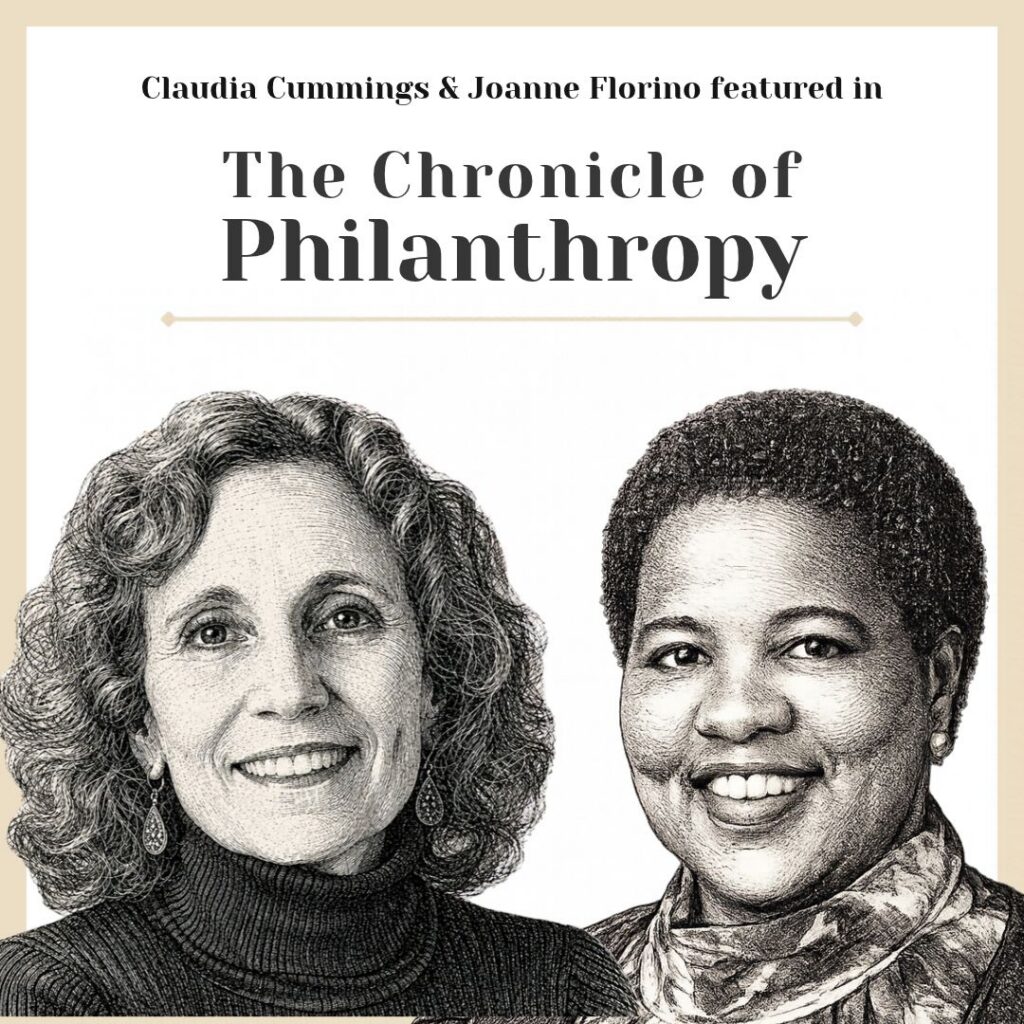
In a recent Chronicle of Philanthropy article, “New legislation would strengthen donor standing in gift disputes. Does it go too far?,” Ben Gose examines Philanthropy Roundtable’s newest research, “The Safeguarding Endowment Gifts Act: The Tao of Enforcing Donor Intent.” Drawing on commentary from Claudia Cummings, senior vice president of public affairs, and Joanne Florino, Adam Meyerson Distinguished Fellow in Philanthropic Excellence, the piece explores how donors are increasingly seeking greater control, input and transparency over how nonprofits allocate and spend charitable gifts.
The research highlights that current legal protections for donors are messy, incoherent and unpredictable, with enforcement scattered across state laws, leaving donors powerless when charities alter written endowment agreements or misuse gifts. The Safeguarding Endowment Gifts Act addresses this by creating accountability and a clear legal path to enforce those agreements, giving donors the confidence to give more generously to organizations that support their communities.
Below are excerpts from “New legislation would strengthen donor standing in gift disputes. Does it go too far?”
“Donors rarely have legal recourse when a charity breaks a gift agreement, according to a new report from the Philanthropy Roundtable.
“The report advocates for the adoption of model legislation — already passed into law in four states — that would bolster donors and their representatives’ ability to sue when endowment agreements are violated.
“In a review of 21 recent legal cases in 12 states, the report found that courts often decided that donors lacked standing, meaning that they did not have a direct stake in the matter or were not personally harmed. Under most state laws, state attorneys general are traditionally the only party that can sue to enforce gifts, aside from narrow exceptions for people who have a ‘special interest.’
“In at least half the cases featured in the report, the courts did not address whether the gift agreement was violated.
“‘Often what happens is the merits of a particular case are never even discussed in court, because the donor doesn’t even have standing,’ says Claudia Cummings, the Roundtable’s senior vice president of public affairs. ‘This bill just gives the donor a voice — that’s all it does.’”
…
“The Philanthropy Roundtable report, written by Dan Kelly, a former Wisconsin Supreme Court justice, urges more states to adopt a version of what it calls the Safeguarding Endowment Gifts Act. Versions of the bill have passed in Kansas, Georgia, Kentucky, and Montana since 2023. A state Senate committee in Oklahoma held a hearing on the measure this month.”
…
“Disputes between smaller donors and charities almost never hit the headlines, Cummings says. When advocating for the legislation, the Philanthropy Roundtable makes clear to lawmakers that it will help donors who make endowed gifts as small as $10,000.
‘When you point that out — that this is a mom-and-pop, Main Street issue — legislators are more than interested in correcting the lapse in the law to protect donors,’ Cummings says.”
…
“Advocates for the legislation argue that it can actually help charities by giving aggrieved donors a clearer path to resolving differences. The legislation helps to level the playing field and should lead to fewer lawsuits and less unflattering press for charities, argues Joanne Florino, a fellow at the Philanthropy Roundtable.
‘It can chill giving if donor intent is not respected and if that becomes public,’ Florino says. ‘And believe me, it typically does become public in one way or another.’”
Continue reading at The Chronicle of Philanthropy.
