In 2023, following passage of the Donor Intent Protection Act in Kansas, Philanthropy Roundtable launched a monthly series on donor intent developments and controversies nationwide to better inform people about this important topic. The Donor Intent Protection Act has now passed in Kentucky, Georgia and Montana, and efforts to extend this legislation to other states will continue in 2026.
We encourage donors to contact us with questions about featured items and consult additional resources on donor intent at the Roundtable’s Donor Intent Hub. We also welcome news about donor intent we may have missed.
This month’s Donor Intent Watch begins with a summary of an Iowa Supreme Court decision blocking the University of Iowa from unilaterally changing the terms of a scholarship program with race-based donor restrictions. It closes with a reminder of the legal requirement that donor intent be maintained when nonprofit organizations merge.
Iowa Supreme Court Hears Case on Race-Based Donor Restrictions
Ezra L. Totton was a brilliant chemistry student who sought admission in 1935 to the segregated University of Tennessee. He and several other rejected Black applicants took their case to court with then-NAACP attorney Thurgood Marshall representing them. Their lawsuit was unsuccessful.
Determined to secure graduate education, Totton enrolled at the University of Iowa and earned a master’s degree and the University Wisconsin where he added a doctorate. He died in 1996, leaving a $35,000 bequest to the University of Iowa to create a scholarship for “Black students majoring in physical sciences, preferably chemistry.”
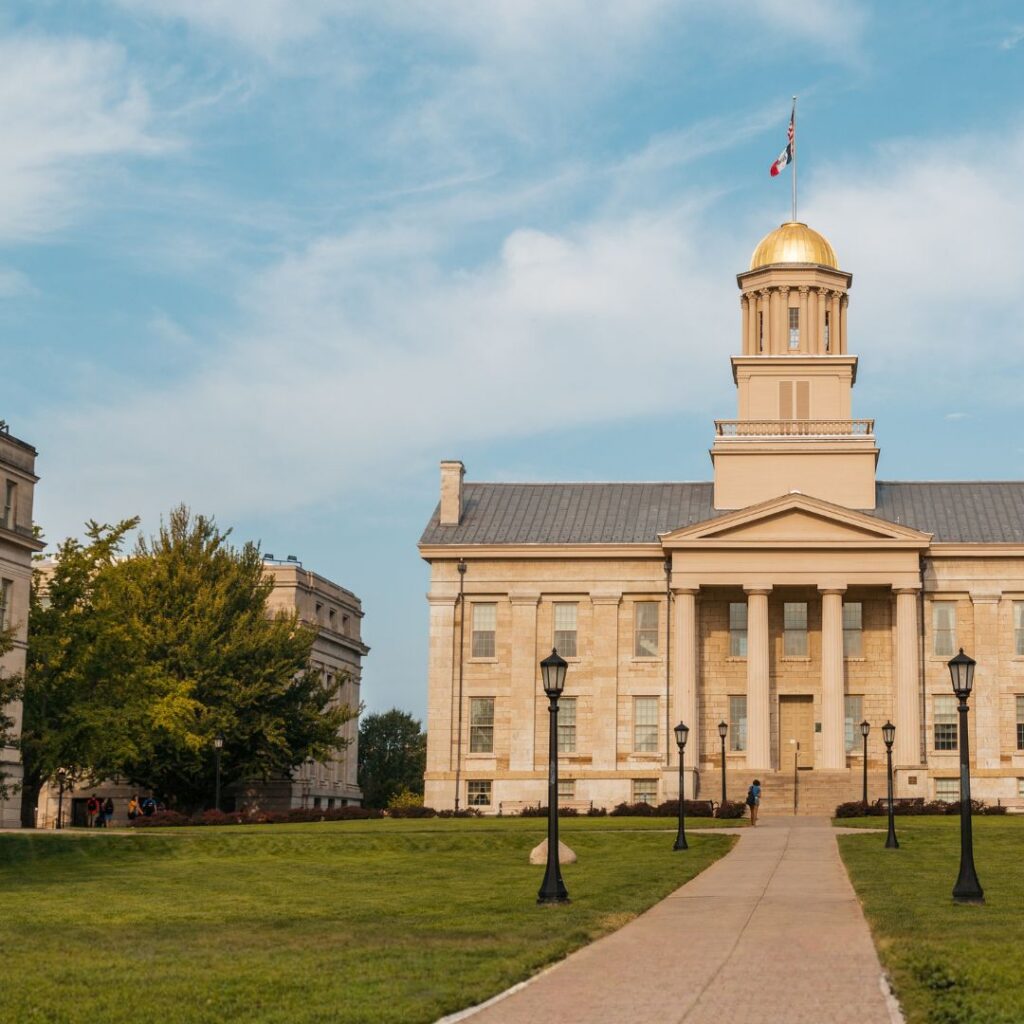
That scholarship was administered in line with the donor’s wishes for nearly two decades. But following the U.S. Supreme Court’s decision in 2023 deeming race-conscious college admissions programs unconstitutional, some state attorneys general also questioned the legality of race-based scholarships. That was the case in Iowa where Attorney General Brenna Bird and the University of Iowa supported the change in the scholarship’s purpose to make it available to all first-generation students.
The Iowa Supreme Court unanimously disagreed with this change without addressing the constitutional question. As one source noted, “The court did not declare a race-based scholarship is automatically lawful. It also did not rule that Iowa’s colleges and universities may ignore constitutional limits established by the U.S. Supreme Court.”
Saying the proposed change to scholarship eligibility was, based on current evidence, “not reflective of the donor’s intent,” a majority of the court mandated a set of procedures to be followed:
- Courts hearing a donor intent dispute must allow an advocate for the donor to participate in proceedings.
- In such disputes courts may consider the entire terms of a donor’s will “and other extrinsic evidence.”
- Permissible modifications include the release of a donor’s restrictions or the assignment of funds “to another institution that can more appropriately honor the donor’s intent.”
The court’s ruling returns the case to a lower court to follow these procedures and decide if Ezra Totton’s intent can be satisfied at the University of Iowa, or if his gift should go to another institution where his wishes will be honored.
Protecting Donor Intent in Nonprofit Mergers
In response to financial pressure, heightened competition for donors and a desire to maximize impact, nonprofit boards and administrative leaders are increasingly considering merging with other mission-aligned charitable organizations. In the due diligence that should precede such decisions, significant attention is typically paid to organizational culture, operational practices, availability of talent and the revenue each party brings to the table.
When that revenue includes donor-restricted gifts – as it frequently does – there is another factor to be considered. Whether the merger results in a new organization formed through the dissolution of all participants in the merger, or in what is better termed an acquisition formed through the dissolution of all but one participant, donor restrictions must be upheld, and funds must be used for their original purpose.
Exceptions can be made only with the donor’s permission or with the approval of a state’s attorney general and/or a cy pres court judgment. Because charity regulations differ from state to state, nonprofits considering a merger should familiarize themselves with the legal requirements of those states involved.
