In 2023, following passage of the Donor Intent Protection Act in Kansas, Philanthropy Roundtable launched a monthly series on donor intent developments and controversies nationwide to better inform you about this important topic. The Donor Intent Protection Act has now passed in Kentucky, Georgia and Montana, and efforts on behalf of this legislation will continue in additional states in 2025 and 2026.
We encourage donors to contact us with any questions about our featured items and consult additional resources on donor intent at the Roundtable’s Donor Intent Hub. We also welcome any news about donor intent we may have missed.
This month’s Donor Intent Watch opens with a piece about donor intent at the Wallis Annenberg Legacy Foundation. This is followed by a discussion of Earlham College’s request to repurpose restricted endowment funds.
We also want to acknowledge the Daniels Fund of Denver Colorado, which completed its 25th year of grantmaking to Colorado, New Mexico, Utah and Wyoming at the end of 2025. We applaud its ongoing commitment to the philanthropic intent of its late donor, Bill Daniels, and encourage others to consider its example by visiting https://danielsfund.org/about/about-bill-daniels/.
Not Your Father’s Foundation
In December 2025, the Center for Effective Philanthropy (CEP) published a blog written by Aradhna Malhotra Oliphant, chief operations and strategy officer of the Wallis Annenberg Legacy Foundation. The blog caught my eye because it detailed the way Wallis Annenberg carefully ensured her philanthropic priorities would last beyond her death.
“Too often,” Oliphant notes, “legacy planning is an afterthought in philanthropy.” For Annenberg, however, it was front and center as she laid the groundwork for her own philanthropy – a foundation separate from the Annenberg Foundation, a family foundation created by her father.
First, she did not delay establishing her foundation once she decided to do so. That happened in 2011. In that same year she chose the foundation’s first trustees, adding others in later years and scheduling regular board meetings. This gave the trustees the opportunity to be at the table with the donor, learning first-hand how and why she determined her grantmaking priorities. She also stewarded the foundation’s financial and investment managers as she sought to provide the resources necessary for the future.
Next, Annenberg took action to leave no doubt about where she wanted those resources to go. As Oliphant describes, “Wallis launched flagship projects that anchored the Legacy Foundation’s role and values. In 2017, she opened Annenberg PetSpace, an innovative center for animal adoption and education. Five years later, she opened Annenberg GenSpace, a bold reimagining of aging and community. Both were expressions of her deepest passions, and together they became blueprints for the kind of work the Legacy Foundation would carry forward.”
Anticipating the future, Annenberg also took action to secure her legacy by documenting the history of her foundation while she was still at the table – a process typically left to a donor’s survivors.
“Nearly a decade ago,” Oliphant writes, “she engaged archivists to catalog the artifacts and lessons from her years of giving, ensuring her story, values and methods would continue to guide the Foundation long into the future.”
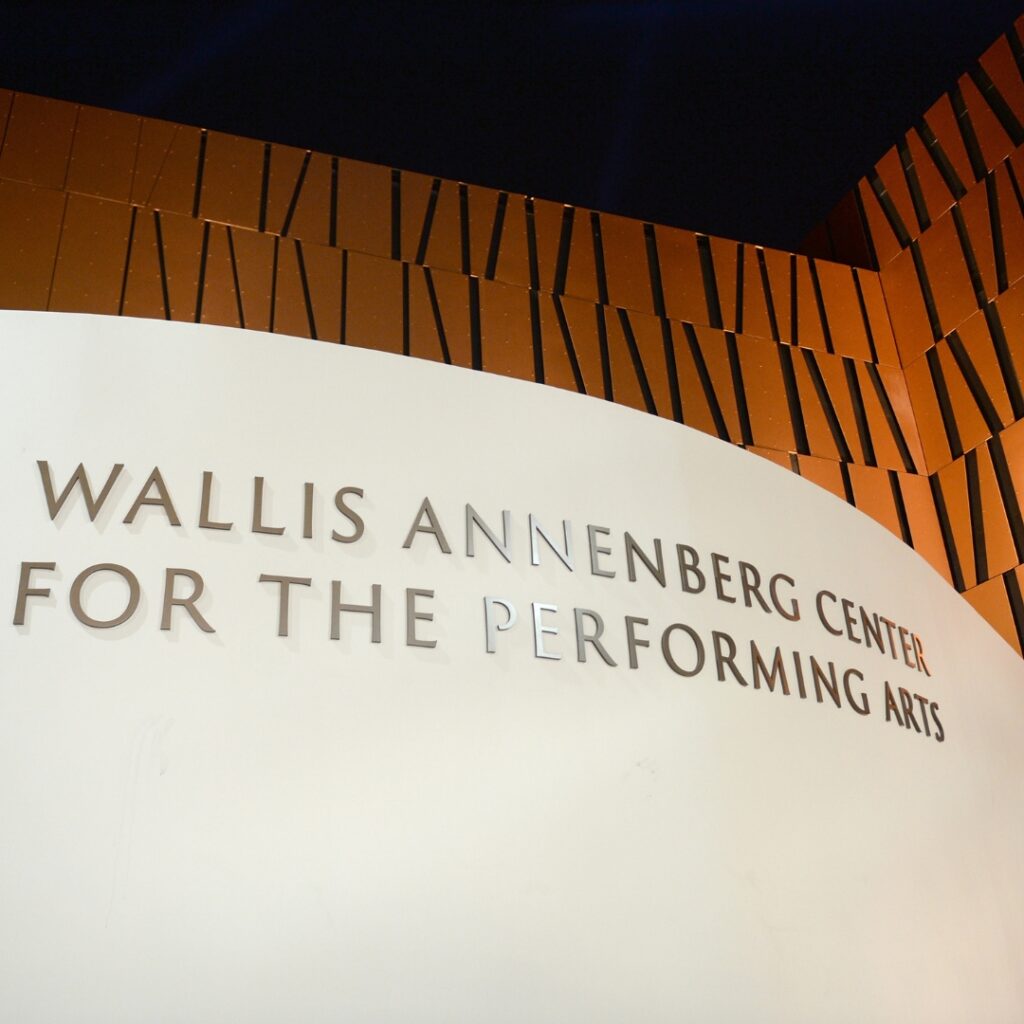
When Wallis Annenberg died on July 28, 2025, she had given her foundation 15 years of thoughtful planning for its future. She left behind not only a carefully curated history, but also very clear instructions—in Oliphant’s words, “explicit direction on the causes that mattered most to her and why.” Among them were the completion of the Annenberg Wildlife Crossing, continued support for the Wallis Annenberg Center for the Performing Arts, support for civic leadership and innovative adoption and education programs to advance animal welfare.

Oliphant credits Wallis Annenberg’s preparations for enabling her foundation “to move quickly and with purpose” after her death, making a “$10 million gift to causes closest to her heart.” The death of a donor, and the transition period that follows, can frequently result in confusion or consideration of a change in grantmaking priorities. But Annenberg had hard-wired her foundation to move forward in the direction she had chosen, communicated and followed in her lifetime.
“Without clear leadership, and intensive planning,” Oliphant concludes, “even the most well-intentioned legacies can drift or diminish. [Wallis Annenberg’s] answer was simple but powerful: make your intentions explicit, build the infrastructure to sustain them and invest early in defining the work that will carry them forward.”
Wallis Annenberg hoped the process of building her Legacy Foundation would set an example for other philanthropists. That is my hope as well. Many thanks to Aradhna Malhotra Oliphant for authoring this blog, and to CEP for publishing it.
Read the full blog here.
Earlham College Requests Use of Restricted Funds for Operating Deficit
Earlham College, a private liberal arts college in Richmond, Indiana, was founded by a group of Quakers in 1847. It is currently serving nearly 700 undergraduates, but has experienced a serious enrollment decline over the last decade. Like many private colleges of its size, its operating costs have surpassed its general revenue, and the college projects a $15 million deficit in its operating budget for the 2025-26 academic year and an up-to $40 million cash-flow deficit through 2029-30.
With its unrestricted funds falling short of those numbers, Earlham is requesting court approval to use restricted funds—specifically gifts made by Eli Lilly—on a one-time basis to address the operating deficit. Lilly, who had a strong interest in assisting religious colleges, made gifts to Earlham in 1969 and 1973, and directed additional funds to Earlham in his will. As of June 30, 2025, the market value of those gifts, some of which carry restrictions, was about $93 million.
Earlham’s court petition says a variety of factors have led to the current problem, listing a change in Earlham’s leadership, COVID-19, a 2023 industrial fire in Richmond and national demographic trends. With new leadership, the petition notes, “a broader recovery strategy is in place to restore financial health” and “return to prudent appropriations in future academic years.”
Philanthropy Roundtable’s 2024 publication, “Protecting Donor Intent: A 50-State Analysis of Legal Protections,” reports, “Indiana has adopted much of the UPMIFA (Uniform Prudent Management of Institutional Funds Act). However, Indiana breaks with the UPMIFA in a fundamental way. Unlike the UPMIFA, which requires gifts be managed ‘subject to the intent of a donor,’ Indiana law allows charities to merely ‘consider’ donor intent when managing gifts. … State law also authorizes charities to seek court approval to lift donor gift restrictions or void restrictions unilaterally if certain conditions are met.” Indiana’s attorney general is a party to this process.
The Roundtable’s publication also notes that in one higher education case involving Purdue University, “Indiana courts have applied the doctrine of deviation,” eliminating the restrictions on a donor’s financial aid gift … “reasoning it would be consistent with the donor’s ‘desired purpose’ for the gift because it would provide more students with financial assistance.”
As of this date, no hearings have been scheduled in the case.
Read more here.
