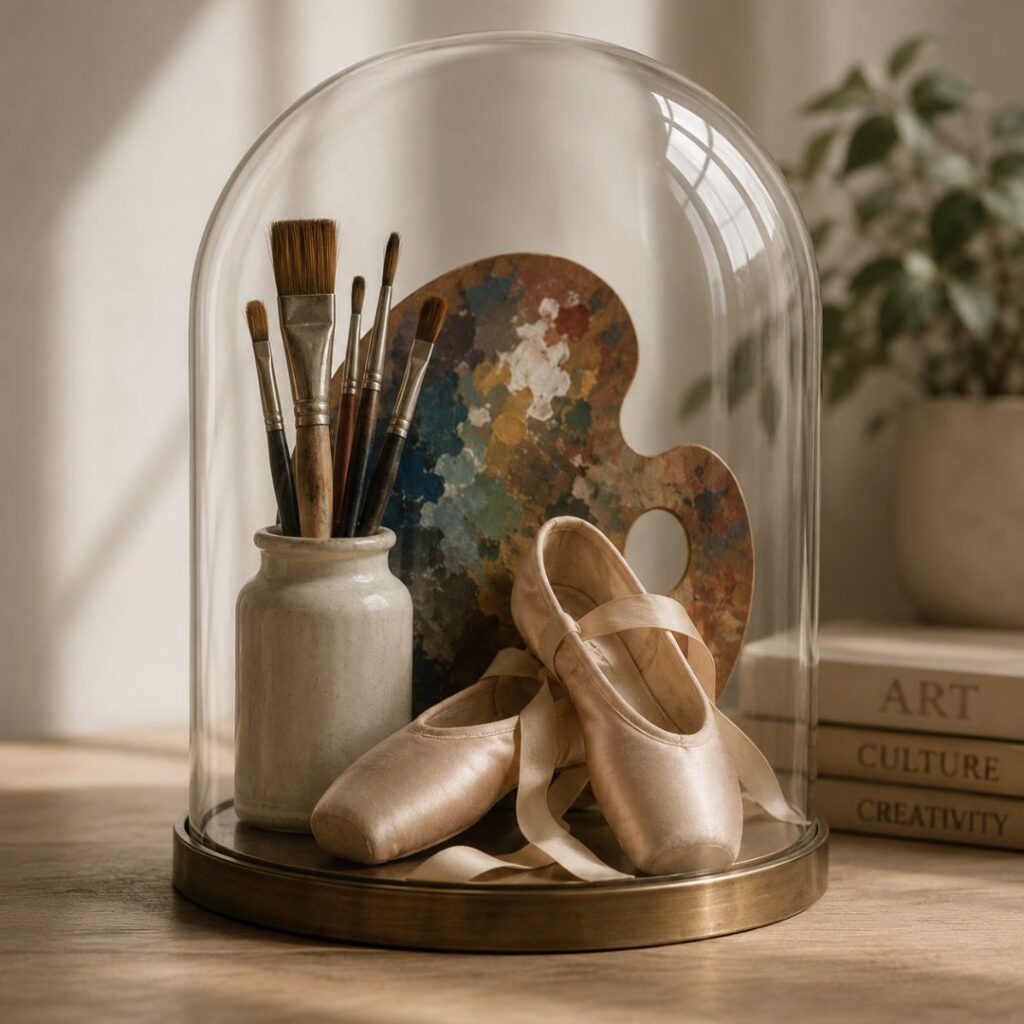
The First Amendment safeguards the right to privately support speech and expression through voluntary giving. Donor privacy and protection from coercion are essential to artistic independence, which in turn strengthens freedom of expression overall.
When artists are free to create, they can foster critical thinking and a diversity of perspectives. Private philanthropy has a powerful role providing that freedom. In this way, private philanthropy plays a vital role in a democratic society by encouraging independent thought and a genuine diversity of perspectives.
Few voices have articulated the importance of artistic independence more than Lincoln Jones, founder, director and choreographer of the American Contemporary Ballet. In recent years, Jones has become a prominent voice against the growing ideological pressures facing the arts. When he refused to align his nonprofit with political and ideological demands he believed distracted from its core artistic mission, American Contemporary Ballet paid a steep price by losing donors, board members, dancers and access to many grants due to their requirements.
Yet, the ballet endured thanks to new and remaining donors who were committed to artistic excellence rather than political conformity.
While American Contemporary Ballet is shut out of most arts funding, the audience doesn’t seem to care,” Jones said. “Our entire season last year was almost entirely sold out. It seems that art, independent ideology, is still in demand.”
The National Liberty Museum faced a similar challenge. Federal, state and foundation grant requirements pressured the museum to shift away from its core mission. In response, Dr. Alaine K. Arnott, its president and CEO, wrote:
“The National Liberty Museum stands at a crossroads, emblematic of the broader museum sector, where the preservation of a liberal democratic ethos is both our challenge and our mandate. In an age where ideological forces from all directions vie to reshape the narratives within our walls, we must steadfastly adhere to our mission: to instill in our visitors—especially the next generation—the principles of liberty, civics and the courage to entertain a plurality of ideas.”
As public funding has increasingly become tied to political or ideological priorities, many cultural institutions have turned to private philanthropy to help preserve their independence and remain focused on their core missions.
A leading example is the Ahmanson Foundation, led by Bill Ahmanson, one of Los Angeles’s most significant outspoken supporters of the arts. The foundation has invested extensively in museums, cultural organizations and arts education throughout the region. Ahmanson has emphasized Los Angeles’s unique role as a center for emerging artists and world-class museums while underscoring art’s power to transform individual lives.
“One of my favorite stories comes from an LAPD commander, who said, ‘We’ve never arrested a child with a violin case,’” said Ahmanson. “The meaning of that story is when kids are involved in the arts, they’re less likely to choose alternative paths.”
This approach reflects broader national effort. Independent organizations are investing in artists, filmmakers, and scholars to ensure that creative expression and free inquiry can flourish outside the constraints of political orthodoxy.
Two standout examples are the Moving Picture Institute and the American Academy of Sciences and Letters.
Moving Picture Institute offers grants, mentorship and professional development to emerging filmmakers who champion freedom, enabling over 100 filmmakers to develop ambitious projects and reach wider audiences. Similarly, American Academy fosters open exchange across academia and society through scholarly events and platforms for research in the humanities, social sciences and beyond.
Through support for scholars, recognition of achievement and encouragement of free inquiry, these institutions contribute to a culture that values creativity, excellence and the free exchange of ideas.
The arts thrive on diversity of thought and robust freedom of expression. Donors must be able to support artistic, cultural and intellectual institutions without fear of public scrutiny or retaliation. This privacy and freedom ensures a wide range of voices, perspectives and artistic traditions can continue to find support, even when they fall outside prevailing cultural trends.
Aziza Diallo is a rising sophomore at Wellesley College and a Daniels Scholar Junior Fellow at Philanthropy Roundtable. Founded by cable pioneer Bill Daniels, the Daniels Fund supports individuals and communities across Colorado, New Mexico, Utah and Wyoming through charitable grants and scholarships that create life-changing opportunities, including the Roundtable’s Junior Fellowship program.
