For as long as I can remember, my family has spent holidays in Koosharem, Utah, a town of just 300 people. It is where I learned to love the outdoors and where I feel most connected to my family heritage. Six generations ago, my ancestors settled nearby Central Valley, Utah and established a home in the desert sagebrush for their descendants.
A few years ago, my great aunt and great uncle purchased property high on Monroe Mountain. My relatives built several small cabins, and they made a second home in the wilds of Utah. It has become a place of peace, happiness and play, featuring a beautiful mountain meadow nestled among a forest of spruce trees. That changed on July 13, 2025.
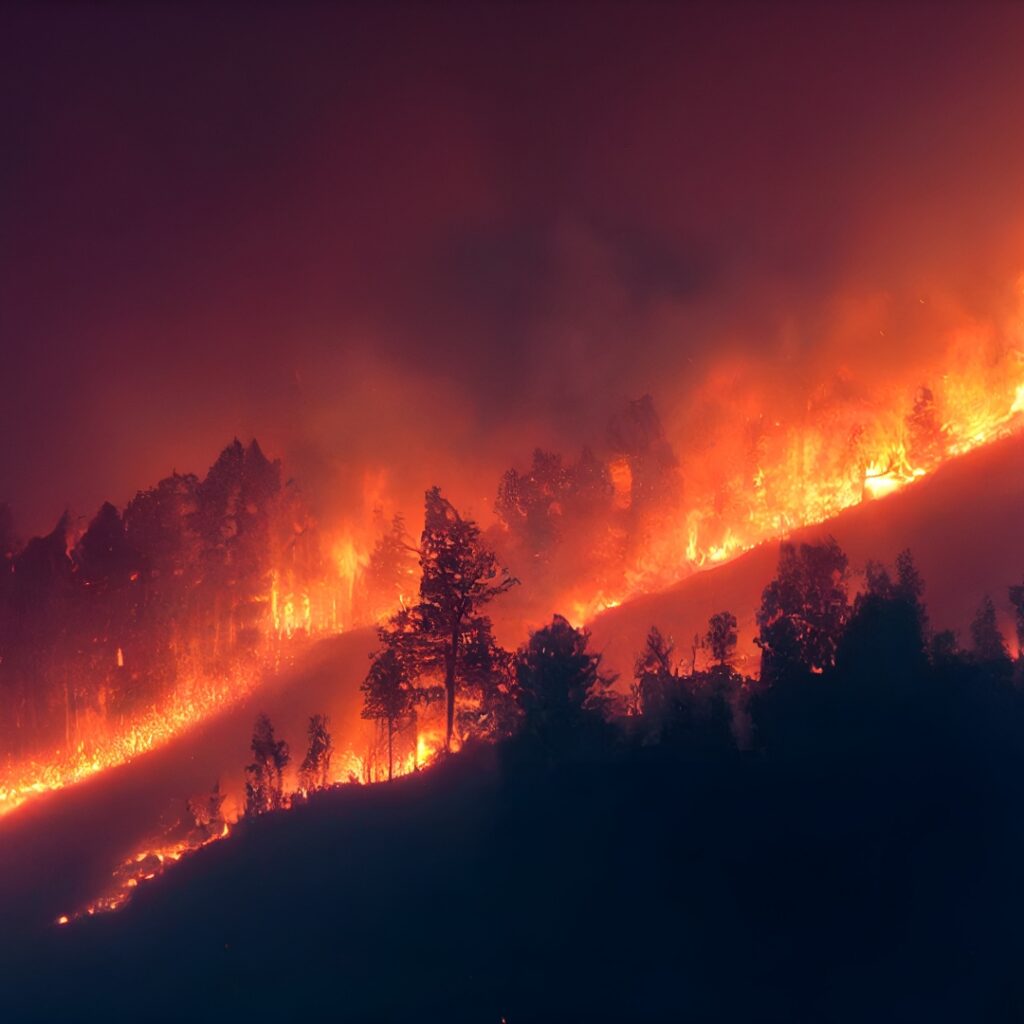
An unknown Off-Highway Vehicle (OHV) ignited the dry brush covering Monroe Mountain, and after months of extreme heat and drought, the fire spread with devastating speed. Over the next 54 days, the Monroe Canyon Fire consumed 115 square miles of forest, threatening nearby communities and Pando the Quaking Aspen, one of the world’s largest living organisms.
My relatives did everything they could to protect their property, running sprinklers continuously in hopes of saving the cabins and surrounding forest. They lost one cabin and half of their trees. The meadow at the center of the property prevented the fire from spreading to all the trees, but a great deal of damage had been done.
A lot remains to be done on the property to restore the land to its original state, where deer and other wildlife will patronize it, but my great uncle has already begun making a vigorous effort by clearing trees and debris. This spring, he arrived with 1,200 Engelmann spruce seedlings and invited everyone to help replant the land.
Together, spanning multiple generations, we spent Memorial Day weekend planting the next forest. Though it was heartbreaking to see the blackened mountain side, we felt united knowing we were helping restore a place that means so much to our family.
But our family’s property represents only a tiny fraction of the more than 73,000 acres burned by the Monroe Canyon Fire. Even with dedicated volunteers, restoring Monroe Mountain will require years of work, millions of dollars and countless hours of labor. The Monroe Canyon Fire alone cost more than $101 million to contain.
The fire taught me that recovery is about more than returning to where a fire burned—it means regrowing an entire forest. If it takes a village to raise a child, it takes all of us to raise thousands of trees. Reclamation of ravaged land requires money, volunteers, technical expertise, organizations that can coordinate resources and most of all, a long-term commitment to its success. Pulling together all these resources hinges on philanthropy and nonprofits.
The Mule Deer Foundation has been at the forefront of Monroe Canyon Fire restoration efforts, contributing $2.6 million to the Utah Watershed Restoration Initiative for immediate watershed recovery. The organization also launched a public fundraising campaign, matching every dollar donated and helping raise over $81,000. It is generous foundations and organizations like this that have helped rescue communities after natural disasters strike across the country.
The Monroe Canyon Fire is far from unique. Across the country, philanthropic organizations are stepping in to help communities recover from all too frequent natural disasters.
Recent flooding in the Texas Hill Country, for example, has devastated homes, farms and businesses throughout south-central Texas. According to the Federal Emergency Management Agency (FEMA), just one inch of floodwater in a 2,500 square-foot home can cause approximately $26,000 in damage.
For many families, the cost of rebuilding quickly exceeds what insurance or personal savings can cover. While volunteer organizations provide invaluable labor, cleanup efforts also depend on charitable giving to fund equipment, building materials and other resources.
The Community Foundation of the Texas Hill Country, which stewards more than $100 million in charitable assets across 10 counties, established the Texas Hill Country Flood Relief Fund to support recovery efforts.
Because of their longstanding relationships and deep understanding of local needs, the foundation was uniquely positioned to mobilize resources almost immediately. National organizations have also played a critical role. The American Red Cross has provided emergency shelter, food, financial assistance and other support to families whose homes were damaged by the floods.
Together, these organizations illustrate an important reality: disaster recovery depends not only on first responders and government agencies, but also on the charitable sector. Long after floodwater recedes or wildfires are extinguished, philanthropy helps communities rebuild their homes, restore their livelihoods and recover for the future.
Private giving offers a unique advantage in disaster recovery. Foundations, community funds, charities and private donations can mobilize resources quickly and direct them where they are needed most. Because charitable organizations are deeply rooted in the communities they serve, they are often able to respond with flexibility, meeting local needs that evolve long after the initial emergency has passed. Donors, in turn, are also free to give through both emergency relief and long-term recovery and support channels.
That long-term commitment matters. When my family replanted trees on Monroe Mountain, the fire had been extinguished for several months. The emergency response had concluded, but the formidable work of restoration was just beginning. Whether recovering from wildfire, flooding or another natural disaster, communities face years of watershed restoration, habitat recovery, rebuilding homes, supporting mental health and restoring local communities.
Philanthropy helps sustain those efforts long after national attention has moved elsewhere. Recovery is a community effort. Volunteers donate their time. Neighbors help neighbors. Donors support organizations they trust, and charitable organizations connect that generosity with the people and communities that need it most.
Natural disasters are devastating, but they also reveal the strength of civil society. From a family planting spruce seedlings on a Utah mountainside to community foundations funding recovery in Texas, philanthropy empowers people to rebuild not only what was lost, but also the communities they call home.
Kylan Olson is a rising junior at Utah State University and a Daniels Scholar Junior Fellow at Philanthropy Roundtable. Founded by cable pioneer Bill Daniels, the Daniels Fund supports individuals and communities across Colorado, New Mexico, Utah and Wyoming through charitable grants and scholarships that create life-changing opportunities, including the Roundtable’s Junior Fellowship program.
