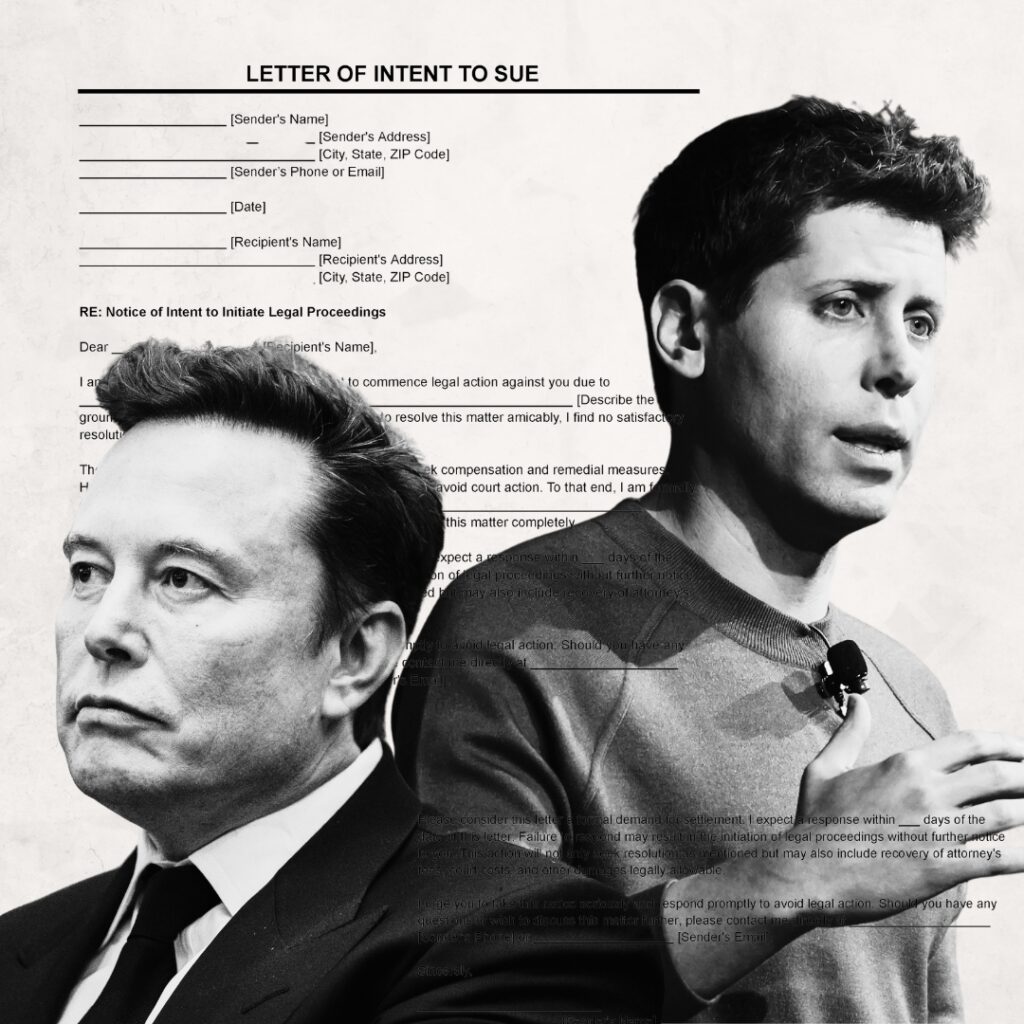
The celebrity civil trial between tech giants Elon Musk and Sam Altman captured the media’s attention as a fight for the future of AI. But the core issue at stake was actually the future of donor intent in the age of AI. The questions that were raised remain unanswered after the jury unanimously ruled against Musk on a technicality—the statute of limitations had passed.
Musk and Altman founded OpenAI (think ChatGPT) together in 2015 as a 501(c)(3) nonprofit organization. Its mission was “to advance digital intelligence in the way that is most likely to benefit humanity as a whole, unconstrained by a need to generate financial return.” That meant OpenAI would develop AI safely, responsibly and as open-source technology that was free to the public.
Musk donated a total of $44 million over the next five years to support it. Later, under Altman’s leadership, OpenAI began to abandon that nonprofit mission as it morphed into a for-profit corporation. Musk now says he was duped, and all of Altman’s altruistic rhetoric was just “hot-air philanthropy—the hook for Altman’s long con.”
In 2019, OpenAI began establishing for-profit subsidiaries. That’s not uncommon for nonprofits to do. But it’s typically done to generate revenue to support the nonprofit mission by blocking unrelated business income that would otherwise be taxable to the nonprofit. What made this case different was the use of corporate subsidiaries to generate profits for outside investors instead.
Then, OpenAI began to hollow out its nonprofit organization as it shifted its AI technology and resources to the new companies. Finally, it ended its commitment to open-source development and even signed a major license agreement with Microsoft. OpenAI’s value soared above $700 billion.
All this left Musk frustrated. If he had invested $44 million into a for-profit startup, he would have owned stock and seen an impressive return on investment. Instead, he donated the money to what was supposedly a nonprofit under the belief it would continue its original nonprofit mission.
In his complaint to the court, he said “in a series of express written correspondence in 2015, Altman and Musk entered into a valid, enforceable, and binding agreement to co-found a nonprofit entity.” Breach of that “founding agreement” made this a donor intent case, but with a twist.
Donor intent cases usually involve a written gift agreement. The donor expresses what the donation is to be used for, and the recipient agrees to honor that intent. However, a gift agreement is not always treated as a legally binding contract, and can be difficult to enforce. Even worse, donors don’t always have legal standing to go to court for relief to enforce their intent, which the Roundtable has addressed by introducing a model bill in several states to give donors that legal pathway.
Musk’s situation was different, however. He claimed to have established a “founding agreement,” a legally binding contract with Altman over the creation of OpenAI, which included Musk’s commitment to provide financial support. If true, that would be a rare example of a contract among individuals to form a nonprofit, rather than a gift agreement between a donor and a nonprofit being used to establish donor intent and bind the nonprofit’s use of the funds.
In 2024, Musk filed a lawsuit against OpenAI and its leadership over breach of contract, fraud and various other charges. The trial began on April 28, 2026 and went on for three weeks. Musk wanted $150 billion in damages.
In his opening testimony, Musk said the case will ultimately determine the future of philanthropy in America.
“If the verdict comes out that it’s okay to loot a charity,” Musk said, “charitable giving in America will be destroyed.”
The jury’s decision that Musk’s complaint was too late and was barred by the statute of limitations left the donor intent issue unresolved. Also unresolved were two other important questions Philanthropy Roundtable was watching closely that could have a major long-term impact on donor behavior.
First, did Musk successfully find a way to use an implied contract among individuals, rather than a gift agreement, to establish donor intent? That could create a new pathway for other donors to negotiate large charitable donations with other institutions. Second, OpenAI created a new business model where a nonprofit is in control of large for-profit companies, capturing the advantages of both types of corporations. How will donors respond to that model over the long term?
Musk feels he was duped into making a donation that OpenAI basically treated as an investment without having to provide anything in return. Blending business and charity in this way is new. Did Musk make a gift to a for-profit company or an investment in a nonprofit? That’s something other philanthropists will be considering in the back of their minds.
Unfortunately, the trial is over and we still don’t have any answers, but Musk’s lawsuit against OpenAI made these questions and the risks associated with them impossible to ignore.
