Civics PlaybookCenter for American Civics
- Mission: The Center for American Civics is a nonpartisan outreach center under the School of Civic and Economic Thought and Leadership at ASU that supports and strengthens K -12 students’ knowledge of American civics and civil discourse skills.
- Geographic Focus: Arizona, and remote curricular resources available anywhere in the U.S.
- Audience: K-12 teachers, K-12 students (including homeschoolers), the public
- Budget: $500,000
- Focus Areas and Core Competencies:
- American constitutionalism
- Civics
Equipping the Next Generation in American Constitutionalism
Impact: Center for American Civics
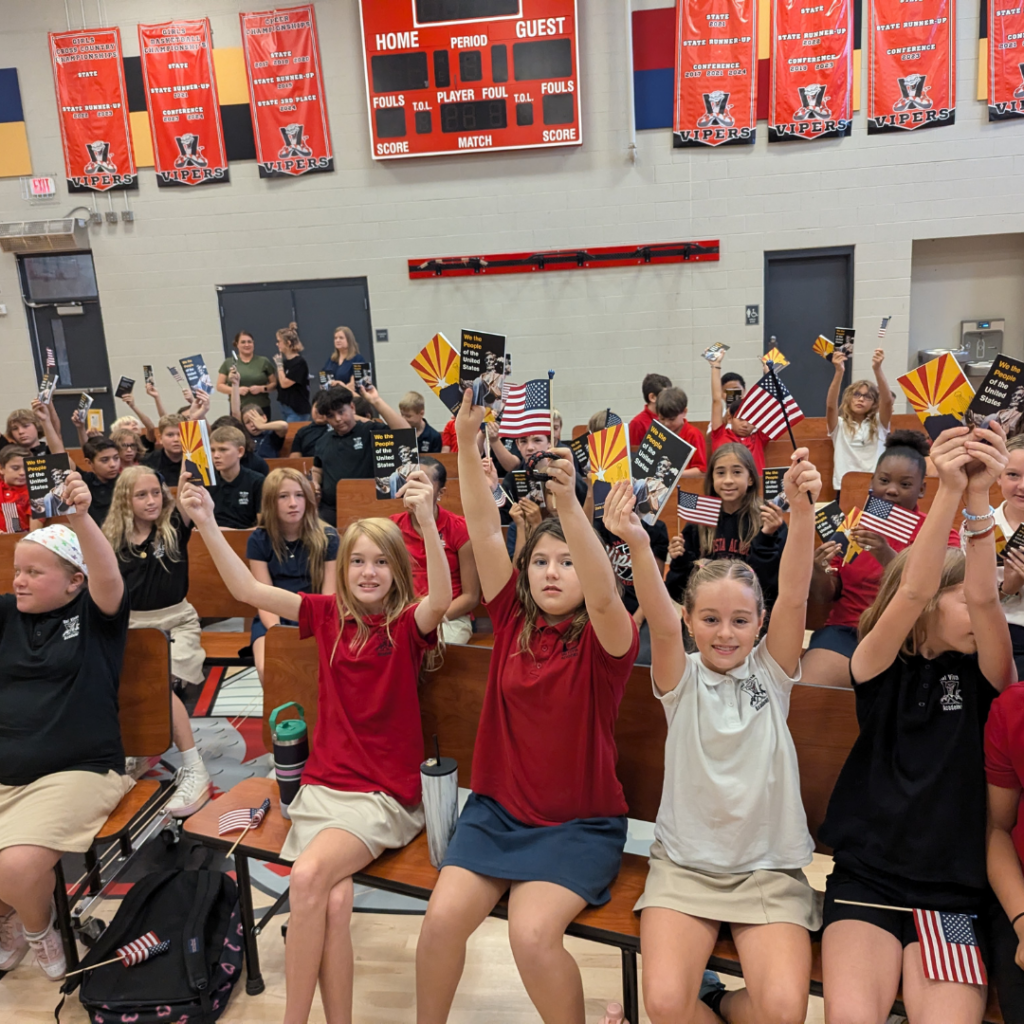
In the last five years, the Center for American Civics has developed a suite of more than 500 lessons for learners at all levels on American Civics teaching constitutional principles and history to hundreds of teachers, elementary and high school students across Arizona and the nation.
A Conversation with Sean Beienburg, Interim Director of the Center for American Civics and Associate Professor, School of Economic Thought and Leadership
Q: What is the mission/work of your organization? What problem(s) in civics education is your nonprofit working to solve?
Our mission is to provide resources and training in American civics, especially related to American constitutionalism, to teachers, students and other learners. Because we are housed within the School of Civic and Economic Thought and Leadership (SCETL) at Arizona State University, we have access to one of the strongest contingents of faculty specializing in American constitutionalism in the country, joined to expert former middle and high school teachers with decades of classroom experience.
We seek to fulfill our mission through four primary approaches:
Empowering Educators: Our teacher development workshops provide K-12 educators, especially in Arizona, with immersive training in American constitutionalism and civics. These also include discussion of comparative political systems, bringing in speakers or deploying resources from Victims of Communism to help students understand the difference between that ideology and America’s free institutions.
Civic Literacy Curriculum (CLC): A free resource offering over 500 lessons for teaching and learning American civics for kindergarten through adult learners. The CLC provides students with a deep knowledge of U.S. history and American civics and includes the historical background, annotated primary texts, discussion prompts and other tools to make it easy for teachers and students.
Created by practicing educators from our Civic Literacy Cohort, this curriculum focuses on civic knowledge, how the Constitution’s structure operates and the founders’ ideals underlying our system of government. Organized around but going far beyond the U.S. Citizenship Test, it is available as both a full curriculum and as a series of abridged study guides.
Veterans Inspiring Patriotism (VIP): A network of American military veterans visits schools in their local area to offer students a unique and inspiring perspective on service and patriotism. They provide lessons or presentations on a variety of topics including American civics and constitutionalism, American history, the American military and what life is like in the armed services.
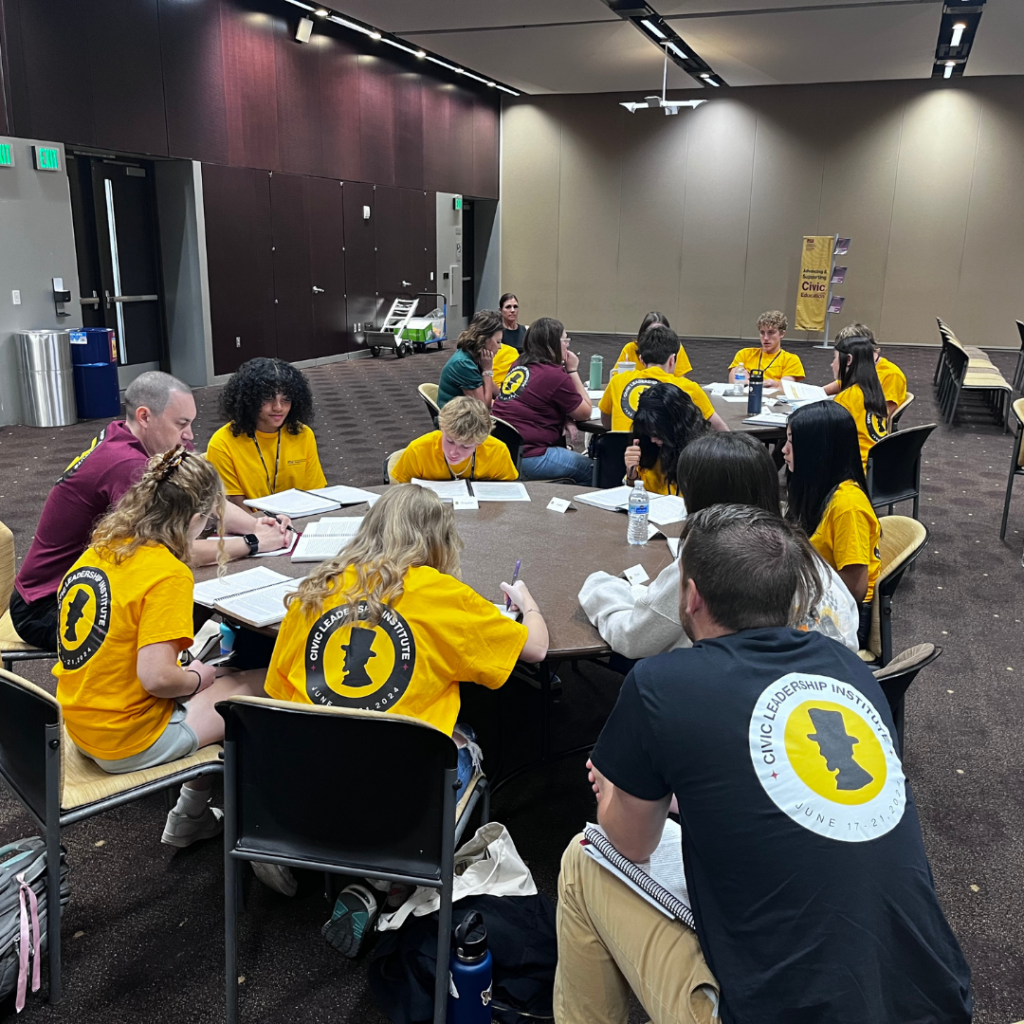
Civic Leadership Institute: A summer program teaching promising high-school students American civics and history, with topics such as the Bill of Rights, Abraham Lincoln and Frederick Douglass and more.
Additionally, we are developing materials to teach Arizona’s constitutional tradition as a part of our federalist constitutional order, a project assigned by the Arizona legislature to SCETL to address the scarcity of these resources.
Q: Does your organization have any upcoming programs or events planned in recognition of the 250th anniversary of the United States?
Yes, we are developing a new podcast series, “Civics in a Year,” that will translate the content of our Civic Literacy Curriculum, which conveys a conceptual understanding of the content on the U.S. Citizenship test material, as well as other foundational civic knowledge. This series will primarily feature faculty affiliated with our Center (and school/department) as well as possibly other departments focusing on civic thought.
Q: How do you describe the big goals your organization is working to achieve? How do you measure impact?
A key challenge we identified is that many civics and history teachers may not have received comprehensive instruction in American constitutional institutions, history and founding principles during college. Our Center’s goal is to ensure that teachers in Arizona (and elsewhere) have the training and materials to teach the next generation of students the constitutional principles on which our free republic is built.
We measure impact through website hits to our Civic Literacy Curriculum, the number of teachers who signed up for the teacher curriculum keys and supplemental materials and the attendance numbers for our trainings and workshops.
More recently, we’ve implemented exit surveys for the teachers who complete our training to measure how knowledgeable and appreciative the teachers are of the American constitutional order after the training (e.g. what they now know about federalism and whether they view it as a vestigial or essential part of our constitutional order).
For example, after a recent civics bootcamp that we organized for over 40 current students of several Arizona teachers colleges (and recent graduates thereof), our programming led to 100% of respondents registering support for federalism as a crucial constitutional principle, with many comments noting—and sometimes lamenting—that they had little to no understanding of it beforehand.
Likewise, whereas surveys from organizations such as FIRE have shown fewer than 40% of respondents believing the First Amendment should protect “hate speech,” 80% of our attendees agreed by the end of the bootcamp that it is vital to protect even offensive “hate” speech.
Such results have proven to be very useful to us in demonstrating the overall success and effectiveness of our materials and instruction and provides valuable insights into areas where we can further strengthen our programming, enabling us to continuously refine our approach over time.
Q: What are some of the biggest challenges your organization has experienced working to accomplish its mission? How did your organization overcome those challenges?
The biggest challenges our organization has faced have primarily been financial. Examples include a revocation of a very large grant at the last minute and cuts to ASU during a poor economic climate filtering down through SCETL. Occasionally, we have had to make the difficult decision to cut programming. But in most cases the industrious Center staff worked with our pre-existing relationships with private partners and cultivated some new ones to either shift funding to essential projects or secure additional support.
Q: What are your organization’s biggest needs? How can philanthropists help your organization achieve its goals?
We are a lean team currently comprising two full-time former civics teachers, one shared department business administrator and a supervising faculty member, with other faculty brought on for specific projects. Because we lack a dedicated revenue stream, our team spends considerable time on development and fundraising rather than the content and pedagogical expertise that is their comparative advantage. Philanthropic support for our Center would allow our experts to concentrate on their highest-impact work.
Q: Beyond your organization, where should philanthropists who care about advancing civic knowledge and education invest their charitable dollars?
Beyond our colleagues within the School of Civic and Economic Thought and Leadership more broadly, we have collaborated with the Goldwater Institute’s Van Sittert Center for Constitutional Advocacy, as well as the Jack Miller Center. Both those organizations share our commitment to fostering civic literacy, with an emphasis on American constitutionalism and our country’s founding principles and are excellent groups addressing the decline in civic knowledge and for philanthropists to support.
Q: If you received an increase in funding, how would your organization expand its programming?
An increase in funding would allow us to develop and tailor an open-access textbook that utilizes the scholarly expertise of our faculty to ensure it’s not only appropriate for high school use but is also meeting the diverse state standards and standardized test requirements across the nation. This would initially entail adding more lessons to the Civic Literacy Curriculum, and then as a second step, connecting them to those standards and requirements.
The second priority would be restoring our high school civics camp, which we had to pause this year due to budgetary constraints, and its continuation remains uncertain.
We would also like to develop additional training modules, expanding beyond the four we currently offer on American constitutionalism, history and comparative systems.

Contact Our Team
Contact the Roundtable’s Programs team to learn more about this investment opportunity.