Civics PlaybookInstitute of American Civics
- Mission: To be the nation’s premier institute for the development and promotion of civic knowledge and civic virtues in students and citizens.
- Geographic Focus: Tennessee
- Audience: College students, K-12 teachers and students and the public
- Budget: $4 million
- Focus Areas and Core Competencies:
- American constitutionalism
- College education
- Teacher training
- Public programming

Cultivating Informed Citizens, Fostering Civil Discourse and Strengthening a Flourishing Republic
Impact: Institute of American Civics
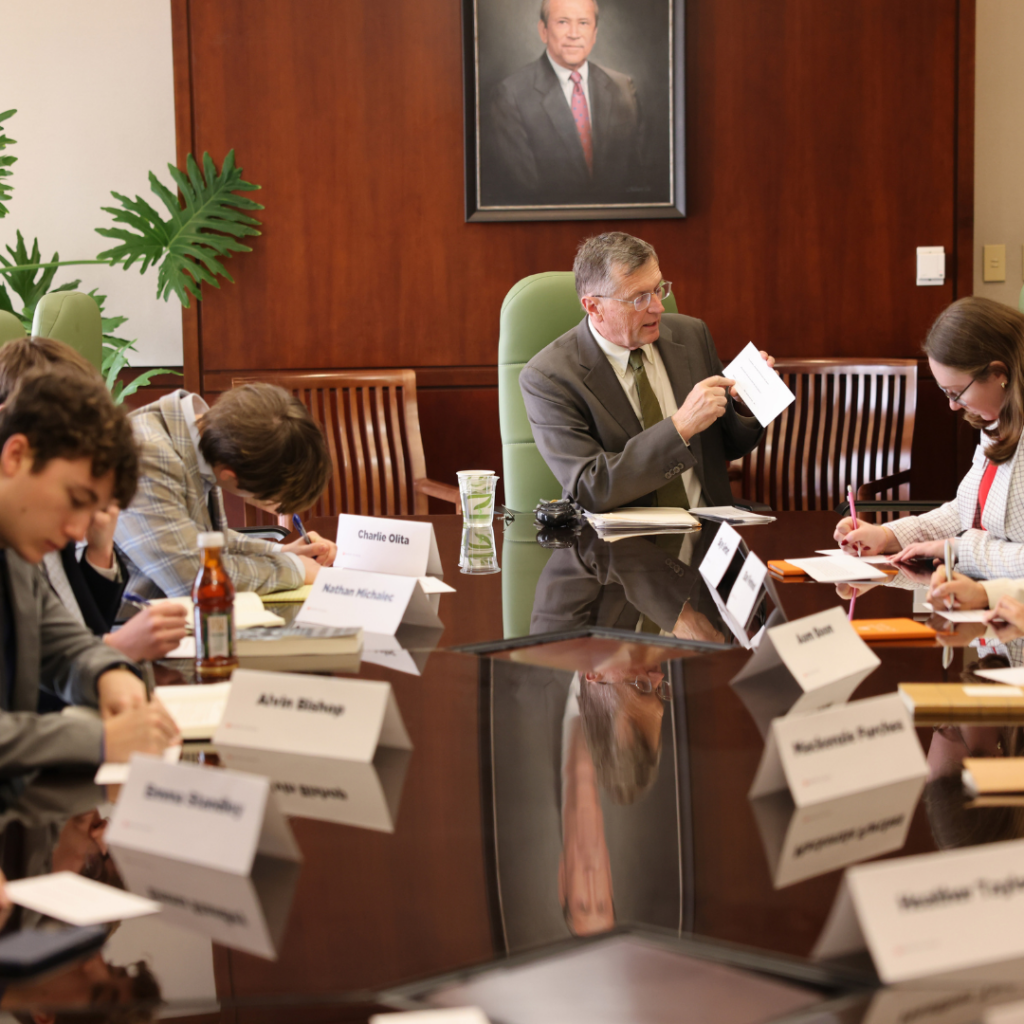
Based at the University of Tennessee, Knoxville, the Institute of American Civics is strengthening civic understanding and engagement across the state. In just the past year, it taught 425 college students, trained 630-plus K–12 teachers, reached over 2,500 K–12 students and launched programs preparing the next generation of civic leaders—from classrooms to communities.
A Conversation with Joshua Dunn, Executive Director at the Institute of American Civics
Q: What is the mission/work of your organization? What problem(s) in civics education is your nonprofit working to solve?
The Institute of American Civics (IAC) seeks to improve civic knowledge, promote civil discourse and support intellectual pluralism. A constitutional republic depends on an informed citizenry that is willing to engage in reasoned deliberation with citizens holding different views from theirs. Colleges and universities have manifestly failed to prepare the next generation of civic leaders.
Through courses, student programs and public events the IAC seeks to deepen students’ understanding of America’s constitutional tradition, model and teach the civic virtues necessary for a system grounded in freedom and limited government to flourish and learn how to engage in constructive deliberation with fellow citizens. The IAC also works to accomplish this mission across higher education in Tennessee, in K-12 schools and the general public.
Q: Does your organization have any upcoming programs or events planned in recognition of the 250th anniversary of the United States?
All of our upcoming public programming will be organized around honoring the upcoming 250th anniversary of the United States. In the spring of 2026, we will host our second Undergraduate Civics Symposium, which will bring together an anticipated 150 to 200 students from 15 to 20 colleges and universities across Tennessee for a one-day conference to examine the principles and legacy of the Declaration of Independence.
In the summer of 2026, we will extend our statewide reach to K-12 educators through dedicated Civics Academies on the Declaration held in each of Tennessee’s three grand divisions. We anticipate 100 to 125 teachers at each academy to attend, and we will equip them to inspire their students with a robust understanding of the Declaration.
We will also be conducting several Constitutional Conversations for citizens around Tennessee during 2026, with each event having 50 to 60 members of the general public in attendance. To complement these discussions, we will also host a series of lectures on campus featuring prominent speakers who will explore the meaning and importance of the Declaration. For instance, renowned scholar Allen Guelzo will speak on the role of the Declaration in Lincoln’s political thought.
Q: How do you describe the big goals your organization is working to achieve? How do you measure impact?
Our first big goal is to improve civic knowledge and teaching throughout the University of Tennessee system and other public and private Tennessee institutions of higher education by engaging undergraduates through courses, public programs like our Undergraduate Civics Symposium and faculty workshops. We are also committed to enhancing the knowledge and instructional abilities of K-12 civics, social studies and American history teachers statewide.
Q: What are your organization’s biggest needs? How can philanthropists help your organization achieve its goals?
First, supporting the scholarships and fellowships that IAC offers to top-tier students pursuing studies in civics. These investments reduce financial barriers which encourage more students to engage deeply with civic education.
In addition, establishing endowed chairs and professorships will attract and retain distinguished faculty dedicated to civic education, significantly strengthening both the national profile of the Institute and the broader civic thought movement.
Q: Beyond your organization, where should philanthropists who care about advancing civic knowledge and education invest their charitable dollars?
The establishment of the civics institute model within higher education represents one of the most significant reforms in preparing an informed citizenry, making support for our sister organizations a vital priority. While these institutions receive state funding, private philanthropic investment is critical for enabling many activities such as offering student scholarships and fellowships, increasing research support for faculty and endowing professorships. Furthermore, private donations help solidify support for these initiatives both on campus among university administrators and externally among public officials, which will strengthen the civic thought movement across the country.
Q: If you received an increase in funding, how would your organization expand its programming?
A top priority is to substantially grow our Tocqueville Scholars Program, a privately funded, signature initiative that currently accepts 20 highly engaged students per class. With increased funding, we could triple the number of students for each entering class, thereby tripling the size of the program. We would also be able to fund student scholarships and dedicate time for faculty teaching in the program. Students in the Tocqueville Program participate in a reading group, take one class each semester from the institute and attend institute lectures, conferences and seminars.
Increased funding would also allow us to significantly bolster our commitment to faculty research. The academic credibility and long-term influence of civics institutes are inherently tied to the quality and volume of scholarship generated by our faculty. Additional resources would help us continue attracting and retaining scholars with distinguished research records, while also enabling them to produce even more groundbreaking and impactful research. This investment in scholarship is crucial for advancing civic knowledge, enriching public discourse and solidifying the Institute’s position as a national leader in civic thought.

Contact Our Team
Contact the Roundtable’s Programs team to learn more about this investment opportunity.