Mental Health PlaybookIntentional Sports
- Geographic: Chicago, Illinois, and national
- Mission: To provide meaningful opportunities in sports and wellness to resource-limited communities through programming rooted in excellence, respect and service.
- People Served: Youth and families with limited access to resources
- Operating Budget: $3 million
- Focus Areas and Core Competencies:
- To deliver transformative sports and wellness programs that foster healthy lifestyles, character development and safe spaces for Chicago’s youth.
- To sustain a vibrant sports facility available to all community members and professional athletes.

Impact Statement
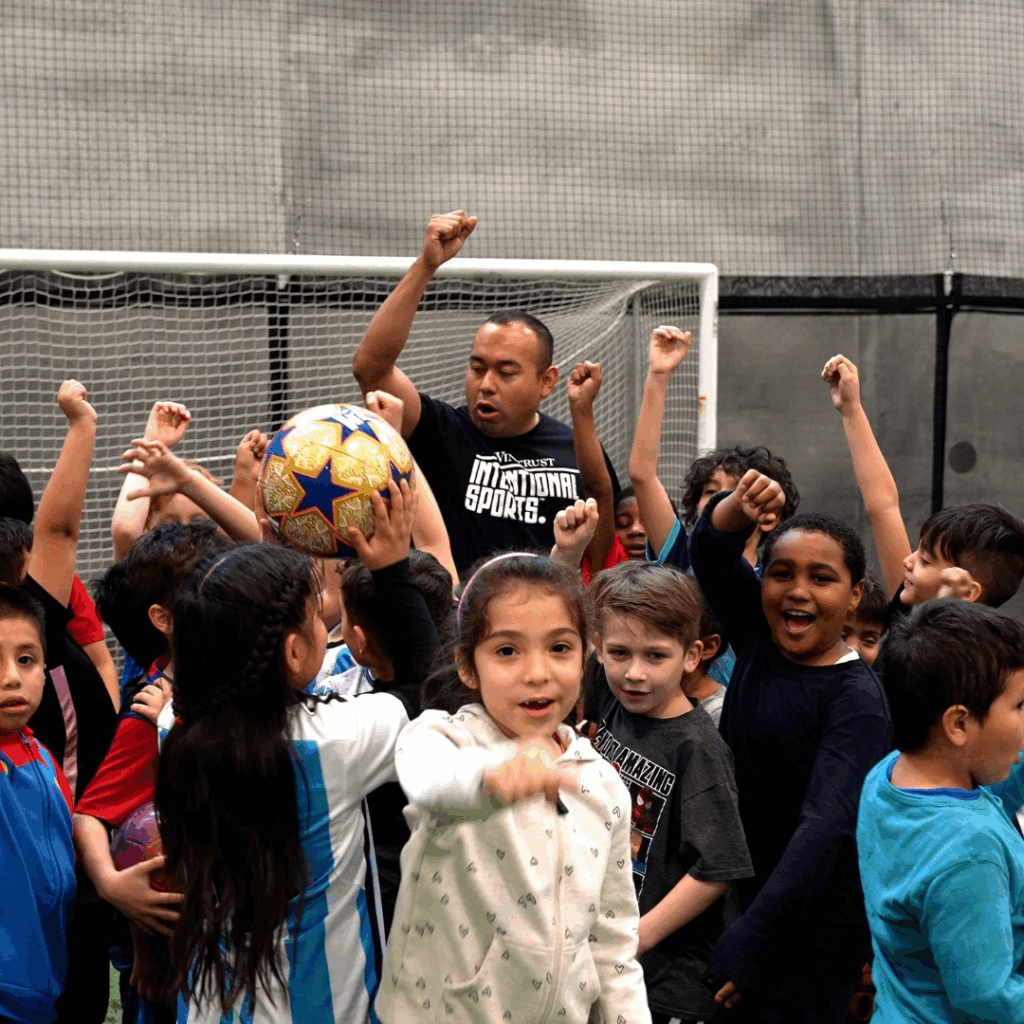
By delivering and hosting more than 45 sports and wellness programs each week, Intentional Sports engages over 2,500 Chicago youth and has contributed to a 50% reduction in youth gun victimization within a half mile of its campus.
A Conversation with Austin Carr, President of Intentional Sports
Q: What is the mission of your organization? What specific areas related to mental health challenges is your nonprofit working to solve?
Intentional Sports is a nonprofit organization dedicated to empowering Chicago’s youth through the proven power of sports. Grounded in the framework of Sports-Based Youth Development (SBYD), our mission is to deliver programs that not only elevate athletic ability but also build life skills, resilience and confidence to help young people thrive both on and off the field.
The Aspen Institute’s Project Play has highlighted how well-designed youth sports programs create protective factors against stress, anxiety and trauma while strengthening social bonds and community pride. Likewise, research published in the Journal of Youth Development affirms that SBYD initiatives enhance self-regulation, leadership skills and psychosocial health, offering youth pathways to long-term success. At Intentional Sports, these findings come alive every day in one of Chicago’s historically most violent neighborhoods.
Since opening our state-of-the-art facility in February 2023, we have hosted or directly run more than 45 weekly sports and wellness activities, engaging 2,500 youth per week. These programs provide the structure, mentorship and belonging at the heart of SBYD, offering young people healthy pathways that reduce the risks associated with unstructured time and exposure to violence. Importantly, our coaches integrate character development lessons into their weekly programming, drawing out virtues such as perseverance, respect and teamwork—qualities that research shows are essential for mental resilience and social health.
The reason this work matters is clear. For youth, sports are more than games; they are a proven pathway to stronger mental health, lower risks of depression and higher resilience, as confirmed by Project Play and other SBYD research. For families, affordable and structured programming reduces stress, fosters healthier dynamics at home and provides safe spaces for growth.
What distinguishes SBYD from traditional mental health interventions is its ability to integrate healing and resilience-building into activities that young people already love and value. While counseling and clinical services remain vital, they are often underutilized in communities where stigma or lack of access creates barriers.
Sports naturally attract participation and provide an accessible, non-stigmatizing context for growth. Through competition, teamwork and mentorship, youth learn to regulate emotions, recover from setbacks and practice resilience in real time. Unlike short-term interventions, SBYD fosters long-term developmental benefits by weaving mental health skill-building directly into daily life and peer culture. This unique combination of joy, structure and empowerment makes SBYD not just complementary to other methods, but in many cases more effective at reaching and sustaining engagement with at-risk youth.
Q: How do you describe the big goals your organization is working to achieve? How do you measure impact?
Our big goals are ambitious: to see North Austin become one of Chicago’s safest neighborhoods, to scale our model nationally and to watch the youth we serve today grow into the leaders of tomorrow. Since opening our campus in February 2023, we have already seen youth gun victimization drop by 50% within a half-mile radius, according to spring 2025 Chicago Police Department data.
While this outcome is a powerful first step, we envision even more: a future where the violence rate within a one-mile radius of our campus resembles that of the safest 20% of neighborhoods in Chicago. If it can work here, in one of Chicago’s most challenged neighborhoods, it can work in Baltimore, Detroit, Philadelphia or anywhere that children need both opportunity and hope.
Our second major goal is therefore to become a multi-site, multi-city and multi-state initiative, exporting this blueprint to other urban centers and scaling the impact of SBYD nationwide.
Our third goal is not simply to help kids through adolescence, but to set them on a pathway to adulthood where they can become role models, community leaders and perhaps even future directors of Intentional Sports itself.
To ensure these goals are not just aspirational but actionable, we measure impact through
violence statistics, participation and first time engagement and long-term outcomes. Together, these three pillars give us a robust way to measure not just short-term impact but systemic change. Intentional Sports is more than a sports facility—it is a catalyst for individual resilience, community safety and economic revitalization.
Q: What are some of the biggest challenges the organization has experienced working to accomplish its mission? How did your organization overcome those challenges?
Perhaps the most delicate challenge was community adoption and reputation. It is one thing to say that you serve the community; it is another to demonstrate that the community truly belongs in your space. Early on, some residents viewed our state-of-the-art facility with skepticism, assuming a place so beautiful and well-resourced could not possibly be meant for them. This is a reflection of a broader national divide, where access to quality sports often falls along lines of geography and resources.
Overcoming this required intentional listening, presence and investment in trust. We hosted community meetings, free family events and heavily discounted programs, providing over $625,000 in financial aid through scholarships, fee waivers and discounts. These actions spoke louder than any marketing campaign: over time, families came to believe that Intentional Sports is their space. Today, we are proud to see North Austin residents not only using the facility but also taking ownership of its success and celebrating the drop in youth violence around its campus.
Q: What are your organization’s biggest needs? How can philanthropists help your organization achieve its goals?
To sustain and scale our success, Intentional Sports must confront several pressing needs including raising capital for expansion, securing mission-aligned partnerships and building stronger technology and data systems to track our impact with precision. Each of these areas presents an opportunity for philanthropists to play a pivotal role in advancing our mission.
The first major need is capital for expansion. Cities like Detroit, Baltimore and Philadelphia face similar realities, and their young people deserve the same opportunities to thrive. We have evidence that it works: the Mastercard study featured in Crain’s Chicago Business found that the North Austin Center, anchored by our facility, generated at least $6 million in new economic activity in under two years. That is the kind of ripple effect we believe can be replicated across the country.
Another critical need for Intentional Sports is for philanthropists to open doors to companies that are mission-aligned, eager to invest in youth and community transformation and willing to build sustained relationships rather than one-time sponsorships. The strongest partnerships we’ve cultivated—such as with Riot Games, Wintrust and the Chicago Fire—have combined financial support with visibility, volunteer engagement and a shared commitment to expanding access to sports. By helping us forge more of these relationships, philanthropists can multiply their own impact, ensuring that Intentional Sports is supported not just by charitable dollars, but also by a network of aligned businesses investing in our mission for the long haul.
The third need lies in technology and data systems. Investment in technology would allow us to build a comprehensive data platform that connects law enforcement statistics, program participation data and longitudinal outcomes into a transparent and interactive dashboard. For donors, this would provide a real-time view of how their investment translates into measurable change: whether in declining violence rates, growing numbers of first-time athletes or long-term academic success among participants.
For our staff, it would create actionable insights to refine programming and maximize impact. With this addition, Intentional Sports joins a new wave of community organizations committed to doing more than measuring inputs—we’re proving how sports deliver real outcomes for youth and families.
Q: Beyond the organization, where should philanthropists who care about advancing knowledge related to improving mental health invest their charitable dollars?
One promising area of investment is supporting SBYD networks like Laureus Sport for Good and Sport for Good Chicago. These organizations act as multipliers, amplifying the proven benefits of SBYD from a local to an international level.
At Intentional Sports, and at other organizations with similar philosophies, we believe in offering a hand up, not merely a hand out. That distinction is more than semantics; it is the difference between dependency and empowerment, between short-term relief and long-term transformation. Philanthropists should seek out organizations whose work is rooted in dignity, responsibility and aspiration, ensuring their dollars reinforce hope and agency rather than despair. Advancing mental health in America’s most vulnerable communities requires not just more dollars, but smarter dollars, deployed where evidence, urgency and values intersect.
Philanthropists have a unique opportunity to shape this movement. By investing in organizations that deliver measurable results, networks that amplify knowledge and missions that empower rather than diminish, they are not only improving mental health—they are building stronger, safer and more hopeful communities across the nation.

Contact Our Team
Contact the Roundtable’s Programs team to learn more about this investment opportunity.