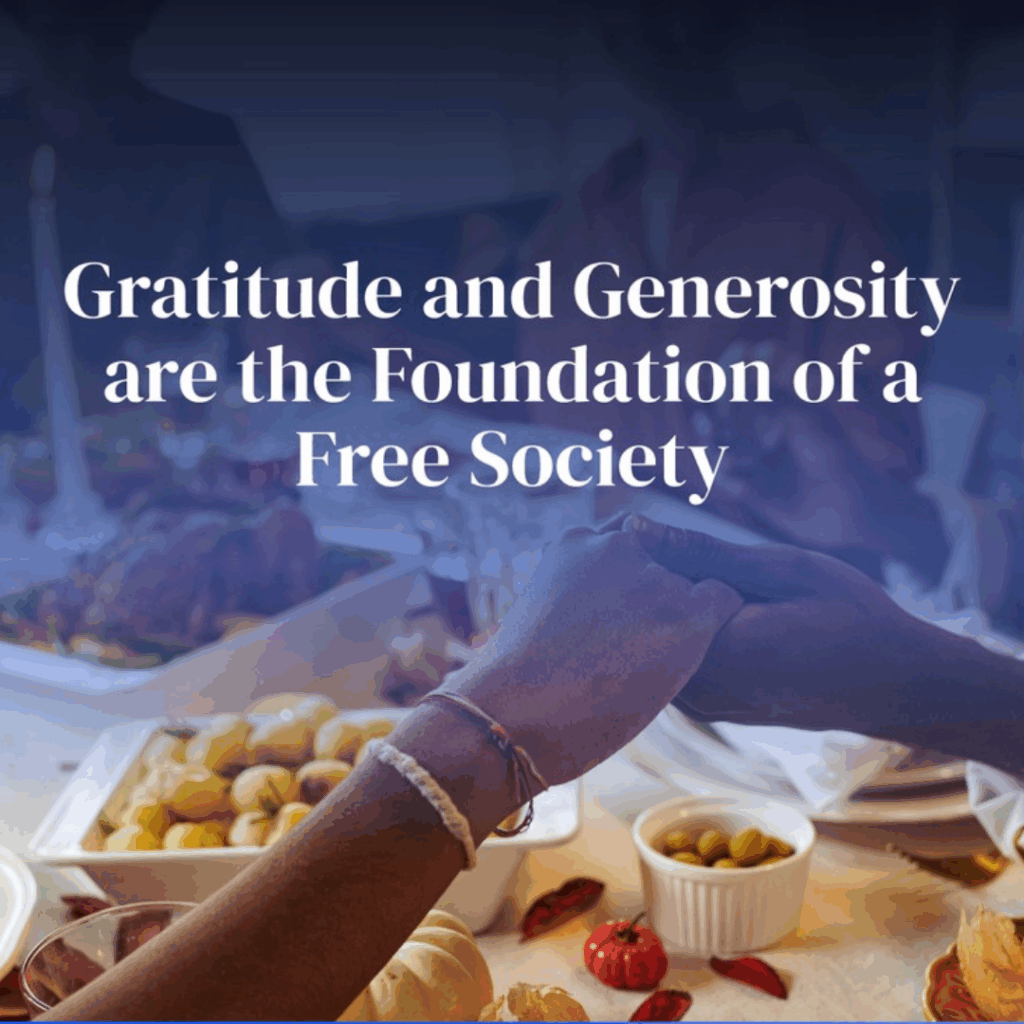
The first light of November comes quietly to the land. The fields are bare now, their labor spent, the trees stripped clean by wind and time. Yet there is a fullness in the air — a sense of something enduring beneath the harvest’s end. Thanksgiving has always carried that paradox: a feast born of scarcity, gratitude forged through struggle, abundance discovered in humility.
When the Pilgrims gathered in 1621 to share a meal with the Wampanoag, they were not celebrating comfort or conquest. They were giving thanks for survival, for community and for the fragile hope that freedom might take root in new soil. It was a story of endurance and grace, of liberty tempered by dependence — on one another, on the land, on providence itself. The generosity of the Wampanoag made that first Thanksgiving possible, reminding us that gratitude begins in relationship.
In the generations that followed, that balance between freedom and gratitude lay at the heart of the American experiment. The Founders believed liberty was not license but responsibility — that a free people must also be a generous people. The right to give, to offer time and treasure toward the common good, is not granted by the state but rises from the dignity of the human soul. It is the voluntary act that sustains the republic when politics and power falter.
Philanthropy in America is an expression of this liberty. It is the moral echo of the Thanksgiving table — citizens gathering to share what they have for the sake of others. It is not compelled or coerced. It is chosen. And in that choice lies both our freedom and our faith.
Gratitude, when lived rather than spoken, becomes a form of wisdom. It teaches us to value what endures, to tend what is near, to measure success not by gain but by stewardship. Each day offers that lesson anew: rise, give thanks, do the work before you with care. The deepest abundance is found not in what we hold but in what we offer.
The spirit of Thanksgiving invites a quieter rhythm in a noisy age — the steady work of building community, belonging to a place and seeing one’s neighbor as kin. Across the country, that work continues: volunteers filling food shelves, families fostering children, donors giving not for acclaim but out of love for the good that binds us.
Every act of giving, great or small, is a declaration of faith in one another — a quiet defiance against despair. A testament that liberty will always find its home in gratitude.
At Philanthropy Roundtable, we celebrate that freedom — the freedom to give voluntarily, guided by principle and conscience. As we gather this season, may we remember that gratitude and generosity are not only virtues of the heart, but the enduring foundation of a free society.
