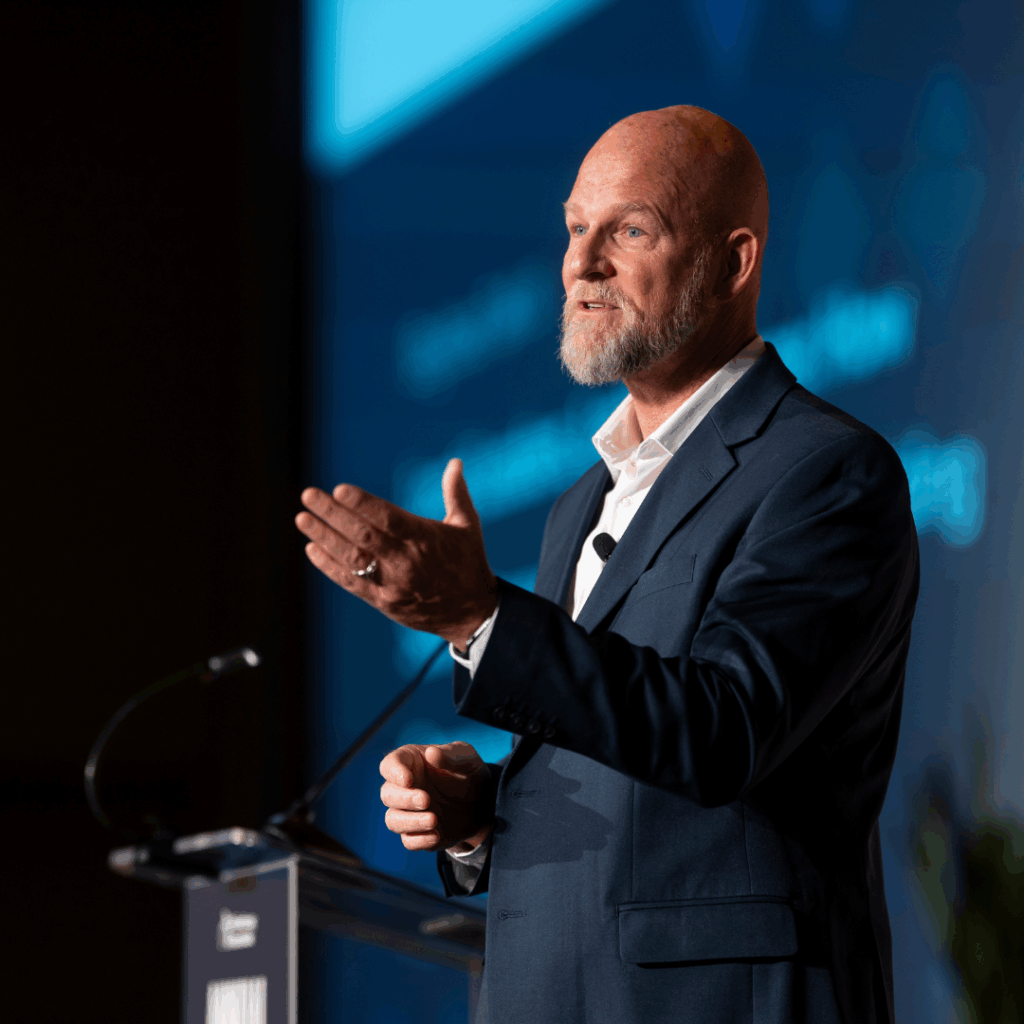
“Perpetual crisis relief is crowding out real opportunities for Americans to escape poverty,” said James Whitford CEO and co-founder of True Charity. Whitford shared his bold blueprint to empower those experiencing poverty with a hand up, not a handout, at Philanthropy Roundtable’s annual meeting in October.
True Charity, formerly Watered Gardens Ministries, exists to lead a nationwide movement of churches and nonprofits committed to effective, dignity-preserving solutions to poverty. Their growing coalition helps organizations move beyond handouts that trap people in dependency to empower people, instead, toward self-sufficiency, creating lasting change in their lives and communities.
True Charity began when Whitford faced an overwhelming call to experience homelessness firsthand so he could more effectively help others. He embedded himself in the homeless population of the people his charity, Watered Gardens, served in Joplin, Missouri. In his talk, Whitford recalls one cold November night when he met a homeless man named Ralph who selflessly offered him part of his sandwich. He was deeply moved, and that moment sparked transformation of the mission of Watered Gardens to birth True Charity.
“My hunger broke through my egoism, and I sat on that curb and I broke bread with Ralph. When I did something happened. I realized that I had been treating Ralph and thousands of other people as objects of my good intentions, objects of my benevolence, rather than subjects who have autonomy and agency and capacity to contribute. … He ignited a change in our mission. We were a ministry that was toxic in its handouts and transactions, and we shifted over to be something much more empowering, with a laser sharp focus on the connection between human dignity and work,” Whitford said.
“People wanted to know, ‘Hey, is it really kind to call for contributions from people when they’re in need?’ I would say it’s not only kind, it’s necessary.”
Whitford added, “When we went from the handout model to the hand up model, where people were earning the very basics they needed, we saw 2,800 people who had been coming through our doors for handouts disappear. Where did those 2,800 people go? Well, they just went somewhere down the street where handouts were still occurring. Handouts, crowding out hand ups. Bad charity crowding out good charity.”
In his talk, Whitford said, “If we don’t compassionately challenge people to develop the strength and the mobility they need to escape their bed of poverty, they’ll remain there until they perish.
“Today, we need a big idea. Let’s transform the way charity is practiced in the United States. That’s what True Charity is doing, specifically toward privately funded, outcome driven, work-oriented solutions. … Ralph was a homeless man who had something to offer. So also do the other 37 million Americans in poverty today. They have something to offer too. Let’s ask them for it.”
If you are interested in learning more about True Charity, please contact Senior Director of Programs Esther Larson Lenger here.
