A free society depends on more than organizations formally associated with the freedom movement. It also depends on a broader culture in which principles such as free inquiry, open debate and intellectual pluralism can flourish.
That raises an important question for philanthropists: What should donors do when influential institutions drift from those principles? The case of the Massachusetts Institute of Technology offers one constructive answer.
In 2021, MIT canceled a science lecture by University of Chicago geophysicist Dorian Abbot after criticism of views he had expressed elsewhere about diversity, equity and inclusion policies. For some alumni, the controversy became a breaking point.
MIT graduates and donors Tom Hafer and Henry Miller publicly announced they were withdrawing their financial support in a 2021 City Journal essay, “Goodbye, MIT,” citing the Abbot cancellation along with broader concerns about academic freedom and DEI mandates.
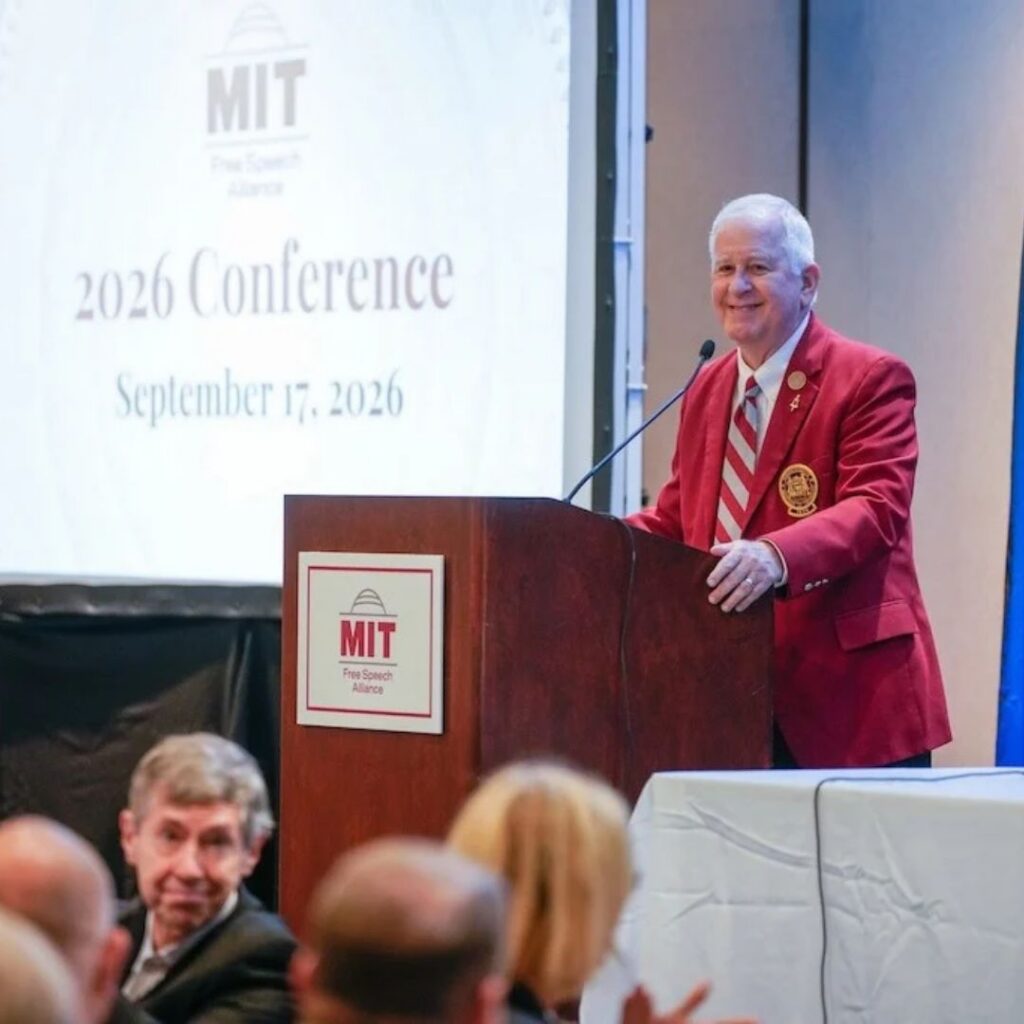
But Hafer didn’t simply walk away. He became involved with the MIT Free Speech Alliance (MFSA) in its earliest days, joining other concerned alumni who were organizing to help renew the institution from within by promoting free expression, academic freedom and viewpoint diversity.
Building an institution for renewal
MFSA fills a gap between donor frustration and institutional action. It organizes alumni around clear principles, builds relationships with reform-minded faculty and students, and builds infrastructure for sustained engagement and accountability even after the original controversy faded from the headlines.
That engagement has coincided with meaningful change at MIT.
Following the Abbot controversy, MIT faculty formed a committee to develop a free-expression policy. MFSA submitted recommendations, met with committee representatives and reviewed and endorsed a draft statement. The faculty approved the statement in December 2022 and MIT President Sally Kornbluth formally endorsed it shortly after in February 2023.
MFSA also spent roughly a year advocating against required diversity statements in faculty hiring and supporting faculty members pursuing reform internally before MIT eliminated the requirement in 2024.
MFSA leaders are careful not to claim sole credit. Both reforms were ultimately faculty-driven, reinforcing an important lesson: Outside organizations can provide resources, attention and support, but durable institutional renewal requires allies on the inside.
Neil Webber, a 1983 MIT graduate and longtime donor, believes MFSA’s approach also mattered.
“We sought to have a productive relationship with the administration, as opposed to a rock-throwing relationship,” Webber told Philanthropy Roundtable. “We felt we’d be more successful providing information, advice and direction.”
Progress remains incomplete. MFSA has not persuaded MIT to formally adopt institutional neutrality or reform its bias-reporting system. Institutional renewal is rarely a straight line.
Finding points of leverage
MFSA’s experience also illustrates what philanthropy can contribute when institutions drift.
Webber cautions against assuming the same strategy will work everywhere. Some alumni organizations have adopted more adversarial approaches. Donors first need to understand the institution they hope to influence.
“You have to figure out where your points of leverage are,” he said.
Tom Hafer adds, “You should form an organization, whether it’s called Free Speech or something else, and then you’ve got to get the word out somehow.”
Money is one source of leverage, but donors can contribute more than financial resources. They can share expertise, build relationships, support principled faculty and students and help create organizations capable of sustaining reform over time.
MFSA’s leaders have learned practical lessons as well. Asked what they would do differently if starting again, Executive Director Peter Bonilla and President Wayne Stargardt said they would have invested earlier in building their alumni audience and would not necessarily have structured engagement around formal membership.
The lesson is larger than MIT: Ideas alone do not produce institutional change. They need people, organizations, networks and philanthropic infrastructure capable of translating principles into sustained action.
Why this matters beyond MIT
Why should this matter to donors concerned with the long-term health of the freedom movement?
Because the movement does not operate in isolation. Universities help shape the leaders, ideas and cultural assumptions that influence American institutions for decades. Webber says MIT’s influence extends far beyond its own campus and believes changes there can help set a tone for other institutions.
Protecting first principles, therefore, requires more than building strong organizations within the freedom movement. It can also mean supporting people and organizations working to defend those principles within influential institutions outside it.
MFSA offers one model. When an influential institution drifts, philanthropy can help build organizations around clear principles, strengthen allies from within and invest in the infrastructure necessary for sustained renewal.
Building new institutions matters. So does renewing institutions worth preserving.
For more information about MFSA, please contact Senior Director of American Values & Policy Philanthropy Clarice Smith.
