
People have known the name Schwab as a leader in financial services for over 50 years. Their banks and offices dot the neighborhoods we live and work in, and their commercials have kept us company while watching television at home. Much in the same way they revolutionized how Americans invest and manage their money, they’ve also quietly shaped the landscape of modern philanthropy.
Helen and Charles “Chuck” Schwab have been a tremendous force for good through their humble devotion to improving the lives of millions of people. As philanthropists, they have shared their time and resources by building true partnerships with the nonprofits they support in the San Francisco Bay Area and across the country.
In partnership with the DeVos Family Foundation, and with previous support from the William E. Simon Foundation, Philanthropy Roundtable is proud to recognize Helen and Chuck Schwab as the recipients of the 2025 Simon-DeVos Prize for Philanthropic Leadership. Their charitable giving truly embodies the Prize’s core values, including resourcefulness, personal responsibility and helping people help themselves.
Helen and Chuck haven’t just exemplified the value of strategic philanthropy through their own giving. Their entrepreneurship has helped millions of other Americans take part in improving our society. Through their business ventures, they democratized the donor-advised fund, making this charitable giving vehicle more accessible to everyday Americans and propelling its emergence as one of the most popular ways to give.
“The United States has the highest level of philanthropy of any nation in the world, and it’s because of the system we have. We have to look at those who can’t help themselves and give back. It’s our responsibility to do a good job,” Chuck said.
The Schwab’s have chosen to give their $200,000 Simon-DeVos Prize award to the Bay Area’s Tipping Point Community, which focuses on improving the lives of the area’s homeless and impoverished populations.
“We are absolutely thrilled that Chuck and Helen have decided to give the proceeds from the Simon DeVos Prize to Tipping Point Community,” said CEO of Tipping Point Community Sam Cobbs. “With those dollars, we’re going to go out and double down with the organizations that are helping people have the opportunity to prosper. What we’ve always been about, and what I believe the Simon-DeVos Prize is about, is helping people help themselves. We’re an organization that gives hand ups, not handouts, and [we will] use this prize to do exactly that.”
For the Schwab’s, charitable giving takes many forms, and they promote their values through several strategic partnerships and philanthropic initiatives.
The Charles and Helen Schwab Foundation has long focused on K-12 and higher education, including programs for those with learning differences, human services and civic and cultural life. The Charles R. Schwab Foundation for Financial Freedom supports financial literacy and financial education programs in schools.
“What Helen and Chuck have done to increase people’s philanthropy and share from whatever level of wealth they have is huge,” said DeVos Family Foundation’s Doug DeVos.
“Helen’s and Chuck’s visionary philanthropy will continue to improve the lives of everyday Americans for generations to come,” said Bill Simon, Jr., co-chair of the William E. Simon Foundation. “They have come alongside the causes they passionately support and set an incredible example for other philanthropists to not just give financially but also share their time and expertise.”
Building A Foundation for Giving
In 1971, Chuck Schwab founded The Charles Schwab Corporation. Aided by the U.S. Securities and Exchange Commission’s historic 1975 deregulation of the brokerage industry, he disrupted the industry by making investing in the stock market more accessible to millions of Main Street Americans. With no more fixed commission rates, Chuck Schwab chose to lower fees, which strengthened competition, expanded choice and led to the advent of the individual investor.
This transformative event and his innovative response opened the door for average Americans to build the type of wealth that makes private philanthropy and its investments in our communities possible in the first place.
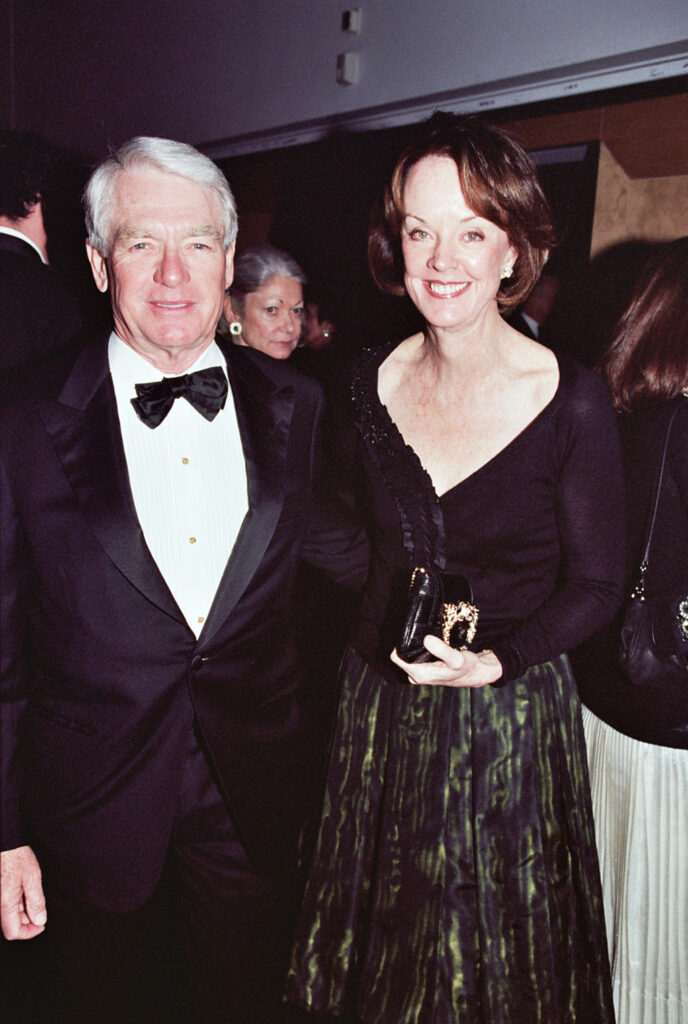
After they discovered their child had dyslexia, Chuck Schwab also learned he had the same learning difference. It was a spark that led to the founding of the Charles and Helen Schwab Foundation in 1987. Originally conceived as an operating foundation, they ran Schwab Learning from 1987 to 2007, a direct service program devoted to supporting families affected by dyslexia and other learning differences through research and education.
“Chuck being so willing and so open to talk about his dyslexia publicly has had a huge impact on removing the stigma associated with learning difference,” said Executive Director of the Charles and Helen Schwab Foundation Chris Nelson. “He often gets stopped by people on the street, in an elevator, in a restaurant, who thank him for that and tell him what a difference it’s made in their lives. And that’s incredibly gratifying, rewarding, and I think something that Helen and Chuck are deeply proud of.”
Today, the Foundation has an expanded focus and has invested $300 million in K-12 learning, higher education, health, human services, cultural programs and civic life.
The Schwabs also amplify their charitable impact by encouraging their network to become generous givers.
“Philanthropy is not a natural thing,” said Chuck Schwab. “The first word you learn as a kid is ‘mine.’ Giving is not an easy concept for a lot of people. Philanthropy is a learned kind of activity, and once you learn it, you find it so fulfilling.”
Throughout the years, Helen and Chuck Schwab have cultivated a close philanthropic partnership through their giving and volunteerism. Their dual talents and efforts—bringing their different points of view together—have made their giving even more effective.
Helen Schwab noted, “Some of the grants go out the door to really good friends who have wonderful ideas, and some are very standard philanthropic processes.”
“It’s really extraordinary if you step back and look at the durability and the breadth of their giving,” said Nelson. “They’ve evolved with the changing times but stayed anchored to a set of core values. And we can look back now and see a legacy of almost four decades of giving—and giving with really transformational impact.”
Their experiences as a family also drove their foundation’s focus on K-12 and higher education.
“We had our two young children, Katie and Michael, in public schools 50 years ago, and we hoped that would be the way they’d be educated,” Helen Schwab said. “That’s how Chuck was educated. But it turned out to be very frustrating, so education became a big focus for us.”
According to Helen Schwab, they took a particular interest in education reform after their friend Donald G. Fisher, founder of Gap, Inc., introduced them to KIPP public charter schools.
“Don introduced us to KIPP schools and the young men who started them, and that really got us thinking,” she said. “He was totally engaged in giving to KIPP and Boys and Girls Club. He was extraordinarily generous, so we sort of tagged along and learned by watching. It’s been a real adventure.”
Today, the foundation focuses on building strong communities through high-quality education, employment, economic power and safe, stable housing to those in need. Their daughter, Katie Schwab Paige, now serves as board chair, president and trustee.
Making Donor-Advised Funds Accessible to All
In 1999, Chuck founded Schwab Charitable, known today as DAFgiving360™, to boost charitable giving in the United States. It became one of our nation’s largest providers of donor-advised funds, creating a simple, impactful, and now, highly popular tool for everyday Americans to use for thoughtful and strategic giving.
“DAFs are so simple. For someone who is coming up in their wealth creation, it is a really nice way to be highly efficient,” said Chuck Schwab.
Simplicity has always been at the heart of Schwab Charitable’s approach, and throughout the years they’ve adapted their offerings to give donors options and flexibility. Since their founding, donors have granted over $44 billion to more than 280,000 charities through DAFgiving360.
In the ultimate testament to how much they believe in the power of DAFs, when talking about his family, Chuck Schwab quipped “some of the kids have DAFs – at Schwab.”
DAFs have become one of the most popular charitable giving vehicles. In 2025, donors granted over $8.9 billion—an increase of 34% from the year before—through DAFgiving360. Chuck Schwab called efforts to protect DAFs “highly important,” so they can continue to inspire more giving from generous Americans.
Focus on Financial Literacy
Financial literacy is an issue near and dear to Chuck Schwab’s heart. The Charles R. Schwab Foundation for Financial Freedom, run by daughter Carrie Schwab-Pomerantz, prioritizes financial literacy education for youth in communities. Through programs like Moneywise America, the Foundation provides teens with essential financial literacy skills and knowledge.
“Financial freedom is all about financial literacy,” Chuck Schwab said. “People haven’t learned much about fundamental things like managing a checkbook or having a credit card. How do you go about buying a house? How do you negotiate pricing?”
In 2008, Chuck Schwab was named chair of President George W. Bush’s Advisory Council on Financial Literacy.
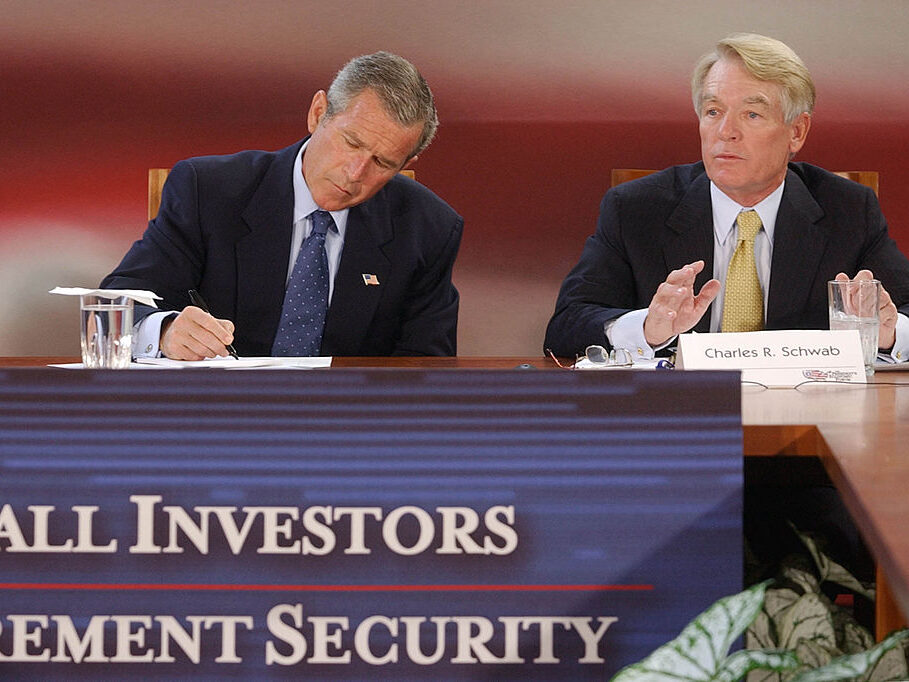
“That was an interesting volunteer job for four years,” Chuck Schwab said. “We incorporated many nonprofit organizations focused on financial literacy throughout the country. It was a big need.
“Schools today are getting better at it, but it’s been a real dearth of capabilities for many, many years,” he added. “One of the goals is to improve financial literacy so people understand how they take responsibility for their financial life. It’s just like their physical lives, their medical lives. They have a financial life, too, that they have to care for and shepherd.”
Chuck Schwab also said the government’s Social Security program only provides about 20% of a typical person’s financial needs in their later years.
“In our society, we’re essentially responsible for our own retirement,” he said. “We work 40 years, and if we’re healthy, we live for another 20 or 30 years beyond that. In that time period, you get no paycheck. You have to live on the savings you’ve put aside in the prior 40 years of working.”
The Charles R. Schwab Foundation for Financial Freedom also funds a course at Chuck Schwab’s alma mater, Stanford University. The course, called Initiative for Financial Decision-Making, aims at equipping students with the knowledge to make sound financial decisions.
His long-time friend Dr. Michael Boskin, professor of economics at Stanford University and the architect of the course, says, “The biggest thing to me has been these first-generation, low-income students who come to me … and say, ‘I can’t thank you enough. I’ve become the financial advisor for my family because I’m the only one that knows anything about this.’ That really was something I hadn’t anticipated and has been extremely gratifying.”
“It’s amazing,” said Helen Schwab. “It attracts a wide spectrum of people who have never really learned anything about the implications of walking away from a student loan. It’s an incredibly popular course now, and other schools around the country are sending in teams to observe the effectiveness and appeal of this class to the students. I think you’re going to see a lot of other schools starting programs.”
Partnering with the San Francisco Museum of Art
“Art tells the story of our time, and artists are very intuitive about observing the moves and the mood of society,” said Helen Schwab. “So, we think art adds a really, really wonderful quality to education. It teaches you about history and social ills and social benefits. In the Bay Area, there is such a broad audience for art, it’s really kind of phenomenal.”
For over 30 years, the Schwab’s have enthusiastically supported the San Francisco Museum of Modern Art (SFMOMA) as donors, lenders and art lovers.
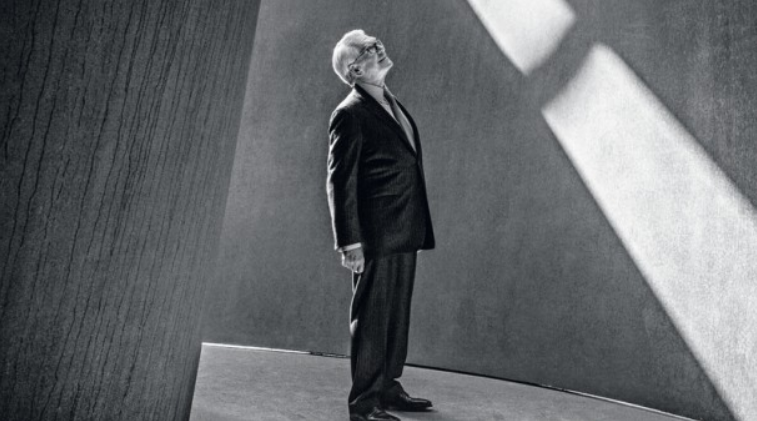
“Chuck and I both got engaged with the museum in the early 1980s,” she added. “We started as collectors. We value the way art teaches you to look at and think about things.”
“We support not just the art museum itself, but the exposure of schools to art. We have a big school program,” Chuck Schwab noted. “Kids come to the museum to learn about the history of art and why art is such an important part of humanity.”
From 2007 to 2018, Chuck Schwab served as board chair of SFMOMA, then as chairman of the museum’s expansion campaign, for which he spearheaded efforts to raise over $610 million for the museum’s infrastructure, collections and future community impact. Helen Schwab also served on the board for many years, and her love and eye for art brought the museum into a golden era of success.
“When I arrived at the museum, Helen was one of the first trustees and collectors I met,” said Neal Benezra, former SFMOMA director. “Chuck became the chair of the board of trustees in 2007 with 11 extraordinary years … kind of the golden age of the museum. And Helen really had extraordinary expertise. A fabulous eye. There was that kind of nice division of labor in their family.”
The Schwab’s have contributed numerous named positions, spaces and exhibition scholarships to SFMOMA. They endowed the Helen and Charles Schwab director position in 2016, as well as the Helen and Charles Schwab Hall during the museum’s expansion.
2025 Grant Recipient: Tipping Point Community
Tipping Point Community was established by San Francisco Mayor Daniel Lurie and Katie Schwab Paige, who both worked for Robin Hood in New York and were inspired to bring the model to the Bay Area.
“Chuck and Helen have been great partners,” said Tipping Point CEO Cobbs. “We were challenged with building housing in San Francisco, one of the most expensive places to build. They were with us every step of the way, holding us accountable. With their partnership, the project came in under budget and was done in three years, much less than the normal seven years it takes to build a building in San Francisco.”

“Tipping Point has done an incredible job of bringing attention and gathering assets from successful people in the Bay Area to support those in need,” said Chuck Schwab.
Tipping Point’s board pays all operating costs, so every dollar donated fights poverty.
Helen Schwab added, “They’re really terrific at making sure their support does the most effective work to combat poverty and promote education, employment and youth development in the Bay Area.”
Looking Toward the Future
When it comes to inspiring others to lead through strategic giving, Chuck Schwab said “everybody can be a philanthropist,” noting those who are most successful not only give their resources, but their time as well.
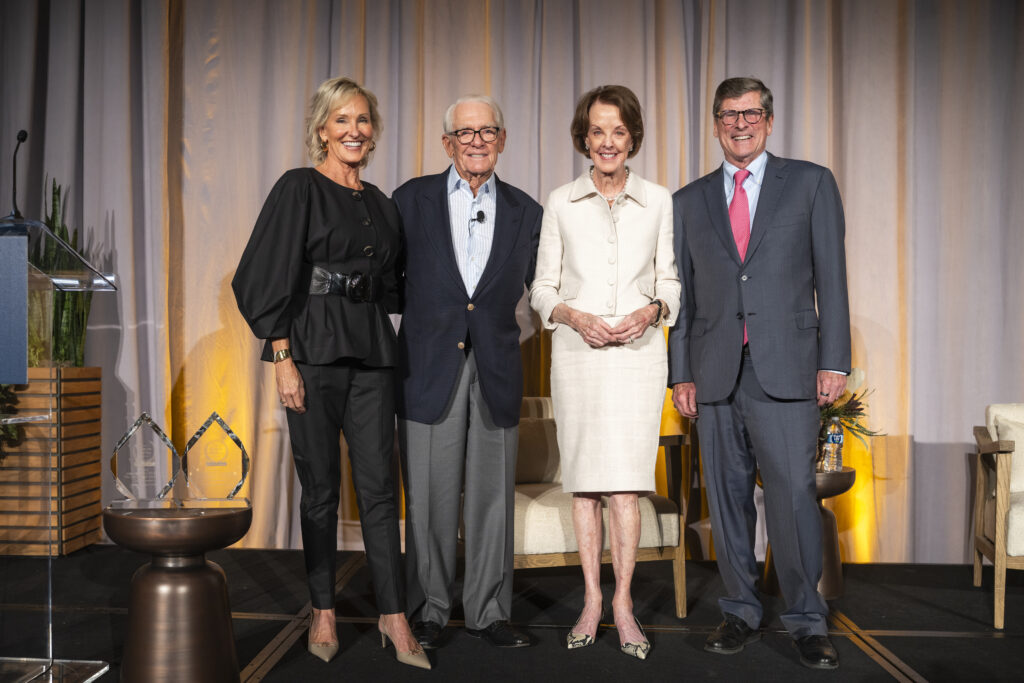
“Philanthropy makes people feel good, and it’s helpful to see where people give, understand why they give and how they can get involved,” added Helen Schwab.
According to Helen Schwab, they became involved with many of the causes they’ve supported through the encouragement of good friends who shared what mattered most to them.
The Schwab’s have intentionally involved their children and grandchildren in their charitable giving, passing on their humility and philanthropic legacy to the next generation.
“Certainly, the example of grandma and granddad are highly important. They see what we do, and it’s amazing how they are very much engaged, talking about it many times at Thanksgiving and Christmas,” said Chuck Schwab.
Reflecting on the indispensable role charitable giving plays in American life, he added, “I’ve always believed philanthropy is the crown jewel of free enterprise and capitalism. If successful people have resources beyond their basic needs, it’s their responsibility to help people.”
