Charter schools have been part of school choice policy for decades. But new legislation in some states threatens to dramatically change how these schools operate and serve students.
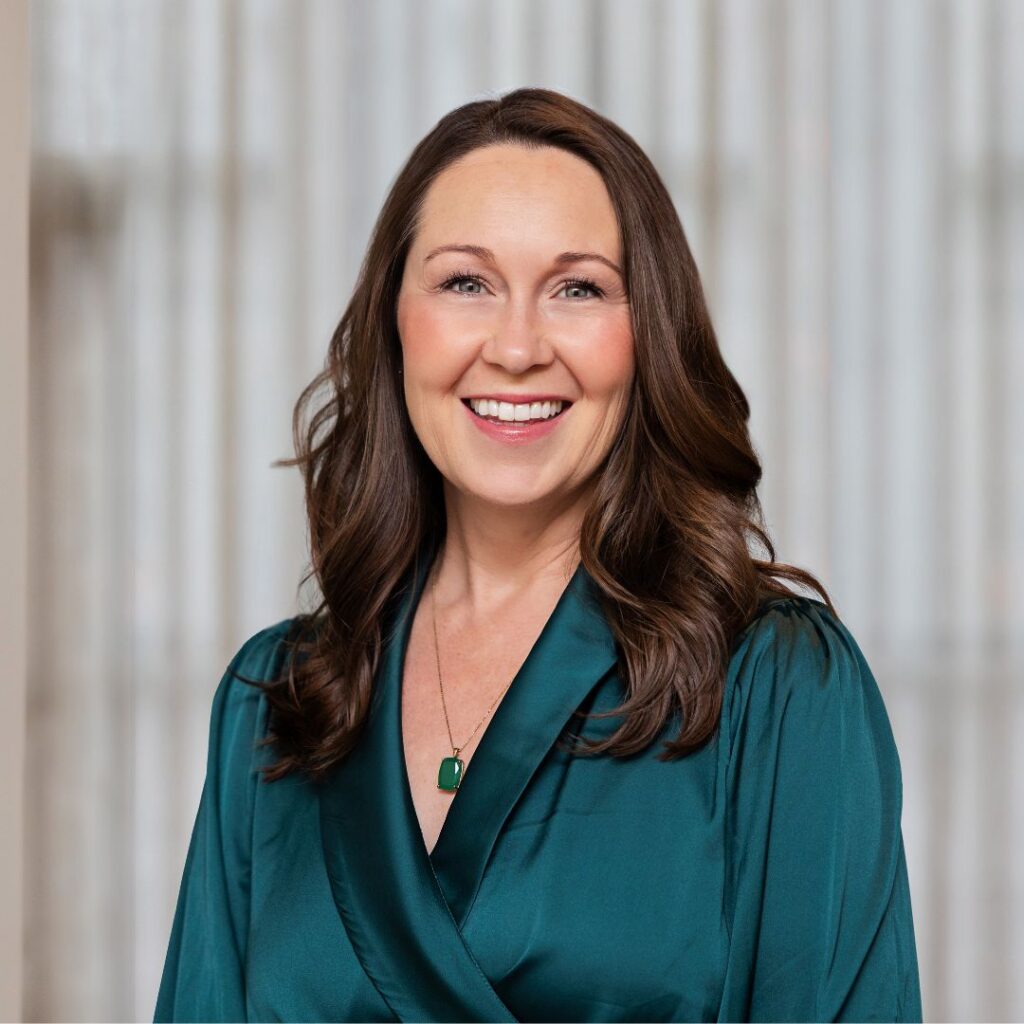
Starlee Coleman, president and CEO of the National Alliance for Public Charter Schools, discusses her organization’s efforts to protect public charter schools amid shifting educational and demographic landscapes nationwide.
This interview has been edited for length and clarity.
Q: What is your mission?
Coleman: The National Alliance for Public Charter Schools is the national voice and strategic leader of America’s charter school movement. We exist to protect and strengthen the policies that make high-quality charter schools possible, ensuring that millions of families can access the public education options they deserve.
Q: Where do you see the most promising philanthropic opportunities in 2026?
Coleman: We have a huge opportunity right now to dramatically strengthen the policy conditions at the federal and state levels that allow charter schools to exist and grow.
With nearly four million students enrolled today, demand is not the issue. Growth is outpacing population trends in most states. The challenge is to ensure that policy, legal and funding environments keep pace. Philanthropy can have a long-term impact by supporting organizations that proactively work to ensure a lasting policy foundation for charter schools.
Q: What key challenges and opportunities should donors keep in mind when considering their support for education reform?
Coleman: Education policy is particularly vulnerable to fads, making it difficult to devote the time required to determine whether an idea truly works. Donors should look for opportunities anchored in foundational truths and build on tried-and-true principles, policies and practices. While we always need people willing to support the seed of a new idea, we must give organizations, policymakers and families the time to fully embrace change before being pushed toward the next new thing.
Recent progress in refocusing reading instruction on the science of reading offers a strong example. Policymakers have done their part. Now, schools need incentives and tools to retrain teachers so they can do their job. This shift can transform outcomes for children, but only if we give schools the space to focus on it.
Yet, educators already face mounting pressure to adopt additional changes, from rethinking math instruction to incorporating AI into the classroom. While these developments may prove important, they follow a once-in-a-generation policy shift that nearly the entire country adopted at remarkable speed. We now need to give this work time to take root and succeed.
So, my advice to donors is to pick your thing, whatever that may be, in education reform and give grantees the time and support to fully realize its potential before asking them ‘what’s next?’
Q: What risks or constraints should donors be paying closer attention to?
Coleman: With fewer babies being born each year, changing demographics will significantly reshape the economics of school districts across the country. Declining enrollment will trigger a wave of school closures unlike anything we’ve ever seen. These shifts will challenge lawmakers who have passed school choice initiatives relatively easily in an era of generally rising student populations.
As fewer kids enroll in traditional public schools, pressure will mount to cap charter school growth, end or cap private school programs and increase taxes. Now’s the time to shore up policy conditions.
For charter schools specifically, a legal push to redefine them as private schools poses a serious risk that proponents have not fully acknowledged. If this effort succeeds, the entire operational and financial structure that underpins charter schools will be in peril. No state in the country directly funds private schools through its per-pupil funding system. No state offers private school teachers pensions, healthcare or access to public school facilities. These are not minor concerns. They put at risk every dollar and every operational certainty charter schools depend on to serve students.
The National Alliance will defend in court the principle that charter schools are public schools. We take this position not out of opposition to private or religious education. For millions of children, those school choices are the best fit. In fact, every state that allows religious charter schools already offers programs to help cover private school costs. There is no reason to threaten the foundation that charter schools rely on.
Q: What feels underfunded but high leverage?
Coleman: Legal advocacy is one of the most underfunded and high-impact areas. Defending charter laws in court, including at the highest levels, has been essential to maintaining the sector’s foundation. Yet legal strategy is often reactive and under-resourced.
State-level advocacy infrastructure presents another critical gap. Modest investments in state charter school associations can drive major policy wins, removing barriers to growth, protecting charter autonomy and ensuring fair funding.
Q: If you were directing grant dollars today, where would you focus?
Coleman: I would focus on three priorities.
First, I would support efforts to build and advance a proactive legal strategy that defends charter schools against definitional challenges, forced unionization and other erosions of autonomy.
Second, I would invest in state charter school associations. Most education policies are set at the state level, and every state needs a high-capacity state charter school association to lead that work. State organizations turn policy into reality, and strengthening state associations’ capacity will drive meaningful, lasting change.
Third, I would ensure my state education agency operates a robust data collection system that allows advocates, policymakers, donors and taxpayers to clearly understand which education policies are working. That could mean investing directly in state data infrastructure, supporting advocacy to improve it or funding analysis to make the data actionable.
In addition, donors who invest in their college or university alma mater should take a hard look at their teacher preparation programs. Do they train future teachers in the science of reading? Are they funding anti-school choice commentary by tenured professors? What students are they recruiting into the teacher preparation program? These programs remain a significant problem, and donors should ask tough questions before they give.
Q: What are the latest developments or strategic priorities for your organization that you would like to share with our community?
Coleman: This year, we are focused on a policy effort, both through federal legislation and regulation, to modernize the federal Charter Schools Program (CSP). The CSP is the only federal funding stream dedicated to expanding charter schools, and it hasn’t kept pace with the charter community’s changing needs. We are currently advancing a three-bill package in the U.S. House and Senate that will dramatically increase the program’s impact without spending a dime of new taxpayer funding.
We’re also partnering with several organizations working to implement the new Federal Scholarship Tax Credit. We are helping charter schools and charter school associations understand how the program will work and how to hit the ground running on January 1, 2027.
Finally, and most unfortunately, charter school unionization is on the rise, even in places many wouldn’t expect, such as Arizona. We are developing a proactive strategy to protect charter school independence, educate teachers about their ability to decertify unions and provide a menu of policy options for state and federal lawmakers.
While charter schools have experienced significant success in recent decades, shifting demographics and political tides threaten to undermine the progress of education reform advocates. Organizations such as the National Alliance for Public Charter Schools fight to ensure charter schools remain a viable option.
If you would like to learn more about the National Alliance for Public Charter Schools or how Philanthropy Roundtable supports K-12 education, please contact Pathways to Opportunity Program Director Stephen Allison.
