Greta Alexander has buried one child. Her oldest son, raised in a Dallas neighborhood where a quality school was out of reach, was pulled into gang life and died of an overdose. She refused to let the same forces close in on her daughter, Miracle.
With a scholarship from ACE Scholarships, she enrolled Miracle in a private Christian school.
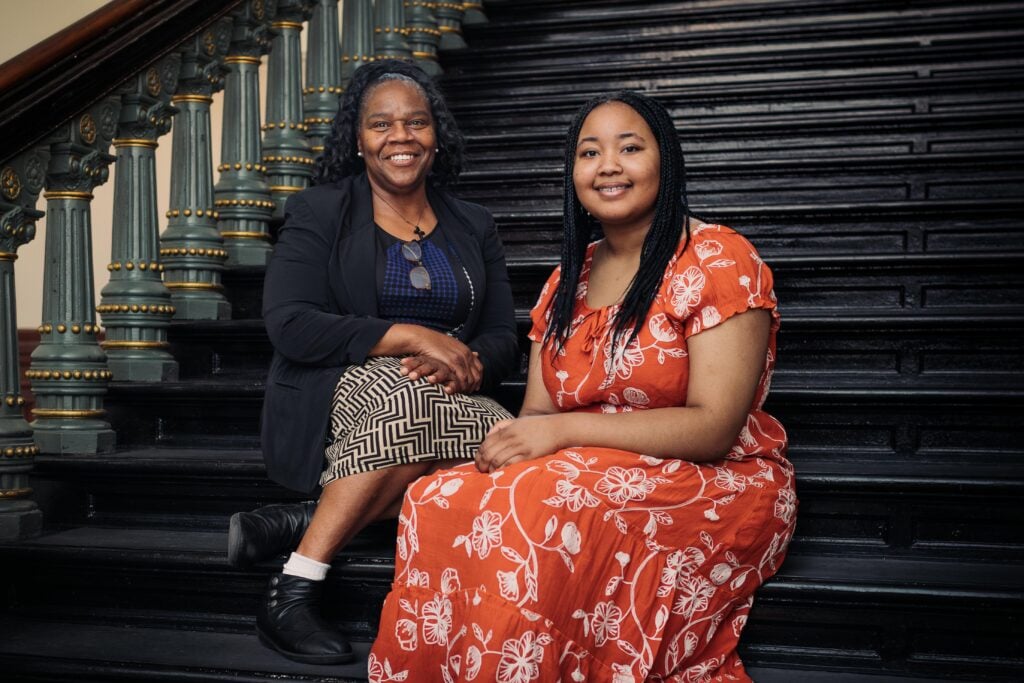
Miracle graduated this spring on a near-full nursing scholarship to Dallas Baptist University. Alexander has since taken in her late son’s daughter, Akira, now an ACE scholar at the same school.
Stories like Alexander’s have driven the school choice movement for three decades. They are why supporters of the Federal Scholarship Tax Credit (FSTC), signed into law July 4, 2025, believe the country is entering a fundamentally new chapter in American education.
Beginning Jan. 1, 2027, taxpayers can claim a dollar-for-dollar federal tax credit of up to $1,700 annually for donations to qualified scholarship-granting organizations (SGOs). It also permits religious schools to participate and funds tuition, tutoring, technology, transportation and special-needs services.
The credit carries no aggregate national cap and no sunset provision. More than two dozen states have already opted in, and additional states are under pressure to follow. If fully implemented across the country, the program would cover roughly 90% of K-12 students.
“It took eight years to get this bill passed,” said Jim Blew, co-founder of the Defense of Freedom Institute (DFI) and a key architect of the law. “And throughout all of that, it simply could not have happened without philanthropy funding the people who were educating congressional staff and members.”
Now that the law is on the books, the educational choice movement is hard at work scaling the infrastructure to ensure success. The investment of philanthropy can play a key role in making that happen.
Supporters say the next 18 months may determine whether the program becomes politically durable—or stalls under regulatory, operational and political pressure.
The Law Is Passed. Now Comes the Hard Part.
The FSTC emerged from decades of state experimentation and multiple earlier federal efforts championed by former Education Secretary Betsy DeVos that ultimately stalled in Congress. Arizona pioneered the nation’s first scholarship tax credit program in 1997. Florida’s program now serves more than 500,000 students.
“This is a genuinely different policy,” says Erika Donalds, president of the Education Freedom Foundation and one of the advocates most closely involved in the final negotiations. “The federal credit is much more flexible than most of the state programs we have. It’s an opportunity to remove barriers and let the industry mature.”
The groundwork for the FSTC was laid in the 2022 Educational Choice for Children Act. The credit arrives as school choice has gained substantial momentum nationwide, accelerated in part by learning disruption during the COVID-19 pandemic. Eighteen states now offer universal eligibility for education scholarship accounts—up from zero before COVID—covering more than half of all K-12 students.
But eligibility is not the same thing as access. In Texas, 274,000 families applied for the state’s new program within six weeks. Only 80,000 received funding.
“I don’t think school choice has been tried and failed. It’s just not really been tried,” said Darla Romfo, president and CEO of the Children’s Scholarship Fund (CSF). “A lot of the school choice programs at the state level just aren’t big enough for families to see that they can actually make that choice.”
Challenges remain as the tax credit rolls out. Treasury rules are expected in mid-2026, and there’s a narrow window to shape how the credit operates. Governors in non-participating states face growing pressure to opt in. And SGOs must scale rapidly to handle the largest influx of private giving to educational choice in American history.
“The barriers are information, making sure supply is free and politics,” said Robert Enlow, CEO of EdChoice, the national school choice research organization founded as Milton Friedman’s legacy foundation. “You could have all the new money out there and no supply, and that’s a problem.”
For philanthropists, the opportunity goes beyond funding scholarships. It is helping build the legal, operational and educational infrastructure capable of supporting a national educational choice ecosystem before the system fully comes online.
The Fight Over Implementation
Treasury rules expected in 2026 will shape how SGOs operate, how donors participate and how the federal credit interacts with existing state programs. But the regulatory work doesn’t end there. Much of the movement’s attention is now focused on implementation and legal-political defense.
Religious-school donors and trustees have wondered whether participation will put religious liberty in the crosshairs. In Virginia, the legislature attempted to restrict funds from supporting schools that they broadly deemed as discriminating against Virginians—a bid to keep scholarships from religious schools. The Stanley M. Herzog Charitable Foundation, which works with around 4,000 Christian and private schools nationwide, has made answering that question a priority.
“The money is going from a private individual to a nonprofit to a private school, and the government, at no point, touches that money,” says Chris Vas, senior director at the Herzog Charitable Foundation. “There are no strings attached. Religious liberty is at its core in this program.”
Legal and political defense, meanwhile, occupy Blew’s attention these days. DFI, which Blew co-founded after serving as assistant secretary of education under Betsy DeVos, was a key architect of the FSTC and remains deeply involved in its rollout.
“The teacher unions do not want to allow children to leave their captive base,” Blew says. “As long as they have children who are compelled to go to their schools, they will have more power. I think they’re making the wrong calculation. We should just focus on what families and kids need.”
DFI’s work now spans media outreach, coalition-building and legal action supporting implementation and defending private school autonomy. The organization participates in a coalition of more than 200 groups supporting the rollout effort.
“Philanthropy is coming alongside us to fund the education and advocacy work,” Blew says, “and it’s fabulous.”
Blue-state participation has become another major strategic focus. Colorado Gov. Jared Polis opted into the program earlier this year, and New York Gov. Kathy Hochul has said she plans to do the same. Supporters view these developments as important signals that the issue may not remain politically confined to Republican-led states.
California has become the movement’s largest remaining target. The America First Policy Institute estimates the state could leave roughly $5 billion annually on the table if it declines to participate.
“When you start to see what those numbers are,” Donalds says, “it’s hard to say no.”
Organizations across the country are now mobilizing philanthropic support for regulatory engagement, legal analysis, coalition coordination, state-level advocacy campaigns and implementation planning.
The School Supply Bottleneck
Even if the politics hold, another challenge looms: there may not be enough educational capacity to absorb demand.
The Texas numbers—274,000 applicants, 80,000 funded—point to the largest bottleneck facing the movement. There are not yet enough schools, microschools, tutors and providers prepared to absorb the demand the federal credit could accelerate nationwide. Scaling school choice only works if there are actually schools available for families to choose.
That challenge extends well beyond traditional private schools. Much of the energy surrounding the federal credit now centers on microschools, hybrid academies, tutoring cooperatives, career-focused programs and specialized learning environments designed around families rather than systems.
Supporters increasingly see the FSTC not simply as a scholarship program, but as the foundation for a broader ecosystem of educational entrepreneurship.
Helping new schools and education programs reach the market is the mission of the Education Freedom Foundation. Donalds’ Education Freedom Accelerator, launching ahead of the 2027 rollout, is designed to address several supply-side bottlenecks already limiting growth in states with strong school choice programs.
One is zoning.
“Zoning is actually a huge obstacle,” Donalds says. “One of the largest obstacles we see in states that actually have choice, like Florida.”
The Accelerator is advancing model legislation to extend those protections.
Another is regulatory reciprocity. Providers approved in one state often must restart approval processes from scratch in another, slowing the expansion of microschools, tutoring providers and curriculum organizations. The Accelerator is developing a reciprocity framework.
The third obstacle is fragmented funding. Donalds is developing model principles for stacking the federal credit with state Education Savings Accounts (ESAs) and 529 accounts so families can combine resources rather than choose between them.
“We’ve already proven that wide open programs work incredibly well,” Donalds says. “Look at Arizona.”
When Arizona expanded eligibility in 2022, the number of private school providers increased from 510 to 661 within a year.
Existing schools face their own readiness challenges. The Herzog Charitable Foundation spends significant time helping its 4,000 school network strengthen enrollment, donor development and long-term sustainability.
“A lot of schools price their product at a price they think people can afford in their community,” says Chris Vas, senior director at the Herzog Charitable Foundation. “The cost to educate is $7,000—that’s what it takes to keep the lights on, the air conditioning on and pay all the teachers. But the school is charging families $5,000 in tuition. So what are they forced to do? They’re forced to fundraise at the annual golf trip or the gala for the difference, just so they can stay open.”
Vas says the federal credit could fundamentally change that dynamic to fundraise for what donors actually want to support: capital improvements, new programs, educational quality.
“How incredible would it be if this federal tax credit program was able to fill that gap?” he says. “Donors are far more likely to give generously to a new STEM lab than to ‘we’ve got to make December’s light bill.’”
For donors, the investable opportunities are becoming increasingly clear: school launches, microschool incubators, facilities funds, tutoring networks, teacher pipelines, operational readiness and implementation support for schools entering the scholarship ecosystem for the first time.
Building a New Donor Ecosystem
The FSTC could also fundamentally reshape the donor base supporting educational choice.
For decades, school choice philanthropy was driven primarily by major donors. Take, for example, the Children’s Scholarship Fund, which Romfo has led since 2000. Founded in 1998 by financier Ted Forstmann and Walton family philanthropist John Walton, CSF has helped more than 200,000 K-8 students attend their family’s school of choice and distributed over $1 billion through a national partner network. She expects the FSTC to bring two distinct donor pools to scholarship organizations, not one.
Organizations involved in implementation increasingly describe the effort as requiring a new type of donor activation infrastructure. Some advocates describe the shift as the “democratization of philanthropy” — moving educational giving beyond a relatively small network of major donors toward broad-based public participation.
“There are going to be mission-driven people drawn to the idea of helping kids,” Romfo says. “But there’s also going to be some number of people who are $1,700 donors because they don’t want to pay taxes. They may not even be that in tune to the mission. Figuring out how to reach and convert both pools is really what this fundraising challenge is about.”
Most Americans still have little understanding of how the credit works, who qualifies or where donations go. Many SGOs were not built for broad public education campaigns, mass donor acquisition or large-scale operational processing.
That gap has created a major new investable opportunity: public awareness campaigns, donor education, grassroots outreach and state-based engagement strategies designed to help families, taxpayers and local communities understand how the program works before implementation begins.
ACE Scholarships has already invested heavily in technology systems supporting donor management, family applications and compliance infrastructure.
“We’ve got over 40 people already working on this,” says ACE CEO Norton Rainey. “We can keep their overhead down low so they can continue doing what they’re so good at: raising money and serving parents.”
Rainey believes corporations may become a major source of future growth. To support this, ACE partners with employers to create white-label donation pages, allowing employees to contribute directly to K-12 private school tuition, tutoring, technology and after-school programs.
“I spoke a few weeks ago to the Chamber of Commerce here in Colorado,” he says. “They had over 50 business heads in that meeting, and the wheels are turning.”
The longest-running form of donor activation may also be the most overlooked: scholarship alumni themselves. Hansel Lopez, one of CSF’s first scholarship recipients as a seventh grader in East Harlem, went on to Cornell University and now runs a marketing firm in Miami. He describes it as “like a stone going in a pond, and all these ripples go out.”
“I’m literal proof that with CSF, that impact is generational,” Lopez says.
Mary, a CSF scholarship recipient who later earned a bioengineering degree from Penn and now works at Boston Children’s Hospital, describes the impact similarly.
“My school provided me with something all children need: love and attention,” she says. “This was the mustard seed that grew into my commitment to do good for those who wanted and needed it most.”
But organizations involved in implementation say none of this activation matters if the only people who know about the tax credit are those who have historically supported school choice. Enlow, EdChoice’s CEO of more than two decades, has watched public opinion shift from controversial to broadly supported.
EdChoice’s polling is a trusted source in the movement on public attitudes, and recent findings have surprised even longtime advocates. The word “voucher,” once politically toxic, now commands majority support. Thirty-eight percent of parents say they intend to contribute through the FSTC once it takes effect.
Donor education, public awareness campaigns, employer partnerships, multilingual outreach and shared technology infrastructure are rapidly becoming major philanthropic priorities across the ecosystem.
“It’s a different pot of money,” Vas says. “It’s not cannibalizing their donation to the Herzog Foundation. We have to have an abundance mindset, and we all have to be rowing in the same direction to actually help the people that we’re committed to helping.”
The Window Ahead
The Federal Scholarship Tax Credit is not the culmination of the school choice movement. Supporters see it as a dramatic expansion of its toolkit.
The organizations leading the rollout are moving quickly. The families are waiting.
Whether it performs as advocates hope will depend heavily on what happens over the next eighteen months.
Treasury rules must be shaped. Governors must be persuaded. Scholarship organizations must scale. New schools and providers must enter the market. Families and donors must learn the program exists before opponents define it first.
For donors, there are three distinct opportunities. The most direct is the credit itself. Starting January 1, any taxpayer can donate up to $1,700 for a dollar-for-dollar federal tax offset. The second is capacity—funding the staffing, technology and outreach SGOs will need to scale. The third is supply. Scholarships achieve little without seats to fill, and donors who invest in new school starts and the policy work to remove zoning and regulatory barriers will have the longest-dated impact.
For Greta Alexander, school choice was never an abstraction or a policy framework. It was a path away from tragedy and toward opportunity for her daughter and granddaughter.
The legislation may have passed.
The race to build the system behind it has only just begun.
