
Education reform and school choice programs are expanding nationwide, but legal challenges and implementation obstacles have stymied their success. It is essential for school choice advocates to remain vigilant even after achieving policy success at the state and local levels.
In this conversation, we speak with Robert Enlow, president and CEO of EdChoice, about his organization’s efforts to create an education system where families can choose the environments that best support their children’s success.
This interview has been edited for length and clarity.
Q: What is your mission?
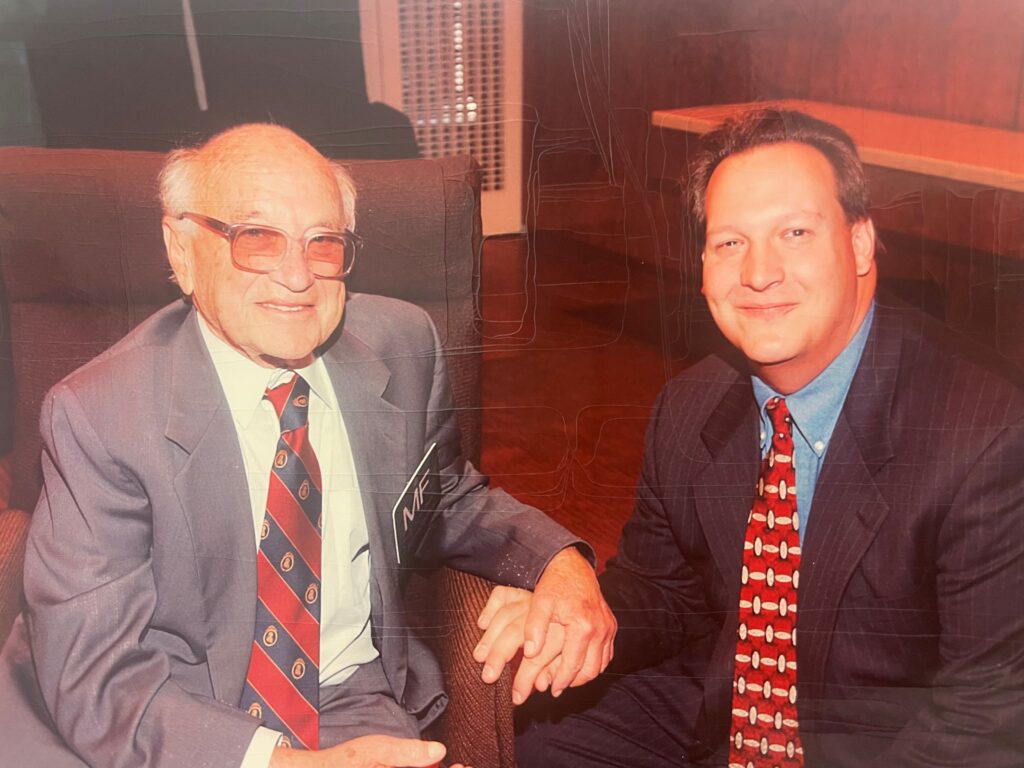
EdChoice exists to advance educational freedom and choice as a pathway to successful lives and a stronger society. When Milton and Rose Friedman founded the organization 30 years ago as the Friedman Foundation for Educational Choice, they envisioned a system where every family could choose the education that best fits their child, with public funding following students to the learning environment that works for them.
Q: Where do you see the most promising philanthropic opportunities in 2026?
The most promising philanthropic opportunities in 2026 center on three priorities: expanding access to educational opportunities, increasing awareness and enrollment in the growing number of choice programs and defending educational freedom in the courts and state legislatures.
Several states, including Louisiana, New Hampshire, West Virginia, Montana and Idaho, are working to expand current state programs, enabling more children to participate and granting families greater flexibility in how they use education funds.
However, passing legislation is only the beginning. For choice programs to succeed and endure, families must know they exist and understand how to use them. Strong participation ensures more children benefit from educational freedom and builds public support to protect programs from future cuts or rollbacks.
At the same time, supporters must remain vigilant against efforts to repeal, restrict or overregulate these policies and be prepared to defend them when they are challenged in court.
Q: What key challenges and opportunities should donors keep in mind when considering their support for education reform?
As Milton Friedman warned long ago, education reform is filled with examples of advocates who fought to pass a bill, declared victory and left town, only to return years later, stunned that nothing had truly changed.
Without long-term, sustained investment, progress can fade as quickly as it appears. Opponents of educational freedom do not stop once a school choice program is enacted. Instead, they shift their efforts, challenging programs in the courts, pushing state legislatures to restrict funding or impose burdensome regulations and spreading misinformation in the media.
That’s why the real work for education reformers begins after the signing ceremony. Donors who want to see lasting change should think not only about passing new policies, but also about sustaining and defending them so that the opportunities created for families continue to grow and endure.
Q: What risks or constraints should donors be paying closer attention to?
American politics is deeply polarized, and education policy is often caught in the crossfire. One of the biggest risks is allowing educational choice to be framed as belonging to one side of the political spectrum.
Educational freedom is not a partisan issue; it transcends party politics. It is a freedom issue that affects families across every community. Efforts that reach new audiences, build unlikely coalitions and engage families from all backgrounds are essential to ensuring the movement remains broad-based and durable.
Another important consideration is how donors and policymakers think about the balance between federal and state efforts. The new Federal Tax Credit for Scholarships is an exciting development that can expand philanthropic support for educational choice and give students a needed lifeline. But the most meaningful policy reforms, and the programs serving the largest number of families, are at the state level. The federal effort should complement, not replace, the ongoing work to create, expand and defend state choice programs. In other words, it’s a “yes-and,” not an “either-or.”
Q: What feels underfunded but high-leverage?
One of the most high-leverage priorities is ensuring school choice programs are fully funded so every eligible student who wants to participate actually can.
In recent years, 19 states have created programs with universal eligibility, meaning every child can technically apply. That is an important milestone. But universal eligibility means little if the funding behind those programs is capped or insufficient to meet demand.
We have already seen this play out in several states where newly created programs quickly generated long wait lists of families eager to participate. The demand is clearly there, but too often the funding is not.
Ensuring programs are funded through sustainable, uncapped mechanisms, whether through funding formulas, education budgets or ongoing appropriations that grow with demand, turns choice from a theoretical option into a real opportunity.
Q: If you were directing grant dollars today, where would you focus?
I would focus on two priorities: awareness and defense.
Over the past few years, more states have created or expanded private school choice programs, giving millions of families access to new educational options. But these programs are useless if families don’t know about them. That’s why EdChoice has launched targeted campaigns in several states to raise awareness and teach parents how to participate. For donors, supporting outreach that connects families to available opportunities is one of the most effective ways to ensure these programs deliver real results for children.
At the same time, the fight over school choice has increasingly moved from legislatures to the state courts. Recognizing this shift, EdChoice launched EdChoice Legal Advocates (EdLA) in 2023 to help defend educational freedom in the courts. In partnership with the Institute for Justice, EdLA litigates on behalf of families to protect school choice programs and ensure they can continue accessing these options for decades to come.
Q: What are the latest developments or strategic priorities for your organization that you would like to share with our community?
EdChoice’s new strategic plan is ambitious. We call it 3-30-by-2030. Our priority in the next five years is to triple the number of truly universal choice states from four to 12 and to increase the usage and awareness of educational choice by 30% in key states.
We will focus on policies and research that advance these goals, as well as advertising to ensure parents are aware of and accessing their educational options. Our goal is to create the truly free educational marketplace envisioned by Milton and Rose Friedman.
School choice programs continue to expand across the United States, but passing policy is only the beginning. Sustained funding and strong legal protections are essential to ensure these programs endure and effectively serve families. EdChoice brings the resources and expertise needed to help safeguard these policies and make them accessible and impactful for families nationwide.
If you would like to learn more about EdChoice or how Philanthropy Roundtable supports K-12 education, please contact Pathways to Opportunity Program Director Stephen Allison.
