The window to strengthen the education freedom movement is open now but closing fast.
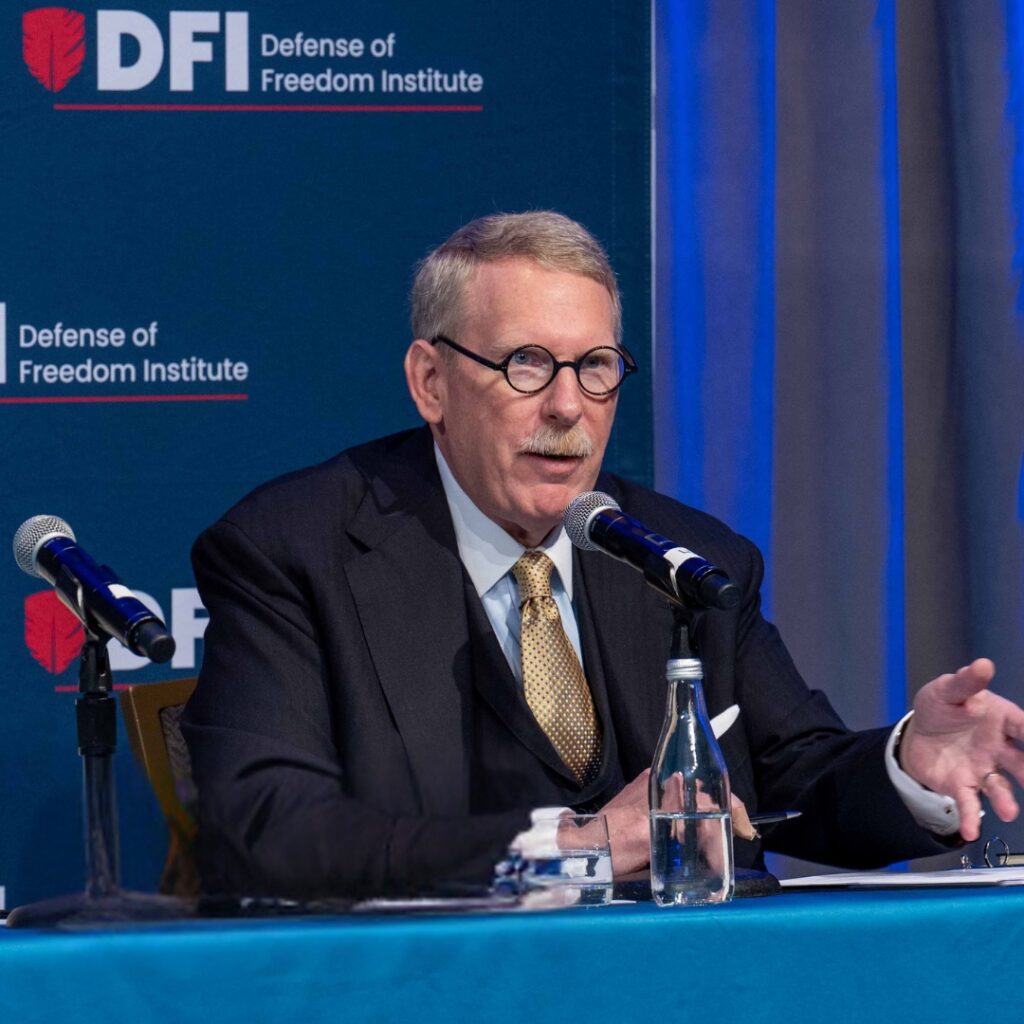
In a recent interview, Robert S. Eitel, president and co-founder of the Defense of Freedom Institute for Policy Studies (DFI), emphasized the urgency of seizing this moment. Central to that opportunity is the federal K–12 scholarship tax credit, a policy with the potential to expand access to schools and services tailored to students’ needs nationwide.
Through federal advocacy, litigation and policy development, DFI works to protect students’ civil and constitutional rights while promoting education freedom and parental involvement.
The following interview has been edited for length and clarity.
Q. What is your mission?
Eitel: The mission of the Defense of Freedom Institute for Policy Studies is to defend and advance freedom and opportunity for every American family, student, entrepreneur and worker, and to protect civil and constitutional rights in both education and the workplace.
We’re unique from other nonprofits in this space in three key ways.
First, DFI focuses on federal activity in education and related civil rights matters. This includes efforts to remove DEI, antisemitism and gender theory from federally funded education programs and activities at schools, colleges and universities; expose the damaging influence of teacher unions; reform postsecondary education and advance education freedom and parents’ rights.
Second, we do more than identify problems. We work to solve them. Through litigation, regulatory engagement, policy development and strategic communications campaigns, we bring a comprehensive approach to advancing change. Our integrated model allows us to pursue legal action, engage directly with regulators, submit substantive public comments that lay the groundwork for future reforms, develop policy alternatives and clearly communicate these efforts to the public.
Third, having worked for former U.S. Secretary of Education Betsy DeVos, we’re the only conservative education nonprofit led by former senior officials from the U.S. Department of Education (Jim Blew and myself, Robert S. Eitel). DFI’s board also includes a former chief of staff to the secretary, two former deputy secretaries of education and a former chief operating officer of the Department. This firsthand experience gives us a deep understanding of how federal agencies operate and how to effectively drive change within them.
Q: Where do you see the most promising philanthropic opportunities in 2026?
Eitel: The education freedom movement has never had more momentum than it does today. This year presents a critical window to ensure every state opts in to the federal K-12 scholarship tax credit established by the One Big Beautiful Bill, and to guarantee, through federal rulemaking, that the tax credit serves students and families, not bureaucrats.
At the same time, we face very real risks. Without sufficient awareness and legislative action, this window could close on several other important issues in education. For example, while courts have blocked or vacated aspects of the Biden administration Title IX regulations, those rules remain in place. Many states and school districts continue to follow them despite the current administration’s decision not to enforce them.
At a minimum, the Department of Education needs to formally rescind these Title IX regulations. Long-term, we need enduring statutory reform under Title IX to end the cycle of regulatory reversals. To that end, DFI has drafted a model law, the RESPECT Title IX Act, to provide a blueprint for enduring reform.
There is also significant work ahead to address antisemitism, DEI initiatives and foreign influence on college campuses, as well as to advance broader higher education reform. Much of the progress in these areas has occurred through executive orders rather than legislation or formal rulemaking. Without efforts to codify these changes, much of that progress risks being lost.
Q: What key challenges and opportunities should donors keep in mind when considering their support for education reform?
Eitel: The conservative education movement has scored major wins for the rights of students and parents, but we cannot afford to lose focus and momentum. DFI is continually uncovering and addressing violations of civil and constitutional rights in education. The political landscape is likely to change, and we must be extremely vigilant to lock in these gains through lasting rulemaking and legislation.
Q: What risks or constraints should donors be paying closer attention to?
Eitel: The federal K–12 scholarship tax credit has the potential to be transformative for families nationwide, opening the door to new schools and services tailored to students’ needs. However, key implementation details are still in play. Treasury rulemaking will ultimately shape how accessible, flexible and scalable these scholarships become. Without strong engagement, bureaucratic constraints could significantly limit the program’s reach and impact. That’s why DFI is actively engaged in the rulemaking process and ongoing policy discussions with both the Treasury Department and the Department of Education—to ensure the law delivers on its full promise.
At the same time, several major policy issues remain unresolved and carry significant long-term implications. Title IX, for example, is at a critical juncture. Without congressional action or clear regulatory reform defining “sex” consistent with biological reality, schools will continue to face legal uncertainty, and students’ civil rights remain vulnerable.
Antisemitism on college campuses also demands sustained federal oversight and enforcement to ensure institutions are held accountable. In higher education more broadly, the accreditation system continues to limit innovation, affordability and student outcomes. Without meaningful reform to allow new accreditors and competition, students will continue to face rising costs and barriers to higher education opportunities that lead to family-sustaining careers.
Q: What feels underfunded but high-leverage?
Eitel: There are three concrete steps that must be taken at the federal level, and each concerns the importance of engagement with the federal bureaucracy.
First, with the Federal Scholarship Tax Credit taking effect on January 1, we must push the Treasury Department to propose and finalize this year a regulation that faithfully implements the tax credit in a way that benefits students and families, not public sector bureaucrats.
Second, we must urge the Education Department to propose and finalize regulations clarifying that Title VI of the Civil Rights Act of 1964 prohibits antisemitism in federally funded programs.
Third, the Biden administration Title IX regulations that put men and boys in women’s and girls’ sports and spaces are still on the books. It’s critical that the administration take immediate steps formally to rescind those regulations and clarify that “sex” under Title IX is male or female, binary and biological, and that it does not encompass any notion of “gender identity.”
The movement must stay engaged with the federal regulatory process.
Q: If you were directing grant dollars today, where would you focus?
Eitel: First, ensuring the successful implementation of the federal K–12 scholarship tax credit is critical. Treasury rulemaking will determine whether this program truly expands opportunities for families or becomes constrained by bureaucracy.
Second, Title IX reform remains one of the most urgent civil rights priorities in education. Resources are needed to support both regulatory reform and potential congressional action to restore clear, durable protections grounded in binary, biological reality.
Third, accreditation is the center of gravity for reforming higher education, as any college or university seeking federal student loans and grants must be accredited by a U.S. Department of Education-recognized accreditation agency. By supporting regulatory efforts to open the accreditation market to new entrants, increase competition and stop “woke” accreditors, donors can help drive down costs, improve quality, preserve civil rights and expand pathways for students.
In parallel, there is an immediate need to confront the rise of antisemitism in education and the broader influence of ideologies like DEI and gender theory that are driving civil rights violations and institutional capture. A coordinated approach—public interest litigation, regulatory action, federal enforcement, policy development and public pressure—is needed to ensure institutions are accountable and students are protected.
Q: What are the latest developments or strategic priorities for your organization that you would like to share with our community?
Eitel: Dr. Jay Greene joined DFI last January to focus on combating antisemitism in education. He will be a valuable addition to our efforts that seek to reverse civil rights radicalism in our schools, colleges and universities.
DFI is leaning heavily into higher education reform, especially with reference to accreditation, which will be the subject of significant federal rulemaking this year. I currently serve on the Department of Education’s advisory committee overseeing accreditation agencies, providing direct insight and input into these processes.
In addition to this work, we are working hard to ensure a strong implementation of the federal K-12 scholarship tax credit through legally defensible Treasury regulations that serve students and families, not public school bureaucracies or union interests.
DFI also continues to examine the root causes of K-12 academic decline in the United States. In our view, this is not a question of funding, but the confluence of several damaging factors, including teacher unions, which serve as a jet stream for malignant ideologies and worldviews to flow into public schools; atrocious teacher preparation programs and the ever-expanding role of technology and screens in classrooms.
If you would like to learn more about the Defense of Freedom Institute or how Philanthropy Roundtable supports K-12 education, please contact Pathways to Opportunity Program Director Stephen Allison.
