
As the Daniels Fund closed its 25th year this past December, Philanthropy Roundtable is celebrating its dedication to improving the lives of men, women and children in Colorado, New Mexico, Utah and Wyoming through its grants and scholarship programs. Our first article of four tells the story of donor intent lost, and then recovered.
Once a foundation veers off course from a donor’s original intent, it’s rare that a full-fledged return to that intent occurs. But that’s what happened on the Colorado Front Range in the early 2000s, when trustees at the Daniels Fund led a systematic process to restore and protect grantmaking based on the donor’s core values. In 2008, former Daniels Fund CEO, Linda Childears, led a session on the rescue at Philanthropy Roundtable’s annual meeting, and Evan Sparks authored the feature story, “Back to Bill” in the Fall 2011 edition of the Roundtable’s “Philanthropy” magazine. It’s a story that never grows old, and one with ongoing meaning for the Daniels Fund and those it serves.
Born in 1920 in Colorado, Bill Daniels grew up in New Mexico. Scrappy from an early age, he won two state Golden Gloves boxing championships in high school, then served as a U.S. Navy fighter pilot in both World War II and the Korean War. Daniels moved to Casper, Wyoming, in 1952. Intrigued by television and amazed by its growing popularity, Daniels was dismayed that the TV signals could not reach mountain towns like Casper.
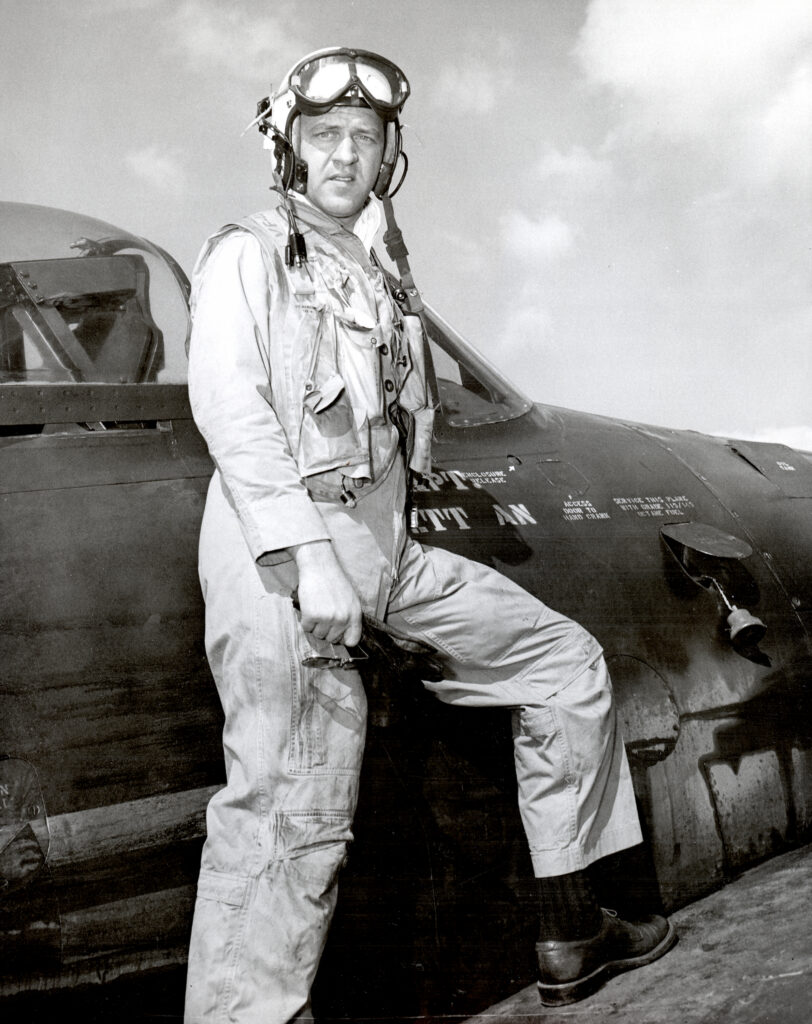
As a workaround, Daniels invested in coaxial cable and secured connection for 4,000 subscribing households (about a third of the total homes in the area). His business took off from there. The cable television boom of the 1980s and 1990s made Daniels very wealthy.
Throughout his life, his charitable giving ranged widely. He reached out to those down on their luck, those who abused alcohol and drugs, and those who suffered from mental and physical disabilities. He provided scholarships, with a focus less on academic achievement and more on demonstrated character and leadership potential. He funded efforts to integrate ethics into business schools, and created a bank meant to teach young people the principles of finance and personal responsibility. Through it all, his giving was largely personal: Daniels routinely enclosed a note with each check, explaining to the recipient what he hoped his money would do.
When Daniels passed away in 2000, his $1 billion estate transferred to the Daniels Fund, making it one of the largest foundations in the nation. Even though he believed he had clearly codified his donor intent—delineating which geographic areas and causes he wished to support and which he didn’t, and even listing funding amounts for his favorites—he had failed to clarify the underlying values and principles that should guide the foundation’s giving. That omission, combined with professional staff whose worldviews differed from the donor’s, produced a culture unfriendly to Daniels’ original vision.
This was typified in 2002 when a staff member turned down a grant request from the Smithsonian National Air and Space Museum to fund an educational exhibit featuring World War II aircraft on the grounds that it would be inappropriate to fund a project featuring “instruments of war.” When it was pointed out that Daniels himself had piloted the same type of aircraft to defend the cause of freedom, the program officer still insisted that the request be declined.
That incident brought a sharp reaction from John Saeman, a member of the Daniels Fund board at the time who later served as chairman. He described it to Sparks in 2011 as “a wake-up call.”
“Suddenly the Daniels Fund was starting to look like someone else’s foundation,” added Linda Childears, then president and CEO of the foundation. Daniels’ original donor intent was being disregarded, prompting a majority of the board to intervene. The result was a five-year effort to ensure that Bill Daniels’ intentions and ideals would underpin the way the foundation conducted its business.
The board’s first major step was hiring a new president. Former U.S. Sen. Hank Brown had known Bill Daniels for decades through Colorado politics and a mutual interest in charitable activities. The two shared similar backgrounds and values. He began by closing regional offices across the Mountain West and consolidating staffing in the Denver office.
As Sparks noted in 2011, staffing multiple offices with local grantmaking professionals had resulted in inconsistency in funding decisions among the different regions as well as decisions not aligned with donor intent. An analysis also showed the organization was spending about 20% more on administrative overhead than its peer foundations, in large part because of the satellite offices.
Next came the codification of Daniels’ intent in writing. Directors pored over their founder’s letters and writings. They carefully studied his giving history—Daniels had made charitable gifts for 25 years prior to his death—and interviewed numerous associates to better understand his intentions. After careful deliberation, the directors defined grant areas, guidelines and grantmaking parameters, all anchored in Daniels’ words and deeds. They amended the foundation’s bylaws to include these new donor-intent documents, including ones that told Daniels’ story from beginning to end, creating a fuller profile of the man that left no doubt about his values and principles.
Additional protections—still in place today—require all board members of the Daniels Fund to acknowledge, in writing, that they have read and understood the full set of materials on Bill Daniels. They are also required to sign a statement affirming their commitment to preserve Bill Daniels’ donor intent and his personal style of conducting business, and understand its importance in guiding the efforts of the Daniels Fund. Finally, it requires a 90% majority of the board to amend the Daniels Fund giving parameters in the future. Staff members are also required to sign a document stating: “I am committed to preserving Bill Daniels’ donor intent and I understand the seriousness of this endeavor.”
In fact, during the hiring process, potential candidates are carefully vetted for a genuine passion for, and alignment with, Daniels’ values, including a belief in the free market system, and patriotism.

Today the Daniels Fund focuses on grantmaking in areas closely in line with Bill Daniels’ wishes and history, including aid for the down-and-out, help for those addicted to drugs and alcohol, and college scholarships for hundreds of students every year as they graduate from high schools in Colorado, New Mexico, Utah, and Wyoming.
It is a leader in the movement to advance civics education, while also focusing on expanding school choice, lowering cost barriers to participation in youth sports and empowering leaders to apply principle-based ethics. The Fund is also a vocal advocate of protecting donor intent.
The Daniels Fund could easily have taken a wholly different direction were it not for the intervention of alert trustees and loyal friends. But the story doesn’t end here.
As a foundation committed to perpetuity—once again honoring the wishes of Bill Daniels—the Daniels Fund has learned that playing defense on donor intent is insufficient over the long term. Staying true to its mission demands some offense too, and celebrating its founder’s values is a key element in that strategy. Its website makes clear all funding areas “are built entirely on the legacy and values of a single donor” and “Bill Daniels’ deep commitment to these values guides every decision we make.”
Another element of that offense is Bo Peretto, the foundation’s senior vice president of legacy and donor intent. Peretto first met a 70-year-old Bill Daniels when he was a 10-year-old entrepreneur. Peretto’s title is unusual in philanthropy, as are his responsibilities: “He leads the integration and preservation of Bill Daniels’ life and legacy throughout the Daniels Fund and all of its activities. Bo stewards the direction, style, and values of Bill Daniels in a manner that advances Bill’s legacy for generations to come.”
The next piece in this series features an interview with Bo Peretto and will follow the story of maintaining donor intent at the Daniels Fund as it moved from recovery to celebration.
