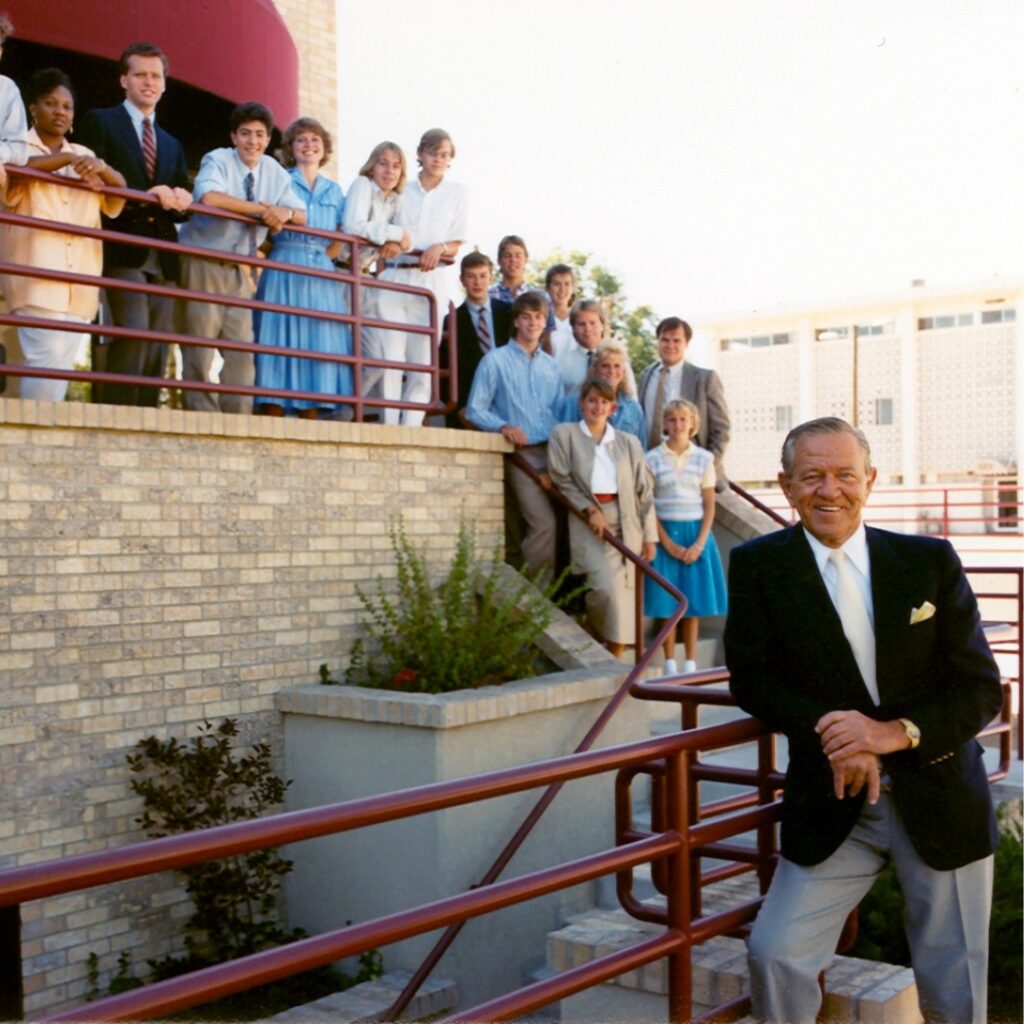
As the Daniels Fund closed its 25th year this past December, Philanthropy Roundtable is celebrating its dedication to improving the lives of men, women and children in Colorado, New Mexico, Utah and Wyoming through its grants and scholarship programs. Our first article told the story of donor intent lost and then recovered. The following interview with Bo Peretto, the Daniels Fund’s senior vice president of legacy and donor intent, takes the story from recovery to celebration. As Peretto says, the goal is now not only to protect Bill Daniels’ intent, but also project his values and principles into the future.
Florino: Your childhood relationship with Bill Daniels is a fascinating story, so let’s start there. How old were you when you started your first business and what inspired you to attempt that?
Peretto: I was 10 years old, in third grade. I think I’ve always had an entrepreneurial spirit – thinking about business ideas and looking for the opportunity to make some money. And I also think about that in my work at the Daniels Fund, especially since Bill was a serial entrepreneur. But back then, I read business books, I had my leather briefcase and was frankly more interested in interacting with adults than with my peers.
Florino: But how did you know about Bill Daniels?
Peretto: So here I am, this weird business kid, and one of my teachers, Mr. Smith, saw that I had this interest and suggested I find a mentor. I think he recognized I was unlikely to get the kind of support I needed or any type of business education at my local elementary school. He suggested that Bill Daniels might be a good choice.
Bill was very well known, especially during that time. It was the early 1990s and Bill was at the height of his business success during the growth of the cable television industry.
I researched Bill and ultimately wrote to him. I created a mini-biography of sorts and sent him a plan on how I wanted to expand my business, which was called MBJJ, Incorporated. I was the “B” and I had several friends as partners, but I was pretty much the CEO of the business. At that time, we had a Jolly Rancher factory in Denver where you could buy 10 pound bags at wholesale prices and then my business would resell them for a profit.
When I sent that off to Bill, I certainly was not expecting any kind of response from him. At that point, I knew he was very successful, worth a lot of money, and likely didn’t connect with random kids like me.
I still remember the day when I was at my neighbor’s house, and my mom came over and said Bill Daniels is on the phone for you. And he said, “I received the information you sent and I want to meet you and learn more about your business next time I’m in Denver.” My communication with Bill continued and whenever I would ask him questions about my business, he always responded. I still have every letter Bill ever wrote me and every letter I sent him.
I remember one of the questions I asked Bill was “You know, a lot of people think I’m stupid for being interested in business. What do you think? Is it stupid?” And Bill responded in his letter to me, “A lot of people thought the cable television business was stupid. Look at it now.”
Bill was a straight shooter, a plain communicator. He treated me as if I was an adult and had value. I arranged a time to meet him in Denver. I went with my parents to his office on a Saturday. Here was a kid from the lower middle class, from the suburbs going to Bill Daniels’ building. That was an experience I never imagined I could have.
Florino: What happened at that meeting?
Peretto: His assistant was there to make sure my parents and I were comfortable, and then we went to meet with Bill. And Bill had a large office and desk with couches and all kinds of things. But Bill, I learned later, held most of his conversations at a small table in his office, and so I sat at that table across from Bill and we got to know each other.
I think Bill wanted to know what made me tick. Why was I interested in business at 10 years old? And I told him I wanted to expand my business and Bill decided he wanted to be my business partner. We talked about what that meant, and we made a deal. I would own 80% of the business, Bill would own 20%, and Bill would inject some capital into my business so I could grow it.
He had me go to Young Americans Bank to open a business checking account and take out a loan for my business that he’d guarantee. This was his way of helping me learn about the importance of credit and the role it plays in your business. Later in life, I learned that he had many bankers who believed in him and his business and ultimately helped him be successful. I think he wanted me to learn that for myself.
Florino: In fact, Bill Daniels founded Young Americans Bank in 1987 to give young people the financial literacy needed to succeed in the free enterprise system.
Peretto: Yes, and I worked at Young Americans Bank for nine years before joining the Daniels Fund in 2006. I’ve been a Daniels employee since I was 16 – that’s going on 30 years.
Florino: What were you doing when you first worked at the Daniels Fund?
Peretto: I had worked with Linda Childears for many years at the Bank. When she became CEO of the Daniels Fund in 2005, and I moved to the Fund about six months later. By then, she had a long list of things she wanted accomplished, and one of those was archiving all Bill’s correspondence for future board and staff use. This involved thousands of letters and notes to and from Bill.
I also worked with Linda and others to create the book, “The Life and Legacy of Bill Daniels.” Most of my assignments really related to Bill’s legacy and donor intent, given my long history at the Bank and my relationship with Bill Daniels. I also oversaw communications, supported our board and managed our ethics initiative. Whatever was important to Bill Daniels was part of my job.
Florino: When did you get your current title, “senior vice president, legacy and donor intent?”
Peretto: When Hanna Skandera became CEO in 2020, she doubled down preserving and promoting Bill’s donor intent. But increasingly in our conversations we discussed the opportunity to emphasize the importance of the values by which Bill lived and operated his businesses.
In my mind, you can protect his donor intent all day long, and you should. But if you don’t hold on to his heart and his values, it’s only words on paper.
Hanna envisioned having all the pieces in place to create a living legacy, and the question became how do we maintain that heart and those values when, over time, we’ll lose all the people who knew Bill Daniels? For several years now that’s been my role and my lens. Like my other colleagues who have a financial lens, or a grants lens or scholarship lens, Hanna’s charge to me is to use a values lens in everything we do.
Florino: I remember Linda Childears remarking about Bill leaving a list of his priority issues for grantmaking but never explaining why he had chosen those issues or what they meant to him.
Peretto: Yes, it’s been a journey. Linda and the team worked so hard to get things on track and solidify Bill’s intent for the Fund. We’ve been here 25 years now and the story isn’t perfect, but we’ve been lucky to have committed people along the way. I often think of our current phase as Daniels Fund 2.0. One that involves projecting Bill’s values and donor intent, not simply protecting them.
Florino: Tell me more about that.
Peretto: In the late 1980s, Bill Daniels authored a set of philosophical statements used to share his values in trade publications. Those statements didn’t use the company name, but they carried Bill’s signature. We have “refreshed” these statements and distributed them as part of our 25th anniversary, calling them “The Enduring Wisdom of Bill Daniels.”
These statements are short and to the point. And I think that all of them are more relevant today than they were in the late 1980s when Bill wrote them. You can read Bill’s own words about class and opportunity in this country and the importance of giving back. We are committed to creating this living legacy by bringing Bill alive and sharing his values, not leaving him behind as someone who died 25 years ago.
Florino: Let’s talk a bit about where staff come into play, and how important it is to hire the right people. That’s an area where I have seen slippage, sometimes with very unfortunate results.
Peretto: Yes, and that’s the reason I’m part of the team managing our hires. I interview folks who seem like the right candidates for our available roles to get their perspectives on Bill and his values.
Do they understand their stewardship responsibilities and what it means to steward Bill’s resources, his life’s work, his values and his intent in a way that’s not about them? For many people, that’s simply not a good fit. For us, keeping Bill’s legacy front and center is core to our hiring process.
Florino: I’m betting the focus on legacy continues in your onboarding process.
Peretto: It does. For new employees, their first meeting is focused on legacy to talk about the importance of Bill’s legacy and intent. I show videos of Bill talking about what he cared about, and videos of folks who knew Bill personally. This is my role – to support the Daniels Fund, our staff, our board and Hanna. And the focus on Bill never stops.
We have what we call “Be Like Bill” moments at every staff meeting. I’ll sit down with a new employee and ask, “What about Bill resonates most with you?” And I’ll connect that employee with the relevant resources we have in Bill’s archive. For example, if we have a staff member who was in the military and Bill’s military service is something that stands out, that employee can tell his or her story along with Bill’s. And then we can discuss how that informs our work at the Daniels Fund. I think this is meaningful to our employees, and it exposes them to the amazing resources we have available.
Florino: But there must be times when you need to make a judgment call – funding areas that Bill never mentioned, for example. Can you talk a bit about using those resources in those instances?
Peretto: That’s where understanding Bill’s values and principles are so important. Bill was so well known for the way he did things. Within the structure we’ve built, can we accommodate other issues and still feel comfortable that we’re aligned with what Bill would do? At the end of the day, if we’re projecting a living representation of his values, I think we’ll get it right. Our employees have gotten younger and have no personal knowledge of Bill Daniels, but we have the tools to help them understand how what we do is tied to his life.
Luke Ragland, our senior vice president overseeing our grants program, is a great example of this. He was a grantee of the Daniels Fund, but now he leads our grantmaking team and is an amazing steward of Bill’s intent. This is what Linda frequently reminded me – someday there will be new staff and board members who didn’t know Bill. For me to see us go through this transition and know donor intent and Bill’s values are stronger than ever, is a testament to all the hard work that was done by Fund’s board and past leaders.
Florino: You get credit for that as well, Bo. What plans do you have now?
Peretto: Now we can take it to a whole different level. I’ve been thinking about AI, and I think there’s a tremendous opportunity there. We have lots of resources about Bill, but we don’t have video of Bill discussing what he wanted for his foundation. I’m imagining an interactive Bill Daniels with whom grantees and scholars might converse to learn about him and his values. We have to use AI carefully, of course, but it’s not going away. So let’s think about how we can use it to talk about donor intent and values.
Florino: That’s a great idea! I know I would be eager to have a conversation with Bill Daniels. I have one last question, Bo. There are an increasing number of donors deciding to limit the lifespan of their foundations. Bill specified perpetuity. Did he leave behind an explanation for that decision?
Peretto: Not that I’m aware of. When I spoke at Philanthropy Roundtable’s Annual Meeting, I mentioned how much I love our country’s freedom for donors to establish foundations for all kinds of causes. They can choose perpetuity, they can choose sunsetting. If I had to guess, I would say that Bill understood the power of perpetuity.
It’s quite amazing when you realize Bill left the Daniels Fund $1.1 billion. We’ve distributed more than $1.5 billion and we have $1.8 billion left. That was Bill’s choice, but all donors have the freedom to consider both the risks and the opportunities of the foundation lifespan they choose and then make an informed decision.
