In 2023, following passage of the Donor Intent Protection Act in Kansas, Philanthropy Roundtable launched a monthly series on donor intent developments and controversies nationwide to better inform you about this important topic. The Donor Intent Protection Act has now passed in Kentucky, Georgia and Montana, and efforts on behalf of this legislation will continue in additional states in 2025 and 2026.
We encourage donors to contact us with any questions about our featured items and consult additional resources on donor intent at the Roundtable’s Donor Intent Hub. We also welcome any news about donor intent we may have missed.
This month’s Donor Intent Watch opens with the re-telling of the six-year donor intent dispute between the Robertson Family and Princeton University. We close with the fourth in a series on the importance of choosing the right vehicle(s) for your giving. In this installment, we share the pros and cons of using supporting organizations.
Robertson v. Princeton, 2002
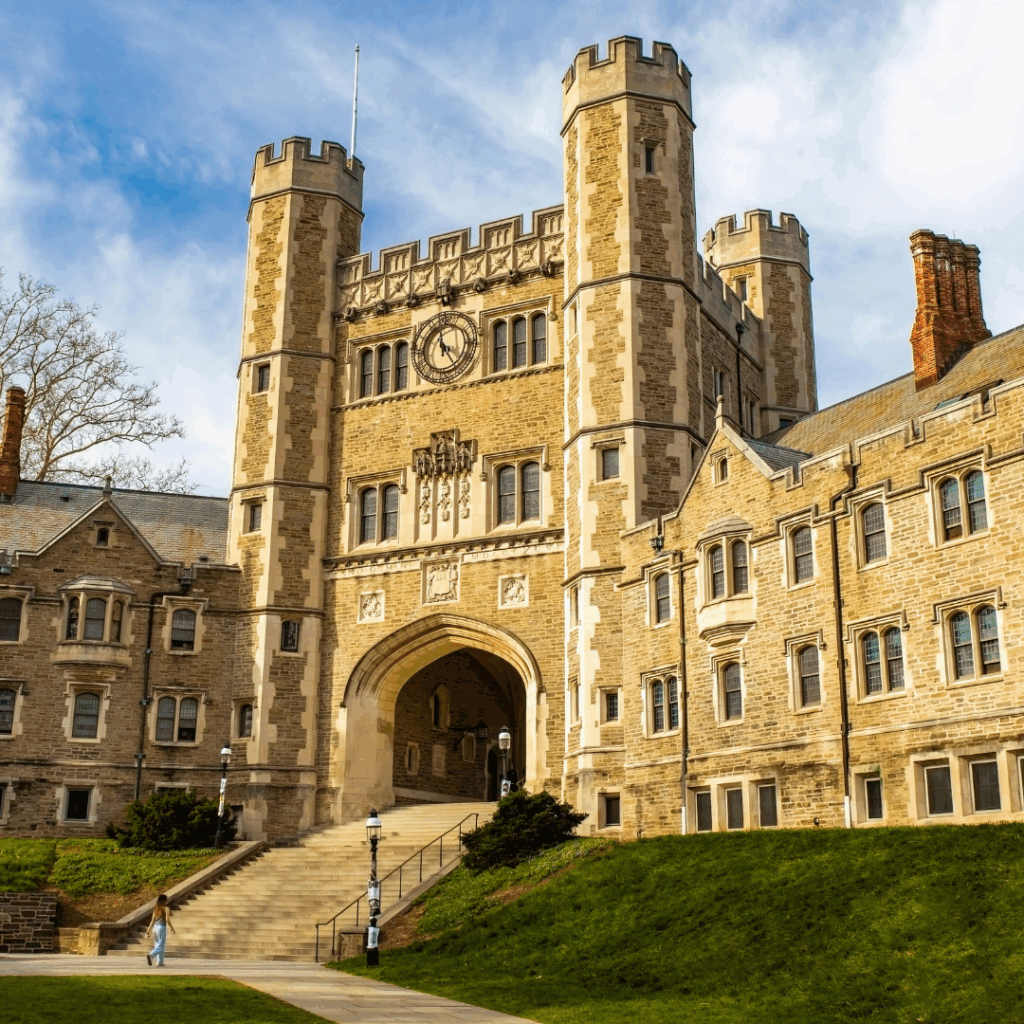
One of the most publicized donor-university skirmishes is the dispute between Princeton University and the Robertson family. In 1961, A&P grocery fortune heir Marie Robertson and her husband Charles gave Princeton A&P stock worth $35 million to endow a supporting organization (the Robertson Foundation) whose restricted purpose was to educate graduate students “for careers in government service.”
The endowment’s value mushroomed to approximately $900 million by 2002, and it was being used to fund most of the graduate programs in the then-named Woodrow Wilson School of Public and International Affairs. The Robertsons’ children concluded Princeton was not fulfilling the terms of the endowment and filed suit.
A PriceWaterhouseCoopers forensic audit of the Robertson Foundation accounts found Princeton had, in fact, misused more than $100 million in earmarked funds. After spending nearly $90 million combined on legal fees without even going to trial, the Robertson heirs and the university reached a settlement in 2008 in which Princeton agreed to return $90 million. After the family’s legal fees were paid, a bit more than $50 million went to fund a new Robertson Foundation for Government that is independent of Princeton and allows Robertson family members to honor the donors’ original intent at other academic institutions.
Princeton took the remaining funds and rolled them into its overall endowment, which now stands at more than $34 billion—and the original Robertson Foundation was dissolved. Both sides claimed victory, but the $90 million returned to the Robertson family by Princeton constitutes the largest award on behalf of donor intent in history. The lead plaintiff in the suit, William Robertson, issued a statement calling the settlement “a message to nonprofit organizations of all kinds throughout our country that donors expect them to abide by the terms of the designated gifts or suffer the consequences.”
Take Care When Utilizing Supporting Organizations in Your Philanthropy
Supporting organizations are, at first glance, attractive tools for donors who value simplicity, and seek an ongoing, perhaps multi-generational, relationship with the charity to be supported. Broadly defined, a supporting organization (SO) is a distinct legal entity that has a supporting relationship with a public charity. The Internal Revenue Service (IRS) recognizes three types of supporting organizations based on their connection with the supported organization and the degree of control exercised by the supported organization.
In terms of benefits to donors, supporting organizations:
- Do not have to meet the public support test, and qualify as public charities even if they have only one donor.
- Are not subject to a minimum annual distribution requirement.
- Save you from the paperwork, administrative and reporting responsibilities and costs associated with a private foundation.
- Generate the public-charity tax advantages for contributions that are far more favorable than those of a private foundation.
- Free you from the management of day-to-day operations, since these are typically handled by the supported charity.
- Allow you to involve generations of family members, who may act as advisers to the supporting organization.
On the downside, a donor cannot control a supporting organization. The supported charity is guaranteed majority control or—at the very least —strong influence over the use of funds. IRS rules require that officers, directors or trustees of the supported organization have a significant voice in the investment policies and grantmaking decisions of the SO. A supporting organization may be respectful of your intentions while you are alive and seem likely to make additional gifts. But once you are no longer providing funding, supported organizations may lose incentives to honor your intent.
To reduce this risk, you can request the appointment of those officers or trustees you know and trust. You can also include an exit clause in your agreement directing funds to go to an alternative organization if the SO is unable to carry out your instructions. Neither of these measures is foolproof, though, and your giving priorities may well be disregarded over time.
Although the above-mentioned Robertson Foundation’s dispute with Princeton University in the early 2000s is cited frequently as an example of donor intent violation, some accounts fail to note the Robertson Foundation was a supporting organization. Princeton held majority control of its board with four trustees, none of whom had been present when the university agreed to the gift terms established by Marie and Charles Robertson in 1961. The Robertson case makes clear the potential danger to donor intent of using supporting organizations in your philanthropy without clear legal guidance.
