
Like many veterans reentering civilian life from active-duty military service, Emanuel Johnson struggled to find employment and fulfillment after returning to Chicago. He’s not alone. A recent survey of 1,000 post-9/11 veterans found 33% cited the transition to civilian employment as their greatest post-service challenge. Other top concerns included the loss of military friendships and the pursuit of purposeful careers.
Fortunately, Johnson was introduced to Leave No Veteran Behind (LNVB), an innovative nonprofit dedicated to veteran career development through a community-integrated model. LNVB helped him secure a transitional job mentoring youth in distressed South Side neighborhoods. Johnson went on to serve as senior policy advisor at the Illinois Department of Veterans Affairs and later as senior program officer at the Robert R. McCormick Foundation.
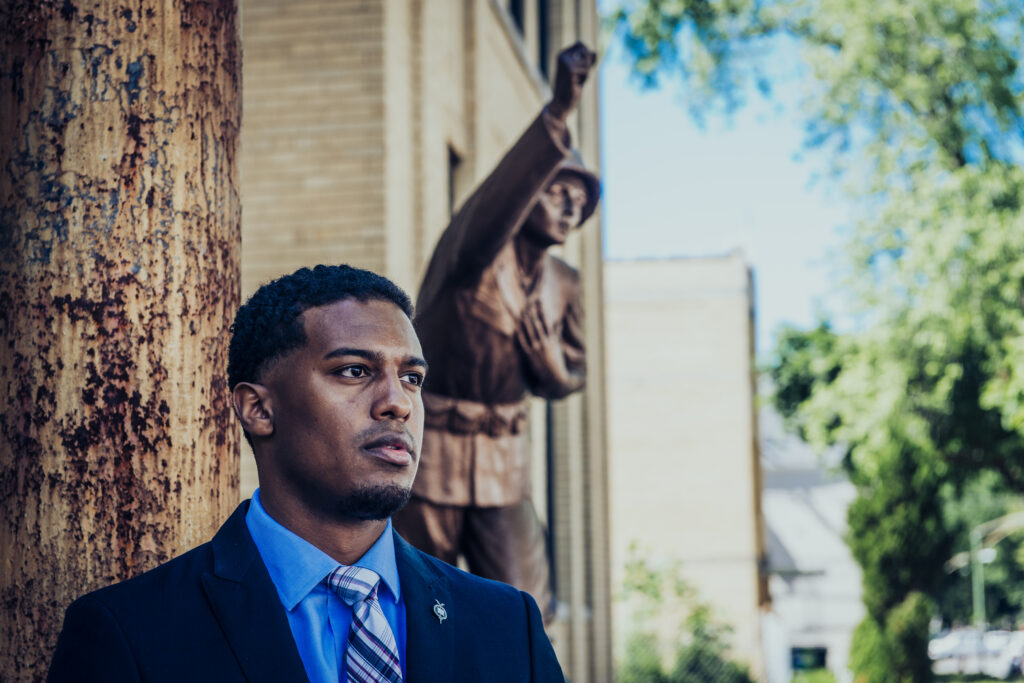
After leaving the foundation, Johnson realized working with youth was his true passion. He is now pursuing a master’s degree in education and working toward becoming a full-time teacher in the Chicago Public School system. Not only did LNVB assist Johnson with his physical and material needs during his transitional period, it also connected him and inspired him to pursue a fulfilling career. Johnson is just one example of how education and employment can serve as an essential lifeline for veterans returning to civilian life.
According to U.S. Army veteran and co-founder of LNVB Eli Williamson, LNVB invests in veterans to build better communities through employment training, transitional jobs and a veteran educational debt relief scholarship.
“Supporting veterans in their transition to civilian life not only improves the lives of the veterans but also enriches the communities in which they return,” said Williamson.
“At the Bauer Foundation, we believe deeply in Leave No Veteran Behind’s mission to help veterans transition from service to meaningful careers,” said Roy Svenson, director of the M.R. Bauer Foundation. “Their model doesn’t just help veterans find jobs, it helps them rebuild purpose, leadership, and belonging in their communities and that’s why we’re proud to stand with them.”
One reason LNVB’s reintegration program is so effective is it harnesses the diversity of veteran training and talent to provide transitional employment that supports community initiatives such as youth violence prevention, public safety and mentorship. As Williamson explained, “Veterans don’t return to programs; they return to communities.”
Since its founding, he added, “[LNVB] has provided over 2,000 transitional jobs directly and through partner cross-sector organizations. These veterans work alongside community members who are part of their integration process into the communities in which they live. It is a learning experience for both groups and provides a catalyst to address the civilian-military divide.”
LNVB connects veterans with transitional community-oriented positions, providing a purpose and a means of living while they pursue education for their new chosen careers. Ensuring veterans have access to employment opportunities is as important as ever.
“Veterans usually suffer from underemployment, and now we are seeing an increase in unemployment among veterans,” Williamson said.
Williamson said the conversation around veterans and employment too often centers on whether veterans can find jobs, rather than on helping them build fulfilling careers. Many veterans experience a mismatch in their military roles and their desire to work in new fields after service. In addition, returning veterans often lack the professional networks their civilian peers rely on when seeking new opportunities.
Education is another steep mountain veterans must climb upon workforce reentry. While the military assigns rank based on prior education before enlistment, the post-9/11 G.I. Bill does not cover education completed before joining the military and does not always fund advanced degrees. As a result, many veterans face economic hardship, preventing them from pursuing higher education that could help them transfer their expertise into other careers. To address this need, LNVB offers a Retroactive Scholarship that fully repays recipients’ student loans.
The LNVB Retroactive Scholarship receives hundreds of veteran applications each year. To qualify, veterans must have completed some form of higher education, be experiencing economic hardship and carry student loan debt because existing programs did not fully cover their costs. Awardees also complete 100 to 400 hours of community service that leverages their military skills, education and financial freedom to address pressing local issues.
LNVB’s Executive Leadership Program further helps veterans translate their skills and stories into stronger career trajectories. This can be within their current organizations or in new fields that may not yet recognize the value of their diverse backgrounds.
This Veterans Day, let us remember our service members and express gratitude to them for our security by honoring veterans every day. The Roundtable is thankful to our military personnel for their sacrifices, and we thank our community of generous givers and nonprofits like LNVB, striving to return the favor.
To learn more about Leave No Veteran Behind, contact Portfolio Director Clarice Smith.
