
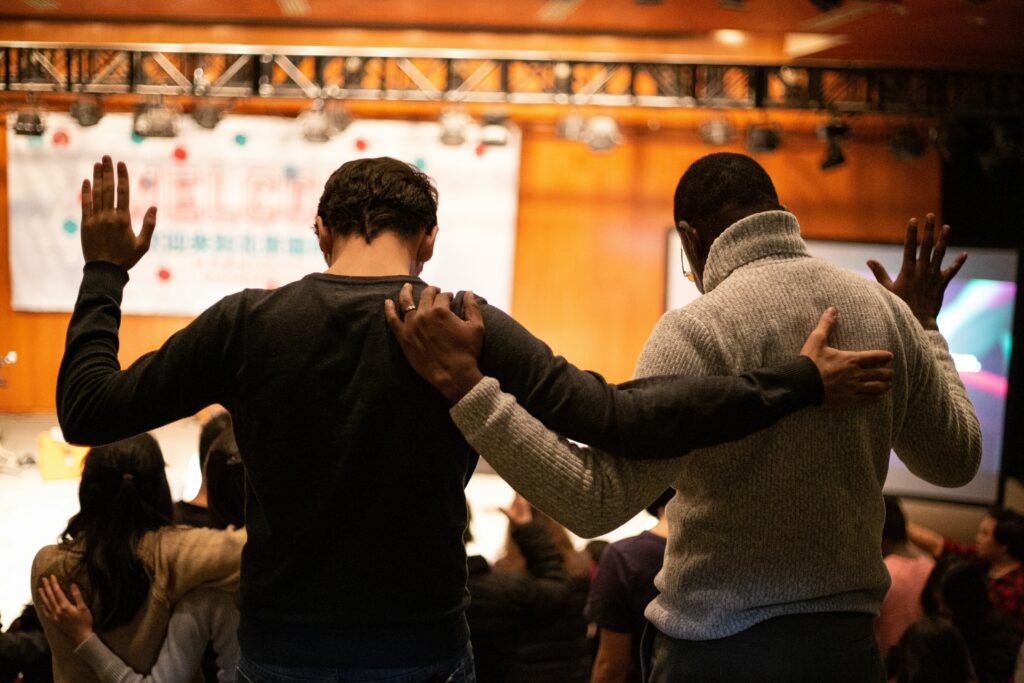
What began as a simple chapel service at Kentucky’s Asbury University in February 2023 unfolded into a two-week, round-the-clock spiritual gathering that drew more than 50,000 people from across the nation. The so-called “Asbury Revival” surprised America, not because it was loud or orchestrated, but because it revealed a deep and growing longing for meaning among young people.
After decades-long abandonment of organized religion, signs of renewed spiritual curiosity—especially on college campuses—are sparking a critical question, posed by Ross Douthat of The New York Times: Is America poised for revival?
Across the country, young adults are turning to faith in unexpected places: college campuses. Gen Z is pushing back against rising loneliness, anxiety and division, not by abandoning religion, but by seeking identity, purpose and belonging within it.
Whether it’s Jewish students reclaiming ritual and community, Catholics filling parishes on holy days or Protestants forming learning communities on elite campuses, this generation is choosing faith not out of obligation but out of a deep yearning for identity and belonging. And the world is taking notice: The Washington Post recently chronicled the Gen Z journey of faith through the eyes of students and religious leaders.
For philanthropists, this moment represents a strategic and high-impact opportunity to invest in organizations that help young people explore faith, seek truth and build community. Supporting these initiatives is not only timely, it’s catalytic. It fuels a movement already underway and equips a rising generation to anchor their lives in something deeper and more enduring.
A Measurable Rise in Faith Engagement
Across faith traditions, a surprising and significant shift is underway. Young people are returning to religious and spiritual life. What once looked like an irreversible decline has given way to renewed curiosity, deeper engagement and hunger for meaning that is reshaping communities across the country.
The data tell a powerful story. According to Gallup, the number of 18- to 29-year-olds attending worship services every week increased from 19% in 2020 to 25% in 2025. In the aftermath of the October 7, 2023, Hamas-led terror attacks on southern Israel, and a sharp increase in antisemitism across the world, those of the Jewish faith, particularly young people, are engaging more with Jewish life. Young people age 18-25 make up 21% of what the Jewish Federations of North America call “the Surge” of renewed interest in engaging with Judaism.
After a period of sharp decline in the 2000s and 2010s, rates of adherence to Christianity appear to have leveled off and stabilized. In 2024, approximately 69% of Americans identified as Christian, a figure that has remained largely stable since 2020, according to Gallup. The National Catholic Register reports some dioceses saw year-over-year increases of 30% to 70% in new converts.
They discuss the Diocese of Fort Worth, Texas, which experienced a 72% jump in converts from 2023 to 2024. Rite of Election ceremonies across the country saw record-breaking turnouts, and attendance at Ash Wednesday Mass in 2025 surged across the Western world. Harvard found Gen Zers identifying as Catholic rose from 15% to 21% in just one year.
Meanwhile, the American Bible Society’s 2025 report shows a measurable rebound in Bible engagement, especially among young men and millennials. Digital tools like Hallow and streaming shows like “The Chosen” have made spiritual formation more accessible and compelling than ever. “The Chosen” has been watched by over 280 million people—a third of whom do not identify as religious, as noted by the American Bible Society’s report.
Philanthropy’s Role in the Spiritual Awakening
On campuses across the country, hunger for faith is visible and growing. This spiritual renewal is often fueled by private philanthropy supporting institutions—nonprofits, campus ministries, counselors, houses of worship and more—that form the scaffolding of faith development. Philanthropy is figuratively and literally building the spaces that foster the spiritual resurgence happening across the country.
Foundations like The Marcus Foundation and the John Templeton Foundation, among many others, are demonstrating that strategic investment in study centers, campus communities, faculty networks and digital platforms can reach young adults and invite them into richer spiritual formation.
This includes revitalization of Jewish identity and resilience through the Hillel Israel Action Program at Cornell, Tikvah and the Hamilton School University of Florida, Christian study centers like Cornell’s Chesterton House and innovative initiatives like Harvard’s Human Flourishing Program. These investments help students ponder life’s biggest questions, confront today’s cultural pressures and build lasting communities rooted in faith.
Philanthropy has a unique opportunity to strengthen this infrastructure. Funding benefits youth engagement and spiritual formation, campus ministries and faith-based academic centers, faith-informed counseling and mental health support, religious literacy and interfaith initiatives and civic engagement rooted in moral and religious values, among many others.
Jewish Communities Reclaim Ritual and Identity
In the wake of October 7, 2023, a scourge of antisemitism was brought to the forefront of national conversations. But a quiet undercurrent of this noxious ideology has been fomenting for decades on campuses and in digital spaces where many young people spend their days.
Alongside this, Jewish life in America saw a steep decline, with one-third of young Jewish adults saying in a 2020 Pew study that being Jewish isn’t important to them. The same study showed an abandonment of the rituals and traditions central to Jewish life. But in the face of adversity, bold organizations have stepped up, leading a revitalization of Jewish life in higher education.
The Marcus Foundation: Hillel Israel Action Program
Amid an increase of antisemitism at campuses across the country, the Hillel Israel Action Program at Cornell University has expanded its work providing a safe and vibrant space for Jewish identity and learning. The program is supported by the The Marcus Foundation, founded by the late Bernie Marcus, co-founder of The Home Depot.
Support for Jewish causes is a key investment area for the organization. They have continued to pursue Marcus’s vision by supporting the next generation of Jewish college students.
“What happens on campus? This is the time of emerging adulthood,” says Yoni Kaiser-Blueth, program director for The Marcus Foundation’s Jewish Portfolio. “This is where students start to become adults and make choices for the first time. It’s about their careers. It’s about mentorship. But it’s also about their Jewish spiritual life. And in order to nurture and foster that, you need institutions.”
Hillel is one of those institutions. The program connects Jewish students to the “why” behind their faith. In doing so, it fights antisemitism on campus by meeting hate with conviction and purpose. It has a presence on over 500 campuses nationwide.
The Hillel Israel Action Program’s intent is underpinned by the Talmudic saying, “Whoever saves a single life is considered by Scripture to have saved an entire world.”
The Marcus Foundation’s big bet investment, which dates back over a decade, is a talent grant to build Hillel’s capacity in staff retention and elevate staff culture to promote growth and expansion. Inspired by Home Depot’s inverted pyramid strategy of investing in culture and people, the Foundation’s investment drove a vision to inspire and accelerate impact, thus effectuating real, lasting change downstream.
Hillel appeals to those in search of community, conversation and connection amid challenging times. It also aims to engage entrepreneurial students. And with 85% of Jewish students going on to attend college, it’s a promising investment for donors who want to care for the Jewish community.
Their investment yields important results. When it comes to combating antisemitism, Kaiser-Blueth says negative incidents against Jewish students have been reduced, and more students are engaged.
“Every dollar, every grant, is about a student’s journey,” he says.
For The Marcus Foundation, philanthropic support transcends mere financial support. Instead, it’s about impact and a commitment to a better future within the Jewish community and beyond.
Tikvah: Robert M. Beren Program on Jewish Classical Education at the University of Florida’s Hamilton School
Jewish ideas and Jewish history are central to Western civilization. At the University of Florida’s Hamilton School for Classical and Civic Education, the newly created Robert M. Beren Program on Jewish Classical Education is bringing this educational vision to life.
Thanks to the generous support of the Robert M. Beren Family Foundation, Paul and Karen Levy and Gary and Lee Rosenthal, Tikvah has partnered with the Hamilton School to build this new program, which will hopefully be a model for universities nationwide. A total of $15 million in philanthropic support has fueled this program’s mission to explore the link between these intellectual traditions.
The program focuses on “the intersection of Jewish, Western and American civilization” and is presented in partnership with the Rosenthal-Levy Scholars Program, a prestigious new scholarship created by Tikvah. Undergraduate students interested in studying “the great ideas of Jewish and Western civilization” with aspirations to become American civic leaders may qualify to become Rosenthal-Levy Scholars, with a full tuition award plus a living stipend.
Tikvah has just announced a similar project at the University of Texas at Austin called the Ackerman Program on Jewish and Western Civilization, and the larger aim is to expand to many more universities in the future.
“Our vision is to build something positive,” says Eric Cohen, CEO of Tikvah. “Not in Jewish fear and isolation from American civic life, but in an effort to contribute to the broader renewal of American and Western civilization. As Jews watch many of their beloved alma maters betray core American values, we have before us a generational opportunity to build new citadels of serious liberal education with Jewish ideas at the center.”
The program is named for the late Jewish philanthropist Robert M. Beren, a prominent supporter of Jewish institutions in America and Israel. His support has been instrumental in building Tikvah, Yeshiva University, the Robert M. Beren Academy and many other Jewish educational programs. Staunchly committed to Jewish excellence and American liberty, Beren encouraged younger generations to stand firm in their identity as Jews as an antidote to antisemitism.
Each Tikvah-university partnership will feature a rigorous series of courses on Jewish civilization, Western culture and modern Israel, all based within the Western civilization schools like Hamilton. These academic centers will work closely with the Rosenthal-Levy Scholars program, an elite national scholarship modeled after programs like the Rhodes and Morehead-Cain Scholarships. It will also involve a study abroad program in Israel, an investment in Jewish campus life and a professional development and mentorship program.
As the Tikvah program aims to expand into more colleges, it is focused on partnering with values-aligned donors to strengthen Jewish and American civic life for the next generation.
Deepening Spirituality through Philanthropy
The abandonment of Christianity in 2010s America was sharp and precipitous. In a 2019 Pew survey, the number of Americans who described themselves as Christians was down 12 percentage points from 2009, from 77% to 65%. And they weren’t flocking to other religions. The same survey saw those who formally regarded themselves as religiously unaffiliated climb from 17% to 26%, accounting for a majority of the decline in Christianity. That growth was most pronounced in young adults. Instead of accepting the decline of faith, smart philanthropists are looking to institutions of higher education to reach those who are losing their religion.
John Templeton Foundation: Funding Spiritual Study Centers Nationwide
Since universities naturally offer a way to engage young people looking to create lives of meaning and purpose, the John Templeton Foundation, founded in honor of Sir John Templeton, aligns itself with the incentives and concerns of educational institutions. To that end, it provides funding through intra- and extra-university grants.
“What [these grants] share is a commitment to institution,” says John Cunningham, director of public engagement at the Templeton Foundation.
For grants that directly support universities, JTF’s primary partners are the University of Notre Dame’s de Nicola Center for Ethics and Culture and the Yale Center for Faith and Culture. These grants enable the institutions to create and offer courses and curricula that help students create lives of meaning and purpose, according to Cunningham. He says the grants plant seeds of interest across 70 to 80 universities nationwide by launching courses looking to help undergraduates engage deeply in what it means to live a good life.
Additionally, the Foundation supports Catholic and Protestant study centers nationwide. These include the Lumen Christi Institute at the University of Chicago and the Stephen and Laurel Brown Foundation at the University of Madison Wisconsin.
“Study centers are an amazing asset to the whole institution,” Cunningham says.
Cunningham says study centers can host religious thinkers in ways that universities typically can’t. The grants to Lumen Christi and Stephen and Laurel Brown Foundation are structured as Request for Proposals to support both Catholic and Protestant study centers at other institutions to run programming on science and faith plus moral and intellectual virtues.
Outside of established institutions, the Templeton Foundation believes the digital landscape offers great opportunities. To that end it supports the work of the Veritas Forum, an organization that puts the Christian faith in dialogue with other beliefs and invites participants from all backgrounds to seek truth together.
“If we want to reach young people beyond the university, working with back-end digital infrastructure—YouTube channels, podcasts, platforms accessed by students—is a strategically helpful choice for us. It increases the surface area of the content we find, if you think of events as content, pretty inexpensively,” says Cunningham.
“If videos can be filmed on campus and then redistributed through Instagram or TikTok, more people are reached. And the people reached are the same target audience who helped make the content in the first place. It’s more likely to be resonant with that audience we want to reach.”
John Templeton believed philanthropy should be used to support influencers who empower spiritual development. By supporting events on campus through the Veritas Forum that get repurposed for an online audience, the Foundation aims to drive cultural engagement beyond campus.
Harvard University: Human Flourishing Program
The Human Flourishing Program at Harvard University is offering something rare: a research-driven, deeply interdisciplinary framework for understanding what it means to live a truly flourishing life. The program’s mission is twofold: to study human flourishing, and promote it at scale. This work, deeply aligned with the John Templeton Foundation’s priorities, shows how rigorous science can meaningfully advance spiritual and emotional renewal worldwide.
Founded in 2016, the program’s mission is to “deepen understanding of what it means to truly flourish and to make flourishing the central goal of institutions and communities worldwide,” according to Tyler VanderWeele, director of The Human Flourishing Program.
They do this by bringing together quantitative social sciences and humanities to study the nature, distribution and determinants of meaning, purpose, connection and well-being. This work is reshaping national and global conversations from the White House to the Organisation for Economic Co-operation Development and offering institutions new tools to support the moral, emotional and spiritual development of rising generations.
Its researchers develop conceptual models of core human traits such as love, character and meaning and create valid and reliable ways to measure them. Earlier this year, the program launched its large-scale empirical research project, the Global Flourishing Study, a five-year longitudinal study of 208,000 individuals across 22 countries. This unprecedented dataset will enable scholars to examine how gratitude, religious service attendance, social connection, forgiveness and other practices influence long-term well-being.
This rigorous research is paired with a commitment to practical impact around mental and spiritual health. The program has pioneered influential work on “moral injury,” expanding diagnostic language in the Diagnostic and Statistical Manual of Mental Disorders (DSM-V-TR) and shaping national mental health frameworks. It has also been instrumental in related studies on family, work and religious communities. The studies demonstrate evidence and findings regarding the protective effects of practices long affirmed by faith traditions—gratitude, forgiveness, hope and community—on anxiety, depression and even “deaths of despair.” These findings provide universities, religious communities and public agencies with new evidence to support young people in distress.
One of the program’s most transformative initiatives is its groundbreaking global forgiveness work. Leveraging the REACH forgiveness model, the program recently completed the largest randomized-controlled trial of a self-guided forgiveness intervention across five countries. The program demonstrated significant gains in flourishing and major reductions in depression and anxiety.
On the strength of this research, the program launched a Global Forgiveness Movement, now funded by the Bancel Philanthropies and the Kern Family Foundation. It’s equipping schools, churches, governments and community organizations with accessible tools to promote forgiveness at scale.
The Chesterton House at Cornell University: Enriching Students’ Christian Experience on Campus
Another example of cultural transformation on a college campus is Chesterton House, a vibrant Christian study center that offers students a place to pursue rigorous intellectual inquiry, deep spiritual formation and authentic communal life. Through its residential programs, award-winning courses and more than 300 annual events—including over 7,000 meals shared around real tables—the center creates an ecosystem where faith is meaningfully explored and lived.
As Executive Director Vivek Mathew says, “Our mission truly comes to life through students whose transformation ripples outward across campus.”
In recent years, Chesterton House has seen a marked shift in students’ appetite for spiritual depth and meaningful formation. Mathew says interest across campus ministries is rising after a decade of decline, driven in part by students’ longing for substance in an increasingly digital and distracted environment.
Programs like the Public Reading of Scripture, now offered three times a week, demonstrate this hunger. Students gather for meals and an uninterrupted hour of listening to Scripture read aloud, and they keep coming back.
“Most of their parents probably couldn’t hold their attention that long,” Mathew says. “But these students are regulars. They find it grounding—an antidote to screen-driven campus life.”
Despite operating independently from Cornell and receiving no university funding, Chesterton House maintains a productive partnership with Cornell United Religious Work and enjoys strong credibility across campus. Its impact has sparked national interest, with other universities and ministries turning to Chesterton House for training, consultation and replicable models.
From hosting the national intern cohort for the Consortium of Christian Study Centers to developing new conferences and “back-to-college” immersive experiences, the organization is increasingly serving as a hub for innovation and leadership formation.
“It’s hard to explain Chesterton House without experiencing it firsthand,” Mathew says. “But when people do, the lightbulb goes on.”
As Chesterton House looks toward the future, philanthropy plays a critical role in sustaining and scaling its high-impact work. Rather than broad fundraising campaigns, the organization invests deeply in relationships, cultivating donors who share its mission and believe in building durable institutions that shape culture over generations.
“We don’t chase quick wins,” Mathew says. “We focus on mission-aligned partners who truly know us, and that’s been the powerhouse behind everything we do.”
With continued support, Chesterton House is poised to expand its influence at Cornell and beyond, forming students who bring wisdom, hospitality and moral courage into every sphere they touch.
Investing in Faith Revival
The recent religious renewal is a strong signal of what could come next. Young people across the country aren’t drifting into religion. They are choosing a religious identity because of the anchors it provides in community and moral clarity, especially in such an unsettled age.
This moment in history provides donors with a unique opportunity to respond to rapid cultural shifts. Philanthropic support of religious institutions in America could help advance younger generations’ newfound resurgence of faith. Likewise, giving to organizations that support spiritual growth could spark renewed hope, vitality, creativity and action in the generations leading these movements.
Faith is not fading—it is being refined by fire. In a fragmented world, young people are discovering that faith offers beauty, truth and a place of belonging and meaning. Stronger, smarter philanthropy can make this spiritual renewal a lasting revival that shapes civic life for decades and generations to come.
If you are interested in learning more about any of the organizations mentioned here, please contact vice president of strategic giving Esther Larson Lenger here.
