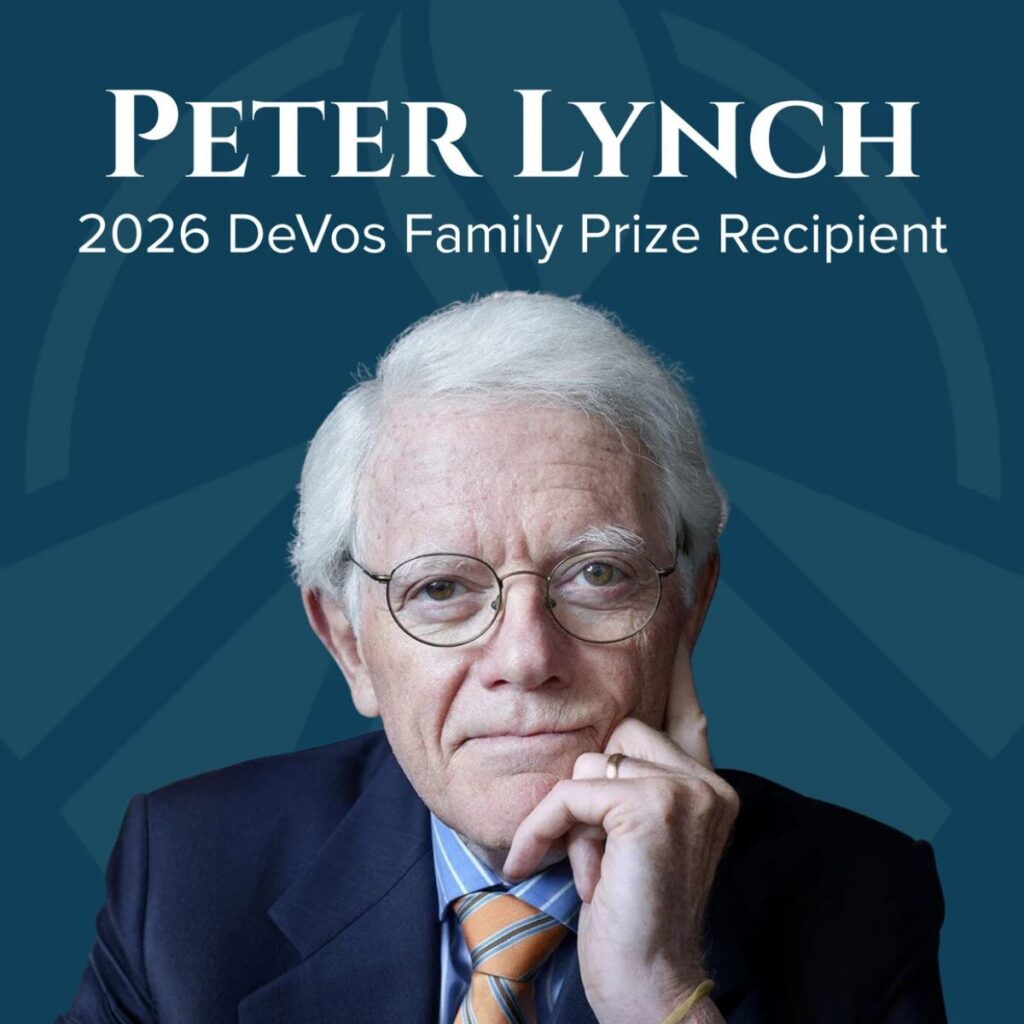
Peter Lynch has long been known as a Wall Street superstar, a man who helped build financial security for millions of Americans while running the best performing mutual fund in the world.
And for almost four decades, he has been dedicated to philanthropy, having been the recipient of assistance through the Catholic Church early in life. Since 1988 when he began The Lynch Foundation with his late wife Carolyn, Lynch and his family have given away more than $330 million to nonprofits in Boston, Massachusetts, and beyond. Their goal has been the desire to create opportunities for people in the way they were created for them.
In partnership with the DeVos Family Foundation, Philanthropy Roundtable is proud to recognize Lynch as the recipient of the inaugural DeVos Family Prize for Leadership in Giving.
The DeVos Family Prize honors a living philanthropist whose charitable leadership exemplifies impact, innovation and giving that inspires others to unlock new approaches to solving major challenges. The Prize is the successor to the Simon-DeVos Prize for Philanthropic Leadership, awarded by the DeVos Family Foundation and Philanthropy Roundtable in partnership with the William E. Simon Foundation, which sunsetted in 2023. Lynch’s charitable giving embodies the DeVos Family Prize’s values, including personal responsibility, stewardship, family, discovery, generosity and equipping people to reach their fullest potential.
Lynch came from humble beginnings, where hard work, faith and family were deeply valued. Raised with two brothers in Newton, Massachusetts, his father died when Peter was 10 years old, and his “incredible” mother, a housewife, entered the workforce to support her children.
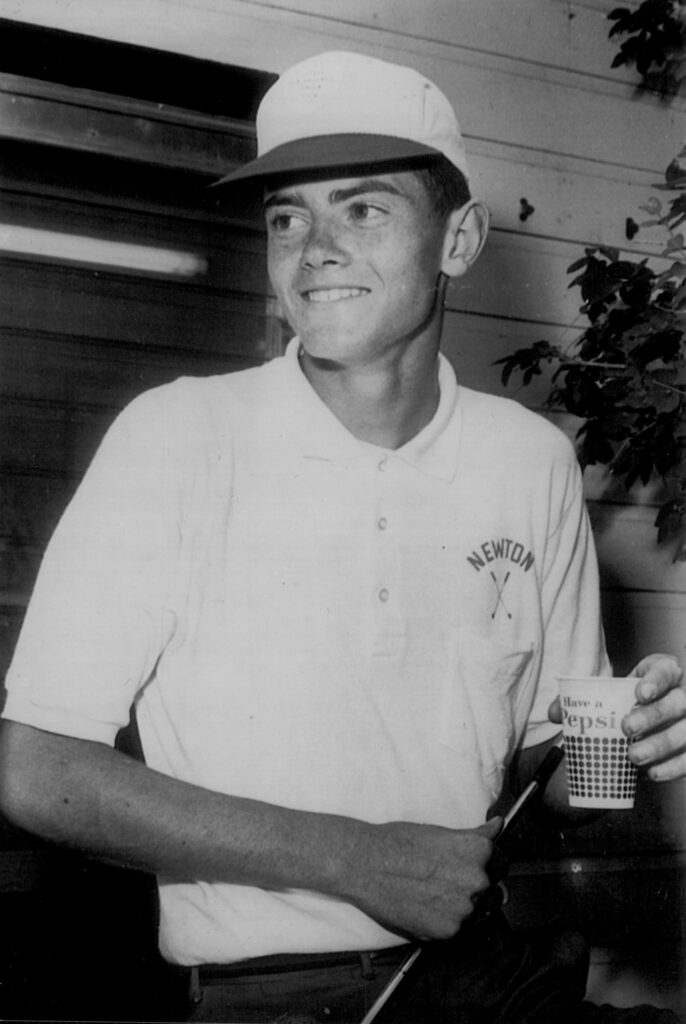
To help with the family’s finances, Lynch started a job as a golf caddie at the Brae Burn Country Club at age 11, earning $2 a bag from its clientele of CEOs and corporate presidents. At 17, Lynch took a job running the refreshment stand at Brae Burn, where he got to know many of the club’s members, including George Sullivan, then president of Fidelity.
Golf also introduced him to the Francis Ouimet Scholarship Fund, which provides financial assistance to caddies pursuing higher education. The scholarship, along with Lynch’s earnings from the club and a small Reserve Officers’ Training Corps stipend, helped pay his $1,000 tuition at Boston College, where he began studies in 1961. The scholarship gave Lynch early exposure to the power of philanthropy.
“I knew about philanthropy, and it made a big difference. I was the beneficiary of it,” he says.
Lynch also credits institutions such as the Catholic Church, the Boy Scouts and the YMCA with helping shape his upbringing and exposing him to opportunities not everyone enjoyed.
“I assumed that everyone had a YMCA that was outstanding. Not true,” he says.
Those experiences helped instill a lifelong belief in creating opportunities for others, a theme that would later define his philanthropy and his leadership in giving.
The Art of Investing
At college Lynch avoided typical courses for an investment career, such as science, math and accounting, instead focusing on history and psychology, art history, religion and ancient Greek philosophy.
“Investing in stocks is an art, not a science,” he says.
Lynch says he was fortunate to go to “amazing” public schools but concedes, “I just assumed everybody else had the same thing I had.”
It took until his 20s to understand that not everywhere in the U.S. had such good educational opportunities. This realization set the scene for giving—he and Carolyn would donate $20 million to Boston College a few decades later.
After college, he was accepted at three graduate schools, deciding to attend the least expensive, the Wharton School of the University of Pennsylvania in Philadelphia. Along with his studies, Lynch immediately got to work as a busboy at the university’s faculty club three afternoons a week, and as a waiter at an Italian restaurant four nights a week. He finished the year in the top 1% of his class and received a scholarship from Shell that paid for his second-year tuition.
Outside of studying and working, Lynch met Carolyn Ann Hoff, who would become his wife, at one of the rare parties he attended.
“That was a triumph, winning her over,” he says.
The following year, in 1966, Lynch was chosen for a summer internship at Fidelity, then the envy of the investment world for its collection of mutual funds.
“There were 75 applicants for three spots, and I caddied for the president for 10 years, so I got the job,” he says.
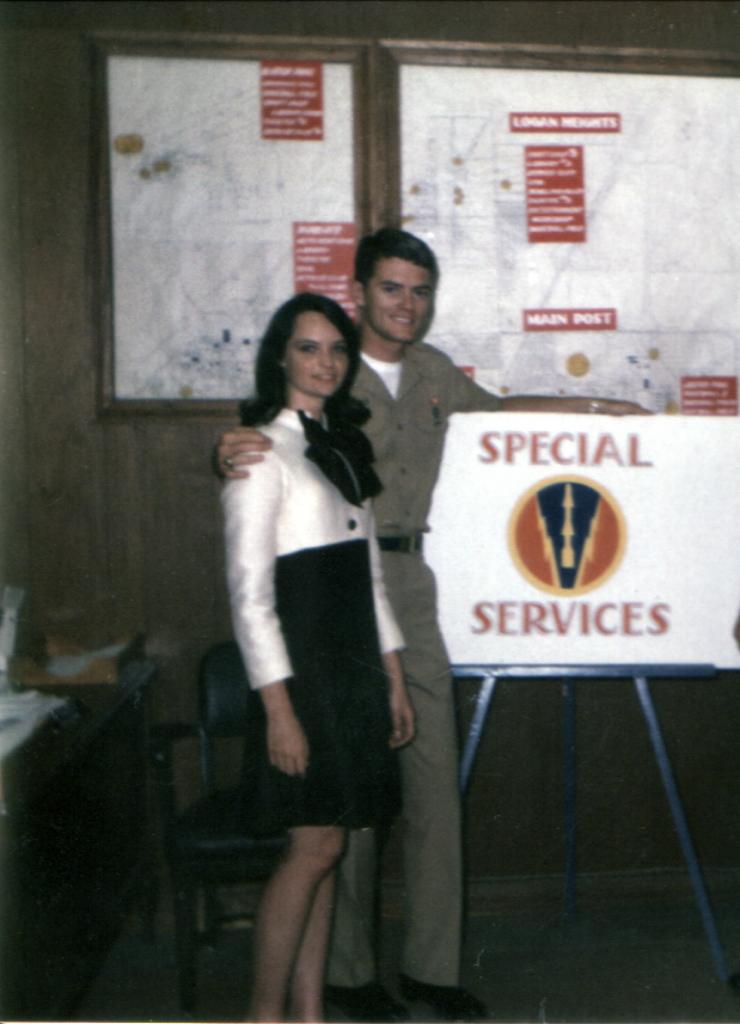
During his internship, Lynch secured a job at Fidelity, and in 1969, after military service in Korea, he began a permanent role at the investment firm. After graduating, Carolyn became a physical therapist and the couple married in 1968. Together, they saved for a down payment on a $60,000 house.
In 1977, Lynch was appointed manager of Fidelity’s Magellan Fund and by the late 1980s the couple was living in Marblehead with their three daughters.
Early Charitable Giving
The Lynches had been giving money away “in an unorganized fashion” before Lynch began to spend time chairing the investment committees of charities and civic organizations including the Museum of Fine Arts, Boston, the John F. Kennedy Library and Historic New England. Lynch learned a lot from these experiences and in 1988, the couple created The Lynch Foundation with a $2 million gift.
“It started [with] very little, but we’ve added to it, and it’s done really well. We’ve had a bull market since 1988,” Lynch says.
“We started with historic preservation because where I worked at Fidelity, right next to me was the Old State House,” Lynch says. “We lived in one of the historically most important towns.”
In 1990, at age 46, Lynch made a decision that shocked the investing world: he quit his role managing the Magellan Fund. Under Lynch’s stewardship, the fund had grown from $20 million to over $14 billion in 13 years and delivered annual returns averaging 29.2%, benefiting millions of everyday Americans. But his father had died at age 46, and Lynch wanted to focus on the family and their charitable commitments.
It’s a point his daughter Elizabeth de Montrichard, secretary of The Lynch Foundation, picks up.
“Losing his father at a young age and seeing the sacrifices his mom made helped him realize how fragile life was. He never took anything for granted,” she says. “If I had to think of two words to describe him, it’d be an enthusiast optimist. He honestly believes that anyone can make a difference and that problems can be solved.”
Along with a focus on historic preservation, the Lynches early philanthropic investments included Teach for America, community service nonprofit City Year and Christian charity Renew International.
“We’re really looking for groups that can make a difference,” Lynch says.
His approach to philanthropy is about helping others reach their potential.
“I’m trying to do what I was able to achieve,” he says.
“Know What You Own”: A Guiding Principle
“Know what you own and why you own it,” became one of Lynch’s well-known principles for investing, reflecting his deep research and long-term focus.
And a guiding philosophy for how the foundation funds projects and initiatives, according to Katie Everett, executive director of The Lynch Foundation and a lifelong family friend.
“Peter believes that philanthropy is a form of investment … and we have taken that tagline and that principle and philosophy and evolved it here to the foundation,” Everett says.
To that end, the foundation focuses on historic preservation and open space, healthcare, religion, education and housing. The foundation supports initiatives including the Pine Street Inn homeless shelter, the St. Mary’s Center for Women and Children, Greater Boston Food Bank and Artists for Humanity.
Since its inception, The Lynch Foundation has focused on partnering with organizations that create lasting improvements in people’s lives in Massachusetts, nationwide and around the world.
A “10 Bagger” and the Importance of Impact
Lynch coined the term “10 bagger” to describe a rare investment, and one that multiples tenfold from its original value. He describes the nonprofits the foundation has supported in a similar way. For Lynch, these include bets they’ve made on Teach for America, Partners in Health and The Phoenix.
“The foundation has grown exponentially because of Peter’s uncanny ability to be successful in the stock market and Carolyn’s ability to be thoughtful and strategic around investments in nonprofit organizations,” Everett says. “The change the foundation has been able to create is staggering. Millions of people’s lives have been changed.”
Impact is critical for Lynch.
“When I was in the stock market, I might look at 10 companies, maybe one was interesting. I looked at 100, and I find 10. The person that turns over the most rocks wins the game. It’s the same with philanthropy. There’s the very good ones, there’s outstanding and there are the ones that have a lot of potential,” he says.
When the foundation awards grants, it looks to identify exceptional leaders, resource them well and then step back.
Helping Children in Their Early Years and Beyond
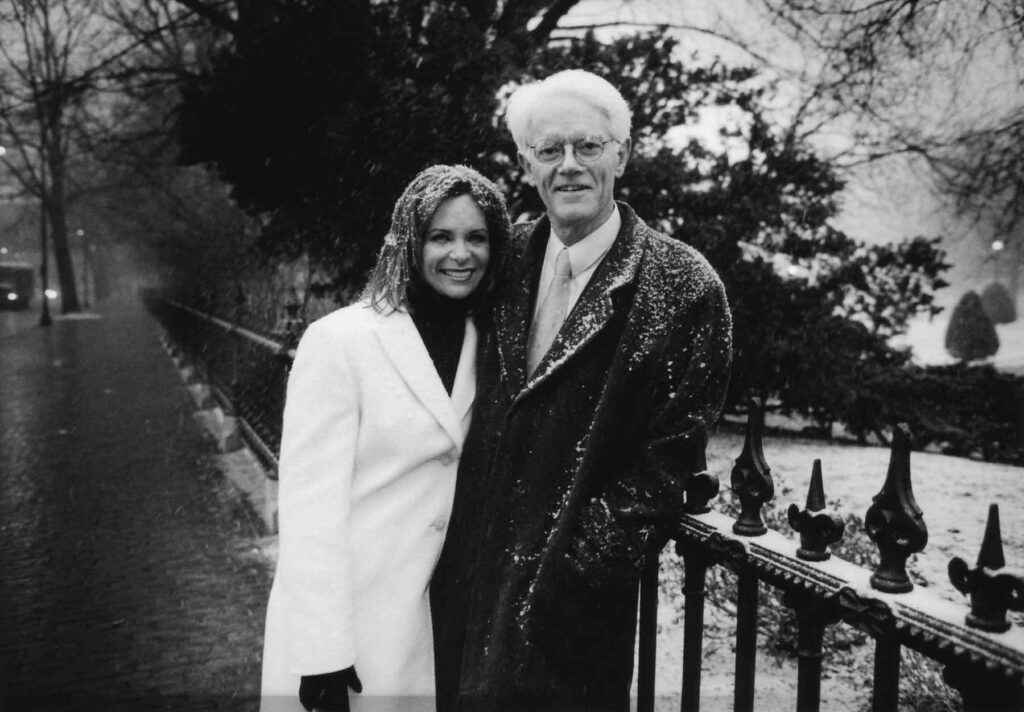
Peter and Carolyn were the children of educators. Lynch is passionate about the foundation’s Early Education Initiative, which provides affordable education and develops educators for children from ages 3 months to 5 years old.
“I didn’t know this until my 70s: 90% of your brain is developed by the age of 5,” Lynch says. “Mostly, they start at age 3, and they learn about empathy, they learn about frustrations. They get a good start.”
Lynch also highlights the Building Minds Scholarship Fund, which he’s supported for more than three decades.
“There are 11,000 children in these schools. Most are from single parent families, and the majority don’t speak English at home, so we’re raising scholarships to help them stay in school,” he says.
Such initiatives provide comfort and support, Lynch says.
“There’s somebody that loves you. You feel like you’re really important. You know, it helps self-confidence.”
Investing in community impact
When it comes to housing, the foundation supports homeless shelters and funds apartment buildings such as those operated by HopeWell to house young people who have “aged out” of the foster care system.
“How do you apply for a job if you’re homeless? There is this fear of, ‘Where am I going to live next?’ And we decided, ‘How can we create more housing?’” Lynch says.
Everett and her team have worked on research to support the conversation around the “Yes in God’s Backyard” legislation, which aims to make it easier for faith-based organizations to build on underutilized land they own.
“It’s a great opportunity to put some housing there, rental housing, low-cost housing. To use a baseball metaphor, we’re in the first inning,” Lynch says.
Sports are a key part of The Lynch Foundation’s activities. The entire family has been involved with the Special Olympics, a nonprofit for athletes with intellectual disabilities, for decades. The foundation co-chaired a $100 million campaign to grow the organization.
“Our goal was to grow international Special Olympics from 1 million athletes to 3 [million]. It’s now at 6 million athletes, and it changed their lives. It’s incredible,” Lynch says.
The organization runs more than 100,000 events a year and operates in more than 200 countries and territories.
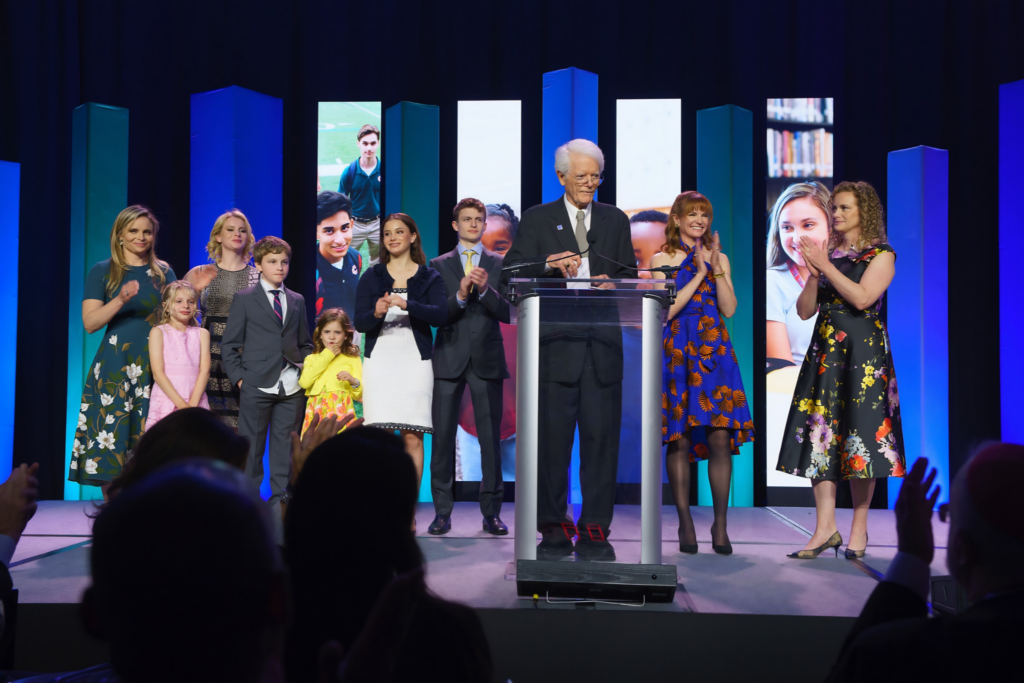
The DeVos Family Prize Award and The Catholic Schools Foundation
Lynch has chosen to give his $100,000 DeVos Family Prize award to The Catholic Schools Foundation (CSF), the largest K-12 scholarship granting organization in Massachusetts. Lynch is president emeritus.
“To have a prize for leadership and working in philanthropy, it’s such an important part of our country,” he says. “It’s important for the donor and the donee. They both benefit from it. It’s like such a wonderful feeling. I wish there was a Nobel Prize for philanthropy, but DeVos is better.”
Over more than 30 years, Lynch raised more than $250 million for the CSF, describing himself as its “chief begging officer.” And, just as he is involved on the ground with the foundation, he continues to ask people for donations.
“I’m calling people, writing letters, meeting with them … trying to get people to give to this,” he says.
Alongside funding scholarships, schools have added gyms, upgraded air conditioning systems and built playgrounds, annually supporting more than 4,000 low-income students of all faiths in the process.
“These are inner city schools, a third [of the pupils] aren’t Catholic. These aren’t the well-to-do suburban Catholic schools,” Lynch says.
Cardinal Sean O’Malley, former chairman for the CSF and archbishop emeritus of Boston, describes Lynch as a very generous person who recognizes he has a responsibility to others.
“And you see that he has joy in giving. … As the scriptures say, the Lord loves a cheerful giver. Peter is a cheerful giver,” O’Malley says.
Catholicism has been a cornerstone of Lynch’s life.
“I really am blessed to be a Roman Catholic. It’s a lot of ups and downs I’ve gone through in some of my life, and you know it’s nice to have the Holy Spirit around to ask for help,” he says, holding up his rosary beads, which were blessed by Pope Francis.
The nonprofits The Lynch Foundation supports provide hope for Lynch.
“It’s such a downbeat period of life right now, the last several years, and it gives you hope that things are working, people are progressing,” he says. “This environment of texting and Instagram and TikTok, you’ve got to overcome that and take your rosary beads out.”
Everett mentions the Lynch Family Skatepark as a particular highlight. It was a labor of love for Carolyn, taking around 10 years to complete.
“She saw a need for kids who were incredible athletes that didn’t have a place to practice skateboarding or go on their BMX bikes legally. She saw a need to help these kids thrive and grow,” Everett says.
In June, two local graffiti artists were hired to create art for the park, which sits under a bridge at the edge of the Charles River in Boston.
“They’re allowed to do this in this extraordinary space that the Lynch family has created for kids that don’t take the traditional art or athletic tracks. And that’s the kind of people Peter and Carolyn are,” Everett says. “They value everybody.”
Over the summer, Lynch took two of his grandchildren to the Skatepark, where they also got involved in decorating it.
“Much Is Given, Much Is Expected”
The values that have guided Lynch’s giving are also reflected in how he talks about the next generation of his family.
“You know, my mother said, ‘Much is given, much is expected,’ and they know they’ve been blessed,” Lynch says of his children and 10 grandchildren.
When the foundation decides on which projects to support, a family member will visit the facility and hear its story, a role held by Carolyn until she died in 2015.
“This foundation, we want to be around forever. Our children and grandchildren are involved in it. We think the charitable groups are spectacular in what they achieve,” he says.
It’s a point Lynch’s daughter Annie Lukowski, a trustee of the foundation, picks up.
“People have always asked if the foundation will sunset with my parents. And I know from the get-go, that was never the case. … It would be such a great opportunity for all of them to get together—second cousins, third cousins, four generations from now—working together, solving problems with each other, learning with each other and helping the city of Boston,” she says.
How does Lynch, who is 82, spend his days? He holds up his iPhone, which is decorated with photos of his 10 grandchildren.
“My goal is to spend as many minutes as I can with my daughters, my grandchildren,” he says, adding that to the younger ones, he and Carolyn were simply Grammy and Grandpa.
And for his daughter Mary Witkowsi, also a trustee of the foundation, slowing down is not an option for Lynch.
“That is not possible. … He is just invigorated by every site visit, … by the idea of whoever is going to be impacted by the work. … He couldn’t stop that just as much as he’s not going to stop eating popcorn or breathing oxygen.”
