One hundred and twenty years ago, in the hills of the Missouri Ozarks, a 26-year-old missionary named James Forsythe arrived to evangelize. What he found was a beautiful region riddled with poverty, one where young people were doing whatever it took to help their families survive. He had a vision to give them a chance for a better life through education and hard work. That vision became The School of the Ozarks in 1906.
The School of the Ozarks, now called College of the Ozarks, has operated on a single, unchanging mission: to provide the advantages of a Christian education for youth of both sexes, especially those found worthy, but who are without sufficient means to procure such training. It is one of only a handful of work colleges in the country. In 120 years of operation, 100% of its graduates have left debt-free.
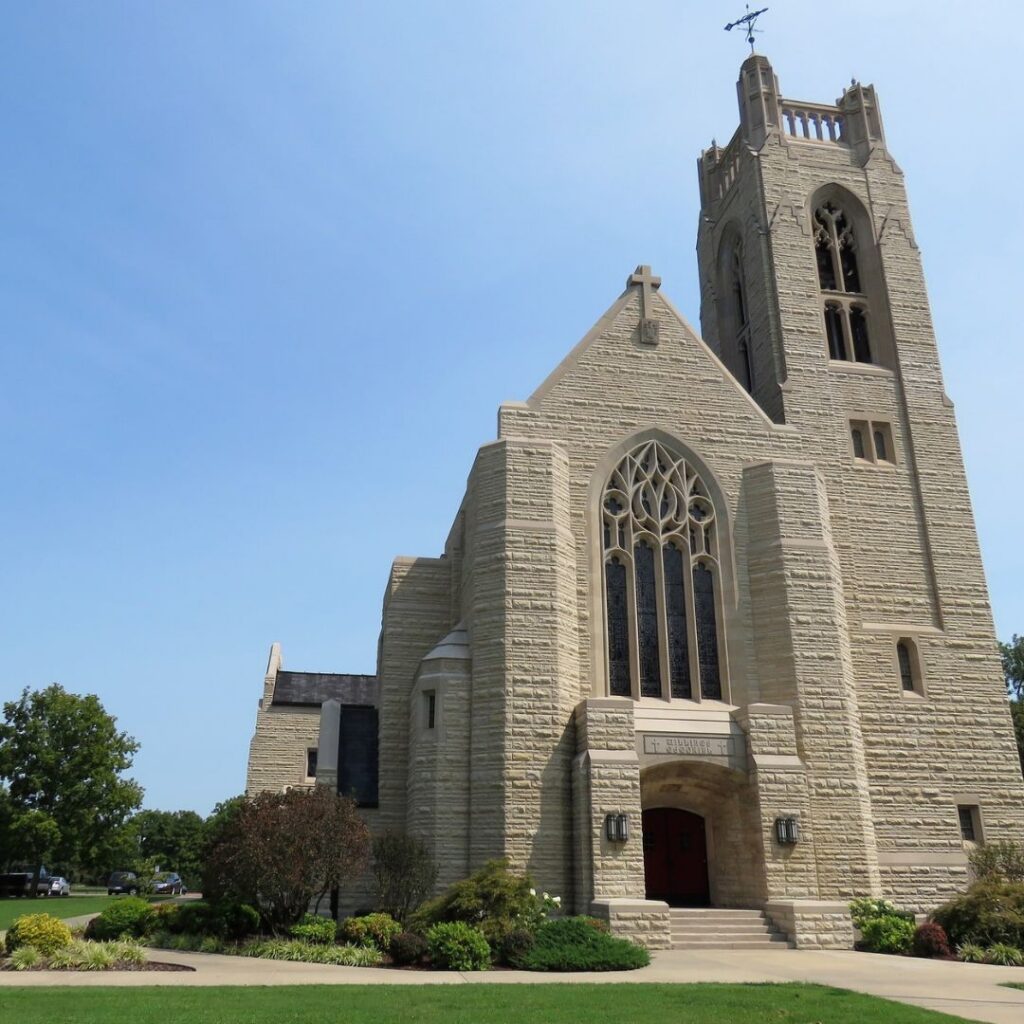
Students at College of the Ozarks run their campus. From milking cows and tending gardens to managing food service and staffing the president’s office, students are the engine of the institution. The college draws approximately 400,000 visitors to campus each year to experience The Keeter Center, a highly regarded restaurant, lodge and convention center. They also enjoy seeing the number one collegiate dairy herd in the country, shopping at student-handmade retail shops and visiting the neo-Gothic cathedral style chapel built by students in the 1950s.
The work college model is straightforward: students work for their education instead of paying for it. Every student works 15 hours per week, plus two 40-hour workweeks per academic year. With about 90% of the student body demonstrating significant financial need, between 500 and 600 of the highest-need students remain working full time on campus through the summer to cover the cost of room and board for the following year.
To sustain that model, the college has traditionally relied on a combination of student labor, private donors and federal student and work study grants. But federal dollars rarely come without conditions.
Over the last decade, College of the Ozarks has grown increasingly concerned about what follows federal dollars. That concern became acute in 2021, when the college sued the federal government over a transgender housing mandate it viewed as a direct violation of its institutional values. After urgent advocacy in Washington, the college received a religious exemption allowing it to govern its housing consistent with its faith and mission.
The college received a more recent threat in 2025, when federal policy affecting large university endowments had potentially devastating implications for the college. Through advocacy in Washington, the college was able to avoid the immediate impact of the policy, but government overreach was clear.
These two experiences gave rise to the college’s Freedom Campaign, a deliberate move to eliminate all federal funding from its operations. As Dr. Sue Head, vice president for cultural programs and advancement, said, “in a unanimous vote, our board of trustees directed the college to prepare for a future independent of all federal funding, strengthening our ability to preserve and advance our 120-year mission for generations to come.”
Head is clear about what motivates the college’s donor base.
“We believe our donors want the college to be free from any kind of threat to this institution, the good work it does and the values at its core. It is time to get free of possible federal government interference.”
This instinct is well-founded. Philanthropy Roundtable’s research documents precisely how federal dollars can quietly erode the autonomy of mission-driven institutions through slow regulatory creep.
Private philanthropy is the college’s lifeblood. And the profile of its donors may surprise you.
“A lot of our donor base looks like the millionaire next door and often come from poverty and difficult circumstances themselves,” Head said. “I met with one this morning who grew up on a farm, was a schoolteacher and is leaving her entire estate, worth a couple million dollars, to the college. You would never know it by meeting her.”
These are donors who trust the institution deeply, often across generations. Head is candid about what is at stake if that trust is ever compromised by mandatory donor disclosure requirements.
“We are 100% dependent on outside donor support for our student body. If that trust begins to erode and we lose donors, where is it going to come from?”
The answer, she makes clear, is there is no substitute. Any regulation that forces the college to expose its donors would strike at the very foundation of its ability to serve students.
As Head stated plainly, “ultimately, it would reduce the number of students whose lives can be transformed through education and the dignity of work, helping them move from poverty to economic independence and stability.”
The model at College of the Ozarks is high-support and high-accountability. Head tells students she wants them to be so capable and well-spoken they can walk through any door and earn a place at any table of influence. But the most important table of influence will always be their own family’s dinner table. The college aims to produce doctors, lawyers and executives, but equally, to produce people with the character who guide family, jobs and their community with grace.
Consider Halley. She was a waitress at Cracker Barrel when someone told her about College of the Ozarks. She applied, was accepted and after graduation went to work at a bank that actively recruits from the college. She worked her way up to vice president of marketing, rebranded the institution and helped it grow from a small community bank into a highly competitive regional player. Later, to best care for her children, she pivoted, launching a marketing consulting practice and a glamping business that now earns her speaking invitations at international industry events.
Or consider a young woman from Cape Girardeau, Missouri, who grew up in a pastor’s household with very little money. She became student body president at the college and excelled. The college’s president helped her secure a White House internship. She arrived in Washington surrounded by polished Ivy League peers and outworked them all. She was hired into the administration, then worked for the vice president, and today is the chief of staff of a $4-billion dollar medical technology company in California.
Approximately 80% of College of the Ozarks students come from within a four-hour drive across the Ozarks Plateau. That region is the college’s core constituency, and its graduates are reinvesting in their communities. A local bank that has operated for roughly 20 years counts about one-quarter of its employees as College of the Ozarks alumni, including its new president.
Head gets to work early every day because, as she puts it, it is humbling to watch transformation happen in real time.
“So many of our students are heroic. If you knew the neglect, abuse and difficult circumstances many of them survived before they got here, you would wonder how they even get out of bed, much less lead on campus, arrive to work on time and earn an education. These young people give me hope.”
The work of College of the Ozarks is a proven, century-old model that turns individual transformation into regional prosperity. The philanthropic freedoms that make it possible, such as donor privacy and freedom from burdensome government regulations, are the conditions under which places like this can exist.
Protect those conditions, and institutions like College of the Ozarks will continue to uplift entire regions, one individual at a time.
