Recent reporting that a federal grand jury is investigating businessman Neville Roy Singham shows the federal government already has tools to pursue alleged wrongdoing involving nonprofits. If individuals or organizations are violating the law, they should be investigated and held accountable.
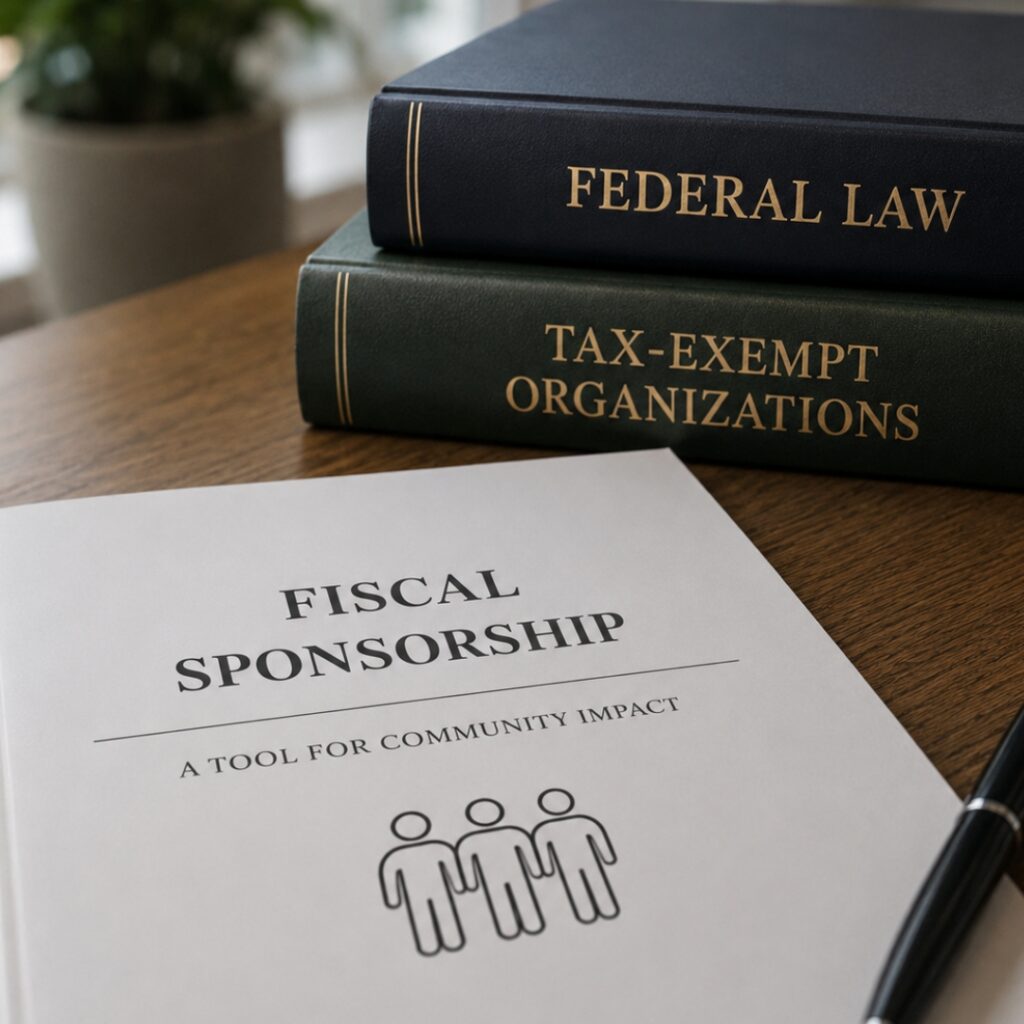
But allegations involving a handful of organizations should not become an excuse to regulate an entire charitable practice. Before policymakers create new federal laws responding to the news of the day, they should stop and ask whether these new requirements are really necessary. If so, they must understand what fiscal sponsorship is, how it works and why it developed. Our new policy primer on fiscal sponsorships provides that background.
The better answer is straightforward: enforce existing laws.
Fiscal sponsorship is a charitable giving tool, not a loophole or a nefarious scheme intended to facilitate foreign influence. Just as a hammer can be used to build or destroy, suppressing the use of hammers will hamper thriving communities, while those who seek destruction will find another path.
Fiscal sponsorship is a flexible charitable practice. It allows private citizens to respond quickly to community needs, launch new charitable projects and support temporary or volunteer-led efforts without forcing every project to become a standalone nonprofit.
That flexibility matters. Fiscal sponsorship is an industry term, not a single legal category. The charitable sector commonly recognizes six models, and some practitioners recognize additional variations. These arrangements can range from a project that looks indistinguishable from a nonprofit’s ordinary operations to a more independent charitable effort overseen and funded through a sponsor.
That makes new regulation harder than it sounds. What exactly would the government require nonprofits to report? Which model would count? Would a church food pantry count? A start-up mobile mental health clinic? A seasonal youth sports league?
In many cases, the answer would not be obvious. A fiscal sponsorship may not be visible in an audit. It may not involve a formal contract. Reasonable people may disagree over whether a particular arrangement is even a fiscal sponsorship.
The likely result is predictable, and we’ve seen it repeatedly when Congress adds new regulations to an already regulated sector. Small, law-abiding nonprofits would spend scarce resources trying to comply with vague new requirements. Bad actors would ignore or circumvent them.
That burden would not fall on a theoretical sector. America has more than 1.9 million charitable nonprofits, and 88% spend less than $500,000 a year. These are often lean, local and volunteer-driven organizations. They do not have attorneys or accountants waiting to decipher another federal filing obligation. The cost will be real, and the funds to comply will be subtracted from the charitable work.
Fiscal sponsorships often exist because forming a new nonprofit is unnecessary or impractical. Many Americans, especially small-town Americans, see fiscal sponsorship at work regularly in their community without knowing it. Some projects are temporary, like a Fourth of July parade. Some are led by volunteers. Some exist to solve one local problem, like teenagers working to build a community skate park. These efforts should not need a permanent corporate structure before citizens can act.
Private charitable dollars are private. They represent the best part of America – neighbors helping neighbors, voluntarily. When government money is involved, public reporting and oversight follow. But private citizens giving private dollars to lawful charitable work should not be treated as hostile actors and met with skepticism merely because policymakers have identified a few bad examples.
History also counsels caution. The IRS’s treatment of tax-exempt applicants during the Lois Lerner controversy is a reminder that regulatory power created for one purpose can later be used in ways that threaten lawful civic activity. The lesson is not that government should ignore misconduct. The lesson is that enforcement should be targeted, not sweeping.
When misconduct occurs, investigate it. When laws are broken, enforce them. But policymakers should not use isolated allegations to impose broad new burdens on thousands of legitimate charities.
Fiscal sponsorship is one of the ways Americans solve problems without waiting for government. That is a strength of civil society, not a reason for more federal control.
