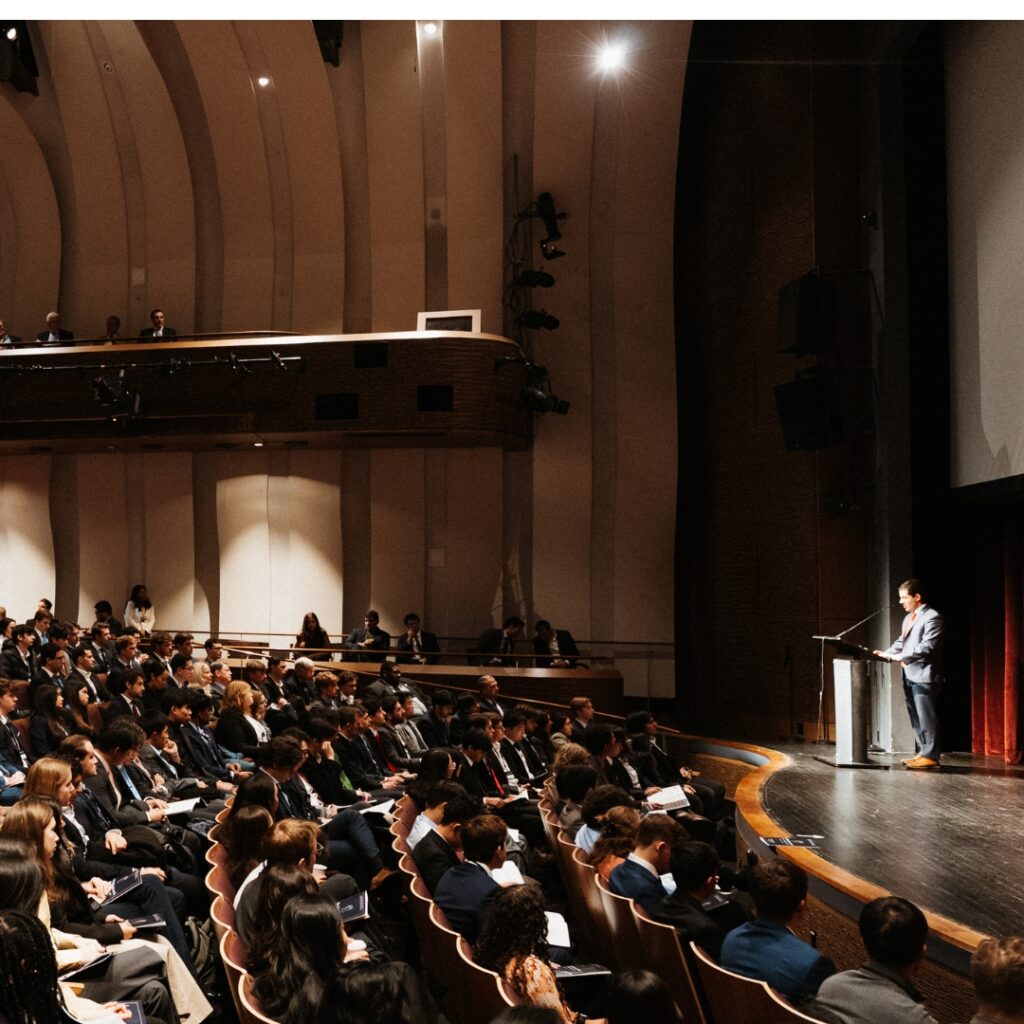
College campuses are known as one of the most hostile places to conservative and religious young people in America. From an overall political climate dominated by polarizing voices to campuswide efforts to stifle free speech, it’s little wonder that conservative students often feel alone and isolated.
Lucas Cremers seeks to reverse that trend. He founded The David Network out of frustration with the lack of support for conservative students, particularly at highly selective colleges that are producing the thought leaders of tomorrow. That inspiration rose from his experience as a student at Columbia University.
“Back then in 2018, there really was no infrastructure that could support conservative students,” Cremers says. “It was pretty depressing. One had to keep their head down as any political or intellectual values were typically out of the mainstream. There was a small circle of maybe 15 young people who were conservative and religious, and they lived in a separate world from the rest of the student body.”
Launched as a dorm room project in 2019, The David Network is based on the biblical story of David and Goliath featuring an underdog defeating a much larger and stronger foe. The network’s mission is to energize and motivate conservative students at elite college campuses by fostering connections and encouraging engagement in their professional and political interests, particularly in fields like finance and technology. The network opens the door to these connections by partnering with every conservative undergraduate organization on campus.
Rather than abandoning these influential universities, the network seeks to cultivate talent from within, training students to thrive, lead and influence culture. The goal is to build a talent pipeline of principled conservatives who will reshape some of our nation’s leading institutions and industries, akin to how the Federalist Society has reshaped the courts. Today, The David Network boasts over 3,000 undergraduate members at all eight Ivy League schools, plus MIT and Stanford.
“One of the worst parts about Columbia is that freshmen who come from conservative or religious backgrounds often become jaded and cynical liberals by the time they are seniors,” Cremers says. “We are preventing that by building a community for these students, especially by welcoming them as soon as they arrive, or even before, through connections with older siblings or parents. It’s student-led, and we aim to provide support from behind the scenes.”
Working from Within
One of the unique aspects of The David Network is its presence inside the halls of academic institutions. Rather than trying to influence students by operating outside university campuses, the Network makes a difference from within. Unlike the past, where students in groups like the College Republicans would graduate without much engagement in the broader conservative community, the organization aims to bridge that gap by exposing students to various conservative resources, fellowships and nonprofits early.
“We’re actually getting them involved and having them more engaged with the movement from a younger age, which I think is really impactful, and certainly was very exciting for me as a student who did not know anything about the conservative world before The David Network came along,” says Annie Rogers, The David Network’s director of development and external affairs. She now works for the organization after attending the summit during her senior year at Cornell University and a brief finance career.
To accomplish that mission, The David Network hosts events to engage previously uninvolved groups on campus, such as conservative athletes, fraternity members and those in fields like artificial intelligence, software engineering, venture capital and fundamental sciences. The organization also emphasizes the importance of sparking productive public debates on campuses by hosting discussions between prominent speakers from the right and left, fostering a healthy competition of ideas.
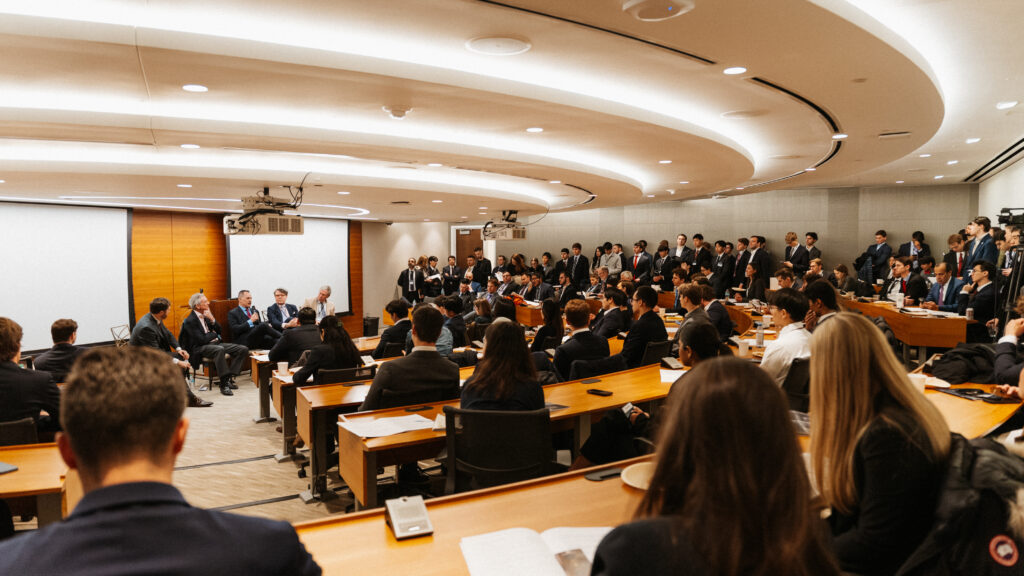
The Network’s focus is not exclusively campus-centric. Its broader goal is to build a long-term pipeline of conservative talent from its universities into the institutions that shape American life. By connecting students with mentors, professional opportunities and public platforms, The David Network helps ensure graduates enter influential fields such as finance, technology and media with the confidence and community to lead. Over time, this approach will shape a generation of leaders capable of strengthening the cultural and institutional foundations that sustain American prosperity, innovation and self-government.
Finding Connection at Annual Summit
That strategy of outside engagement is perhaps most visible at the organization’s annual summit. Since its inaugural conference in January 2020, The David Network has gathered hundreds of conservative Ivy League students and dozens of conservative leaders in Washington to connect, equip and motivate the next generation.
What began as a conference of 140 students has grown significantly. The most recent 6th annual summit in January 2026, held at the Museum of the Bible in Washington, D.C., was attended by 600 undergraduates and 300 alumni, with 80 speakers including Jay Bhattacharya and Ron DeSantis. Past event headliners have included former AQR CEO Cliff Asness, Blackwater founder Erik Prince, Vice President Mike Pence, psychologist Dr. Jordan B. Peterson, venture capitalist Joe Lonsdale and professor Robert George.
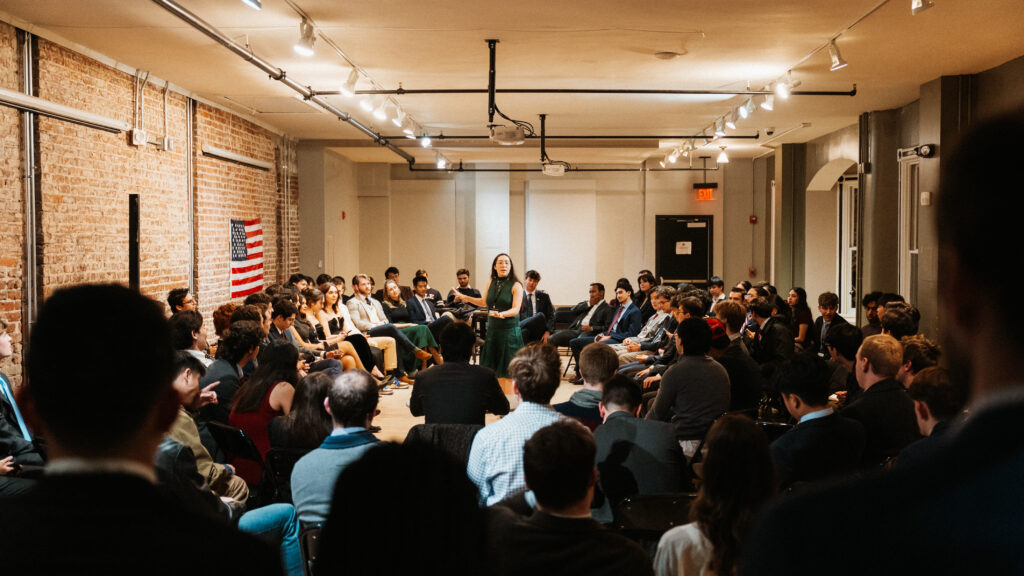
These summits allow students to learn the architecture and underlying principles of the conservative movement. Perhaps more importantly, they show students they are not alone in seeking to grow in adversity. By engaging with speakers over meals and in small breakout sessions, students are trained to think intentionally about how they can lead effectively within ideologically opposed institutions.
A ‘Game Changer’ for Conservatives
While current students are the primary focus, the impact of the network is perhaps best understood by those who navigated these campuses before that support existed.
Michelle Knesbach, a 2017 Dartmouth graduate and former president of the Dartmouth College Republicans, recalls a much bleaker landscape during her time on campus prior to encountering The David Network.
“This was a tough era for conservatives,” Knesbach says. “This era saw the rise of new, radical social issues. It felt like nobody outside of the Ivory Tower cared about the insanity (happening) on campuses. Treatment of conservatives was honestly pretty terrible, and importantly, The David Network did not exist yet.”
Knesbach, who was introduced to the organization by a fellow Dartmouth alum, sees the network as a vital shift in the ecosystem.
“I have optimism for the first time ever that campuses can be saved,” she says. “The David Network is a game changer for the future of conservatism. It taps into every node including social, career (and) intellectual to ensure long-term success of growing the next generation of impactful conservative leaders.”
Crucially, Knesbach says the support doesn’t end when students toss their caps in the air.
“What is really amazing too is that David Network does not stop at graduation. These events, these communities, all of this exists in New York City, San Francisco and Washington for young alumni. This is vital as it keeps alumni engaged and these alumni in turn help students.”
What’s Ahead
The organization places a strong emphasis on tracking the careers of its alumni to measure impact. They have established robust regional networks in major cities corresponding to their programming themes of government, finance and technology. A key goal is to foster conservative community within these professional sectors, which includes alumni founding conservative clubs in major corporations, particularly Fortune 50 companies.
Over the next four years, The David Network hopes to expand its network to encompass 10% of undergraduate students at these target universities. This year, UChicago and UT Austin are joining the ranks of The David Network’s chosen universities.
Beyond a financial contribution, one way donors and business owners can have a direct impact is by hiring alumni of The David Network.
“We would love to be helpful in finding talent for them, and we also love to have individuals speak who have built their careers in the private sector,” says Cremers. “We prioritize bringing accomplished business leaders to our campuses to discuss conservative values, their career progression and the relevance of conservatism in their industries, while also inviting them to mentor our students.”
Donors can also support the network by involving their own alma mater.
“The David Network is seen by many influential alumni and donors as a key means to support their universities. We often discuss governance and future issues with deans and trustees, so we would love to partner with those who are invested in their universities to share knowledge and experience,” says Cremers.
If you would like to learn more about The David Network, please contact Senior Director of American Values & Policy Philanthropy Clarice Smith.
